NoFap Benefits: What Evidence-Based Research Says
NoFap can reliably help with one thing: reducing compulsive porn use and reclaiming the time, attention, and mental space that habit consumes. Most of the bigger claims, the ones about massive testosterone spikes or overnight personality transformation, don’t hold up under research. What people experience often comes from placebo effects, better sleep, or simply replacing a compulsive habit with something calmer.
Here’s the quick breakdown before we go deeper:
- Plausible and reported often: sharper focus, less time lost to porn, calmer mood, better presence in relationships.
- Overhyped or unproven: sustained testosterone jumps, guaranteed cures for depression or anxiety, dramatic physical “superpowers.”
- Mixed evidence: small studies show short-term hormonal shifts after brief abstinence, but nothing lasting or dramatic.
Perceived benefits from abstinence are frequently explained by placebo effects, lifestyle changes, or relief from shame rather than a direct physical mechanism.
The rest of this guide separates what research actually supports from what the internet likes to repeat, with a realistic timeline and clear guidance on when to talk to a professional instead of just gritting your teeth.
Key Takeaways
NoFap reliably reduces compulsive porn use and reclaims attention for many people, but most claims about dramatic physical or hormonal transformation lack solid research support.
| Point | Details |
|---|---|
| Behavioral gains are real | Reduced porn use, sharper focus, and better relationship presence show up consistently in reports and small trials. |
| Hormonal superpowers are unproven | Larger studies don’t confirm sustained testosterone increases from abstinence alone. |
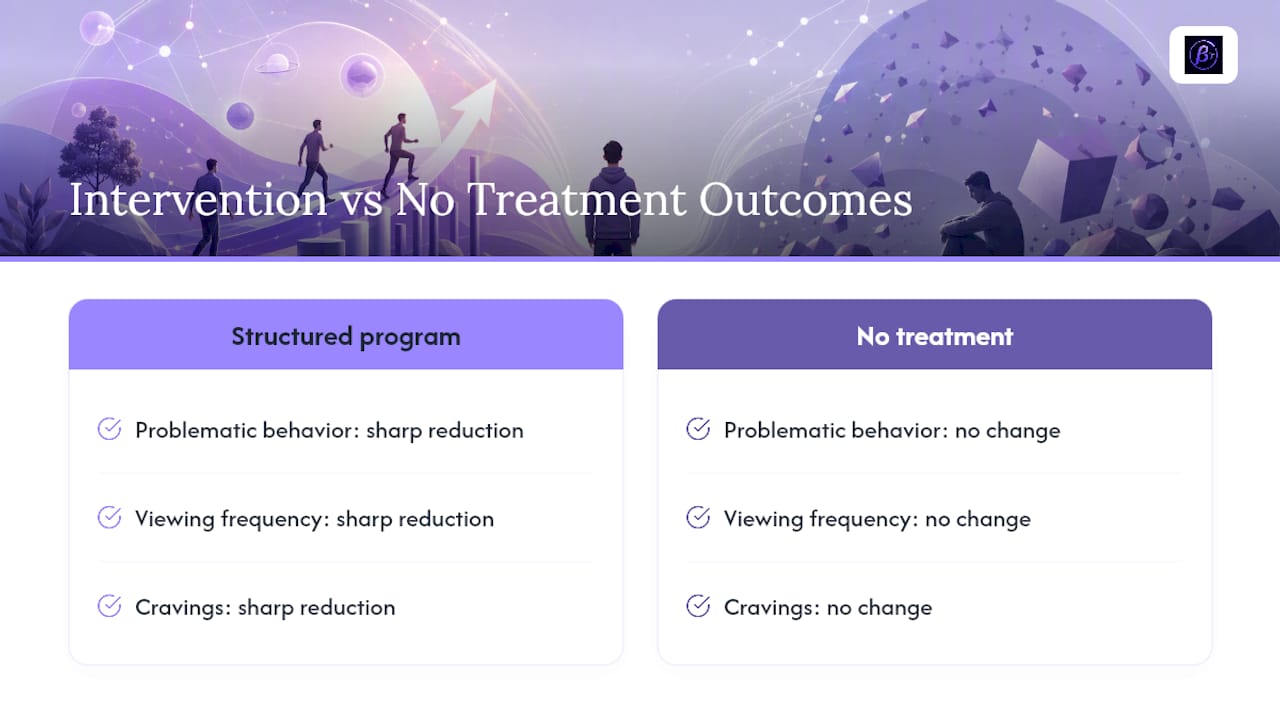
| Structure beats willpower | A six-week structured intervention produced measurable drops in compulsive behavior and cravings. |
| Know the red flags | Persistent ED, compulsive behavior, or severe mood symptoms warrant a doctor or therapist, not more willpower. |
| Project β’r offers structure | Its 30-day private program pairs daily protocols and pelvic floor training with habit logging for skill-building over shame. |
Table of Contents
- Where the NoFap Movement Started
- What People Claim They Gain From NoFap
- Does the Research Actually Support These Claims?
- How Long Does It Take to See NoFap Benefits?
- What Are the Risks of NoFap?
- When Should You See a Healthcare Professional?
- What Structured Programs Add That Willpower Alone Doesn’t
- The Bottom Line on NoFap Benefits
- What We’ve Learned Covering NoFap and Sexual Wellness
- A Structured Path if You Want More Than Willpower
- Sources
- FAQ
Where the NoFap Movement Started
NoFap traces back to bodybuilding forums and semen retention communities discussing energy and focus long before it had a name. The term itself came from a 2011 Reddit thread that grew into r/NoFap, now one of the internet’s largest self-improvement communities.
A few terms show up constantly in this space:
- NoFap: abstaining from masturbation, and often pornography, for a set period.
- Semen retention: a related but distinct practice, sometimes framed around energy conservation rather than porn reduction.
- Reboot: the idea of “resetting” arousal patterns after heavy porn use.
- PIED (porn-induced erectile dysfunction): a community term for erectile difficulty some men attribute to frequent porn use.
Motivations vary widely. Some people arrive through religious or spiritual practice, others through secular self-improvement, and a growing number through frustration with compulsive porn habits that feel out of their control.
What People Claim They Gain From NoFap
Ask around r/NoFap or scroll through nofap success stories, and the same themes repeat. Medical News Today notes that supporters commonly report improved focus, decreased pornography use, more time for other pursuits, and stronger relationship focus, though it stops short of confirming most of these as scientifically proven.
Mental and emotional benefits people describe most often:
- Improved focus and mental clarity, especially during work or study
- Greater confidence in social and romantic situations
- Reduced anxiety around sex and performance
- A clearer sense of priorities once compulsive checking stops eating up hours
Physical benefits people describe most often:
- More consistent energy throughout the day
- Better sleep quality
- Improved sexual performance during partnered sex
- Claims about improved sperm quality, which have some limited scientific support
Behavioral shifts tend to follow a pattern too. People report picking up hobbies again, showing up more present in relationships, and rebuilding exercise or sleep routines that had slipped. This is where the nofap emotional benefits people talk about most often show up, less about willpower and more about having attention back.
Now for the myths. The most persistent one is the “day 7 testosterone spike,” often repeated as fact across forums. Small studies have reported short-term hormonal changes after brief abstinence, but larger, more rigorous research does not confirm any clinically meaningful or sustained testosterone boost. The same goes for claims that NoFap cures depression or fixes a relationship on its own. It doesn’t. What it can do is remove one compulsive behavior that was making things harder to manage.
A handful of small studies show short-term hormonal shifts tied to brief abstinence periods, but nothing that supports the sweeping claims found in most NoFap success stories online.
Does the Research Actually Support These Claims?
This is where things get honest. Some of what NoFap communities describe lines up with actual research. A lot of it doesn’t.
Masturbation research. Regular, healthy masturbation is linked to short-term benefits for mood, stress relief, and sleep in multiple studies. That matters because abstaining removes those benefits too. It’s a trade-off, not a one-directional gain.
Pornography research. Studies on compulsive sexual behavior and pornography-related sexual dysfunction show mixed results, and outcomes depend heavily on study design and sample size. Some men do report sexual dysfunction tied to heavy porn use. Others show no measurable effect at all.
Abstinence and semen retention research. The evidence here is thin. Small samples have shown short-term testosterone or sperm-quality changes after brief abstinence periods, but nothing that holds up as a broad, reliable effect.
Structured program evidence. This is the strongest part of the picture. A structured six-week behavioral intervention produced sharp reductions in problematic sexual behavior, viewing frequency, and cravings compared with a group receiving no treatment. That’s a meaningful data point: structure and accountability, not raw willpower, seem to drive the biggest measurable changes.
There’s also a plausible mechanism behind why any of this feels different day to day. Dopamine, the brain’s primary reward pathway, adapts to overstimulation. Cut back on a high-intensity habit like frequent porn use, and ordinary activities can start to feel more rewarding again. That’s a real neurological pattern, even if it’s often oversold as a “dopamine detox.”
The honest summary: quitting or reducing porn use is associated with reduced compulsion and improved clarity for many people, largely through behavioral and psychological channels rather than hormonal ones. The research doesn’t support the superpower narrative. It does support the idea that cutting a compulsive habit frees up real mental bandwidth.
How Long Does It Take to See NoFap Benefits?
Timelines vary enormously, but a rough pattern shows up across most reports.
- Days 1 to 7: Expect mood swings and a “rollercoaster” feeling as habits get disrupted. Energy sometimes improves, but so does irritability.
- Days 8 to 21: Cravings often start easing for people who stick with it. Focus reportedly sharpens, though this is where confirmation bias also kicks in hardest.
- Day 30 and beyond: Habits start consolidating. Many nofap success stories describe this stretch as when new routines finally feel normal rather than forced.
The 21-day mark gets repeated so often it sounds scientific, but it’s not tied to a verified biological threshold. It likely persists because 21 days is long enough for a new routine to start feeling automatic, which lines up with general habit-formation research, not anything specific to abstinence.
Individual variation matters more than the calendar. Baseline porn use severity, existing mental health, sleep quality, and social environment all shape how fast, or whether, someone notices change.
What Are the Risks of NoFap?
Not every part of this experience is positive, and pretending otherwise does readers a disservice.
- Shame and guilt often creep in when people treat lapses as moral failures instead of normal setbacks.
- Avoiding real sex education happens when abstinence becomes a substitute for actually understanding arousal, consent, and intimacy.
- Rare physical discomfort, including epididymal hypertension, has been reported anecdotally with extended abstinence.
- Worsened anxiety shows up when people expect dramatic transformation and feel like failures when it doesn’t arrive on schedule.
- Missing proven benefits of healthy masturbation, including documented stress relief and improved sleep, is a real trade-off worth naming honestly.
Moralizing framing makes all of this worse. When abstinence gets treated as a purity test, lapses trigger shame spirals rather than course correction. That shame cycle causes more harm than the original habit did in many cases.
Pro Tip: Pair any reduction in porn use with something concrete, like better sleep, regular movement, or pelvic floor exercises, so the change feels like progress instead of restriction.
When Should You See a Healthcare Professional?
Some signs mean this isn’t something to work through alone.
- Erectile dysfunction that persists regardless of porn use or abstinence
- Compulsive sexual behavior that’s interfering with work, relationships, or daily functioning
- Suicidal thoughts or severe depression tied to sexual shame or withdrawal
- Severe withdrawal symptoms after stopping porn use
A primary care doctor, urologist, or sex therapist is the right first call. Expect a medical history review, a look at current medications, and a behavioral assessment. If porn use itself is the core issue, structured reduction paired with evidence-based therapy tends to work better than cold-turkey shame tactics.
What Structured Programs Add That Willpower Alone Doesn’t
Willpower runs out. Structure doesn’t, at least not the same way. That six-week behavioral intervention mentioned earlier didn’t work because participants tried harder. It worked because they followed a repeatable system with daily accountability built in.
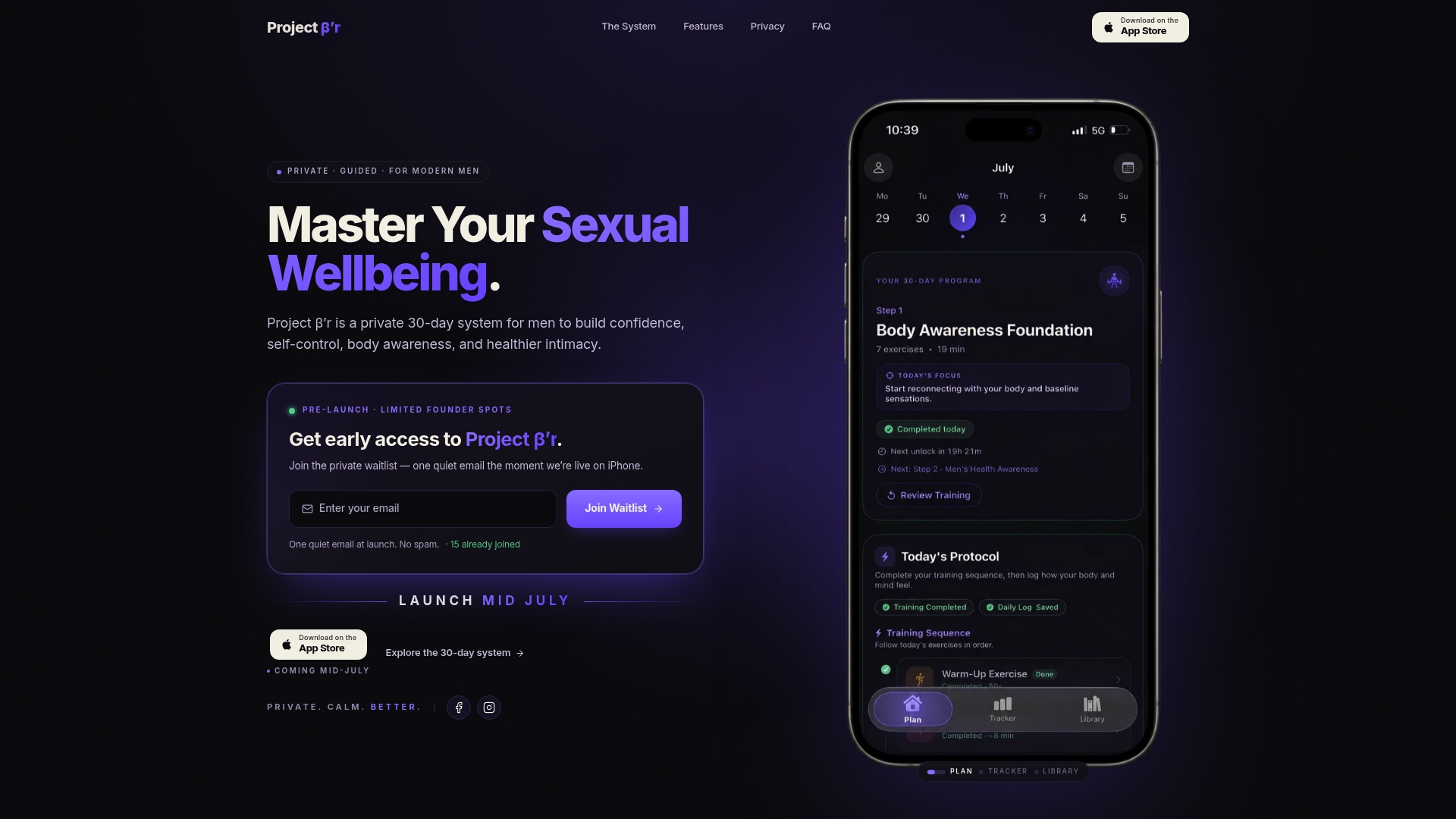
That’s the model Project β’r is built around: a private 30-day program with daily protocols, guided pelvic floor training, movement exercises, guided meditations, and habit logging designed to replace compulsive patterns with skill-building instead of shame.
Structure works because it removes decision fatigue. You’re not relying on willpower at 11 p.m.; you’re following a plan you already committed to.
To be clear: this is not medical treatment, and it’s not a substitute for clinical care when red flags show up. It’s a structured path for men who want daily accountability and a judgment-free framework rather than another motivational post promising overnight change.
The Bottom Line on NoFap Benefits
NoFap can genuinely help some people reduce compulsive porn use and reclaim time and mental clarity. Most of the “superpower” claims circulating online don’t hold up against actual research.
- Behavioral and psychological gains are real for many people; hormonal miracles are not.
- Combine any habit change with sleep, movement, and other supportive routines rather than relying on abstinence alone.
- Seek professional care when persistent dysfunction, compulsive behavior, or mental health symptoms show up.
An evidence-based, nonshaming approach beats a purity-test mentality every time.
What We’ve Learned Covering NoFap and Sexual Wellness
The gap between NoFap forums and the research is smaller than critics claim and much smaller than true believers claim. Both sides tend to talk past each other.
What gets lost in that argument is the actual mechanism doing the work: structure. Men who see real change usually aren’t relying on abstinence itself. They’re replacing a compulsive habit with a routine that gives them something to do instead, whether that’s breaking impulsive patterns in a relationship or building a daily practice around movement and reflection. The abstinence is almost incidental. The structure is the active ingredient.
We think the moralizing wing of NoFap culture does real damage by treating lapses as character failures. And we think the skeptics dismissing the entire movement miss that a six-week structured intervention produced real, measurable drops in compulsive behavior. Both things can be true at once: the superpower claims are mostly noise, and structured behavior change genuinely works.
A Structured Path if You Want More Than Willpower
If you’ve read this far, you already know willpower alone rarely sticks. Project β’r is built for exactly that gap: a private 30-day iOS program that replaces guesswork with a daily structure covering movement exercises, guided pelvic floor training, habit and mood logging, and short guided meditations, all designed around building self-control and confidence rather than punishing lapses.
This isn’t medical treatment, and it won’t replace a urologist or therapist if you’re dealing with the red flags covered earlier. It’s built for men who want a private, judgment-free framework for changing habits day by day, with daily protocols instead of a single motivational push that fades by week two. Every plan includes a free trial, so you can see how the structure feels before committing to a longer subscription. If NoFap has felt like an uphill battle with no real plan behind it, start the 30-day program and see what daily structure actually changes.
Sources
- Masturbation abstinence is popular, and doctors are worried : Consider This from NPR : NPR
- NoFap Movement: Benefits of not masturbating
- NoFap Benefits: Overhyped or Worth the Sacrifice? — Healthline
- What Happens When You Quit Porn - A Real Timeline
- Dopamine: The pathway to pleasure — Harvard Health
FAQ
What are the benefits of not ejaculating for 21 days?
Most reported benefits, sharper focus, reduced cravings, better mood, are behavioral rather than hormonal, and the 21-day mark isn’t tied to any confirmed biological threshold.
Why does masturbation feel so good?
Masturbation triggers dopamine release through the brain’s reward pathway, which is why it produces immediate feelings of pleasure and stress relief.
Is there any benefit to not ejaculating?
Some small studies report short-term hormonal shifts after brief abstinence, but the clearest benefits people experience come from reduced compulsive porn use rather than physiological changes from not ejaculating itself.
Is it healthy to never masturbate?
Regular masturbation has documented benefits for mood, stress relief, and sleep, so long-term complete abstinence means giving up those benefits without strong evidence of an equivalent physical upside.
How do structured programs like Project β’r differ from just quitting porn cold turkey?
Structured programs pair habit change with daily accountability, tracking, and skill-building exercises, which research on behavioral interventions suggests produces more consistent results than willpower alone.