Male Internal Pelvic Floor Physical Therapy for Men
TL;DR:
- Male internal pelvic floor physical therapy involves internal assessment and treatment to improve urinary, sexual, and pelvic comfort. It effectively addresses conditions like incontinence, pelvic pain, and erectile dysfunction, especially after prostate surgery. The therapy, guided by a trained therapist and with voluntary internal exams, restores muscle coordination, enhances sexual confidence, and promotes faster recovery.
Male internal pelvic floor physical therapy is the clinical practice of evaluating and treating men’s pelvic floor muscles through internal assessment to improve urinary control, sexual function, and pelvic comfort. The pelvic floor is a group of muscles, ligaments, and connective tissues that support the bladder, bowel, and sexual organs. When these muscles become overactive, weak, or poorly coordinated, men experience symptoms ranging from urinary leakage to erectile dysfunction and chronic pelvic pain. Pelvic floor physical therapy is highly effective for post-prostatectomy continence recovery, with promising benefits for erectile dysfunction and chronic pelvic pain syndrome. This therapy is underused in men, but the evidence supporting it is growing steadily.
How is male internal pelvic floor physical therapy performed?
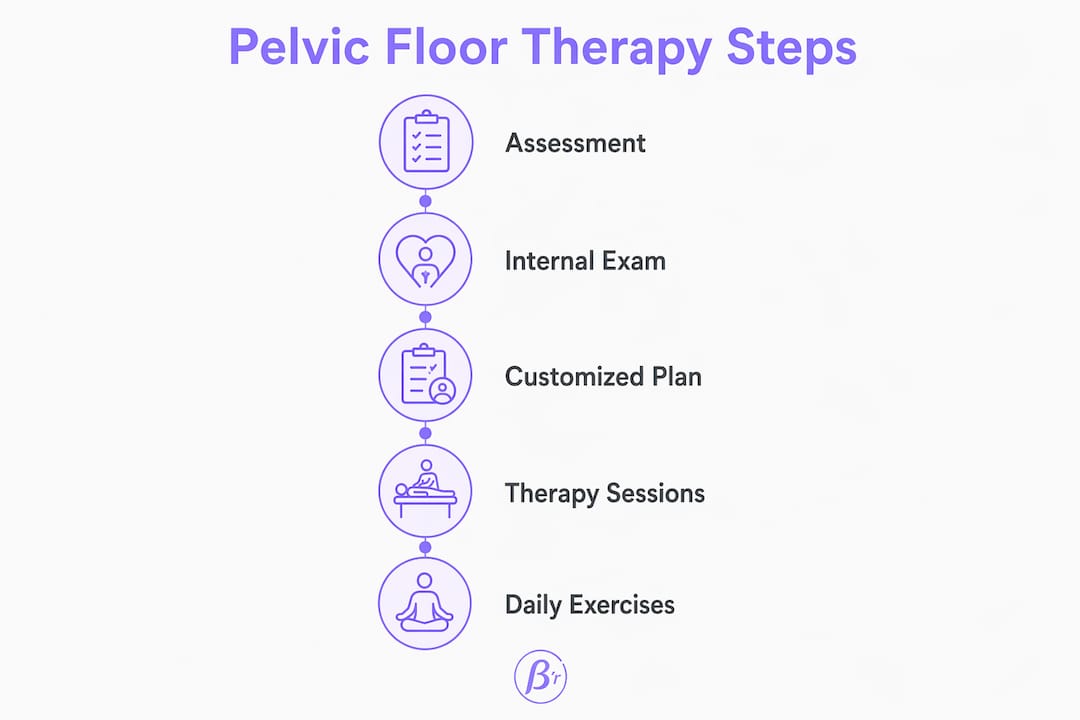
A trained pelvic floor physical therapist conducts this therapy through a structured session that combines evaluation, manual treatment, and muscle retraining. The process is methodical and always guided by your comfort and consent.
A typical session follows this sequence:
- Medical history review. The therapist asks about your symptoms, surgical history, bladder habits, and sexual health concerns. This takes 15–20 minutes and sets the foundation for your individualized plan.
- External assessment. The therapist evaluates your posture, breathing mechanics, hip mobility, and abdominal wall function. Whole-body assessment including the diaphragm and hip mobility is required for long-term success.
- Internal exam (optional). With your consent, the therapist performs a rectal internal exam to directly assess muscle tone, trigger points, and coordination. This is the clinical gold standard for precision. Internal exams are voluntary and can be declined without compromising the quality of your care.
- Manual therapy. The therapist applies gentle pressure to release tight muscles, reduce trigger points, and restore normal tissue mobility.
- Muscle retraining. You practice specific contractions and relaxation patterns, often guided by verbal cues or biofeedback. Breathing exercises are integrated to coordinate the diaphragm with pelvic floor activity.
The internal component is what separates this therapy from general exercise guidance. External observation alone cannot detect subtle asymmetries in muscle tone or locate specific trigger points that drive pain and dysfunction.
Pro Tip: Ask your therapist to explain each step before it happens. Informed patients report less anxiety and better muscle relaxation during internal assessments, which directly improves the accuracy of the evaluation.
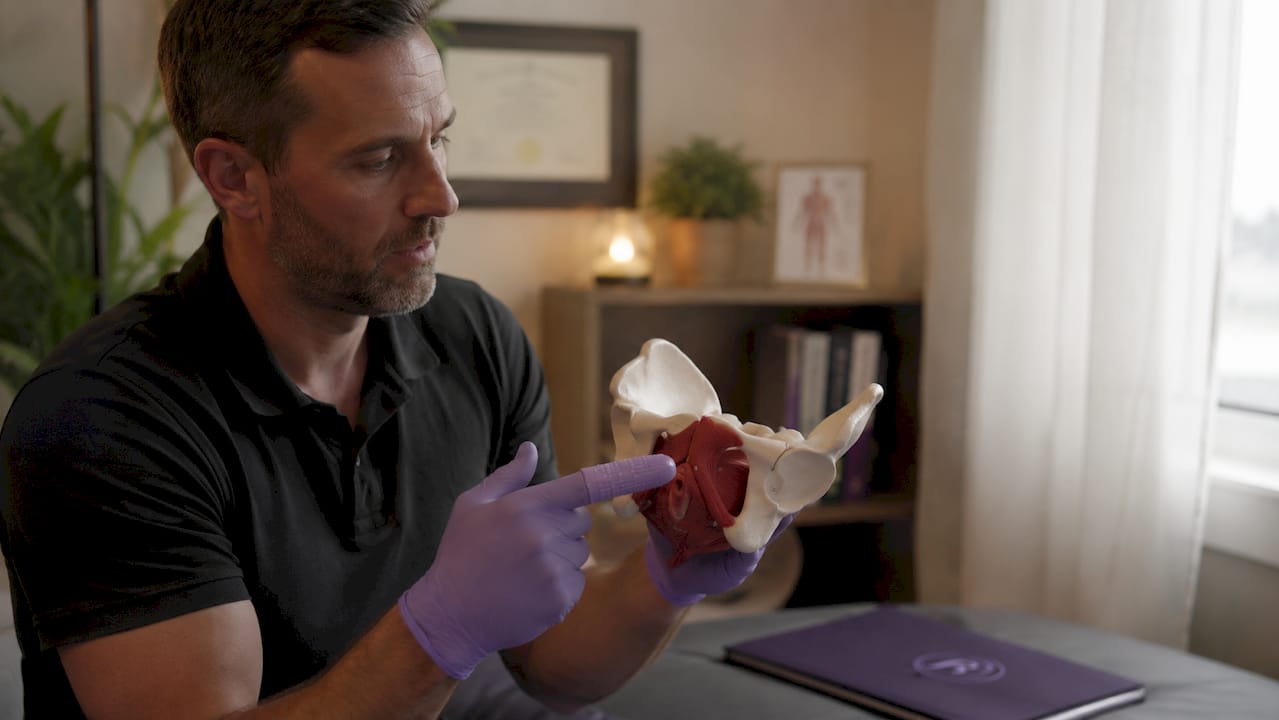
What does pelvic floor dysfunction look like in men?
Male pelvic floor dysfunction is defined by overactive, tight muscles far more often than by weakness. This distinction matters because the wrong treatment, such as aggressive Kegel exercises on already tense muscles, makes symptoms worse.
Common conditions that internal pelvic floor therapy addresses in men include:
- Chronic pelvic pain syndrome. Persistent aching or pressure in the perineum, lower abdomen, or tailbone, often misdiagnosed as prostatitis.
- Urinary incontinence. Leakage triggered by coughing, lifting, or urgency, particularly common after prostate surgery.
- Erectile dysfunction. Impaired blood flow and muscle coordination reduce the ability to achieve or maintain erections.
- Premature ejaculation. Poor voluntary control over the bulbocavernosus and ischiocavernosus muscles contributes directly to this condition.
- Painful intercourse or ejaculation. Muscle spasm and trigger points in the pelvic floor create sharp or burning pain during sexual activity.
- Urinary hesitancy or incomplete emptying. Overactive muscles can obstruct normal urine flow even without a structural blockage.
Symptoms frequently go untreated for years because they overlap with urological conditions like benign prostatic hyperplasia or prostatitis. A pelvic floor physical therapist trained in men’s health can differentiate muscle-driven dysfunction from structural causes. Men with sudden symptoms such as blood in urine or fever require urgent urologist evaluation before starting physical therapy.
What should men expect when preparing for therapy?
Preparation reduces anxiety and helps you get more from your first session. Knowing what to expect before you walk in makes the process feel private and controlled, not clinical and cold.
Key things to know before your first appointment:
- Initial sessions run 45–60 minutes. The first evaluation includes detailed medical history, movement assessments, and functional testing. Treatment may begin in the same session.
- Post-surgical timing matters. Men recovering from prostate surgery typically begin therapy 1–2 weeks after catheter removal. Starting early correlates directly with faster recovery of urinary control.
- You set the pace. The internal component is never forced. You can request to start with external assessment only and progress to internal evaluation when you feel ready.
- Biofeedback tools may be used. Point-of-care ultrasound is a growing biofeedback tool that gives you real-time visual feedback on muscle activation. Seeing your own muscles respond on a screen improves compliance and speeds rehabilitation.
- Structural causes must be ruled out first. If your symptoms are sudden or acute, your therapist will refer you to a urologist before proceeding with hands-on treatment.
Your therapist builds an individualized treatment plan after the first session. This plan outlines session frequency, home exercise protocols, and measurable goals. Progress is tracked at each visit so you can see concrete improvement over time.
Pro Tip: Wear comfortable, loose clothing to your first appointment. You will be asked to move through functional positions like squatting and standing, and relaxed clothing makes the movement assessment more accurate.
Common concerns and misconceptions about internal pelvic floor therapy
Men avoid this therapy for reasons that are understandable but largely based on incomplete information. Addressing these directly removes the barriers that delay care.
| Concern | Reality |
|---|---|
| “The internal exam is invasive and uncomfortable” | The exam uses one gloved finger and is performed gently. Most men report mild pressure, not pain. |
| “I can just do Kegels at home” | Kegels strengthen muscles. They do not release overactive muscles or treat trigger points, which are the most common male pelvic floor problem. |
| “This therapy is only for women” | Men’s pelvic floor anatomy is distinct, and specialized therapists train specifically in male assessment and treatment protocols. |
| “I have to do the internal exam” | The internal component is always voluntary. Declining it does not prevent effective treatment. |
| “My doctor would have referred me if I needed this” | Men see 3–7 providers before pelvic floor dysfunction is accurately identified. Under-referral is a documented systemic problem. |
Many physical therapists also feel underprepared to treat male pelvic floor dysfunction due to gaps in standard training programs. This means finding a therapist who specializes in men’s pelvic health is worth the extra effort. Seeking out a pelvic floor doctor for men with documented experience in male assessment gives you a measurably better outcome.
How does internal pelvic floor therapy improve sexual health and confidence?
The connection between pelvic floor muscle function and sexual health is direct and physiological. Therapy does not just reduce symptoms. It restores the physical foundation that sexual confidence is built on.
Evidence-backed benefits include:
- Improved erectile function. The ischiocavernosus and bulbocavernosus muscles compress the veins that drain blood from the penis. When these muscles are retrained, blood retention during erection improves. Pelvic floor therapy shows promising outcomes for erectile dysfunction with growing clinical support.
- Greater ejaculatory control. Voluntary control over the pelvic floor muscles gives men the ability to delay ejaculation. A 2024 narrative review found good outcomes for premature ejaculation through pelvic floor physical therapy, though researchers call for larger trials.
- Faster continence recovery after prostate surgery. A 2024 meta-analysis found that therapist-guided muscle training with biofeedback produced superior continence outcomes at 1–6 months compared to home programs alone.
- Reduced pelvic pain during sex. Releasing trigger points and normalizing muscle tone eliminates the physical source of painful intercourse or ejaculation.
- Psychological confidence. Men who regain physical control report reduced performance anxiety and greater comfort in intimate situations. The body and mind respond together.
Integrating pelvic floor therapy with structured daily habits, including breathing practices, mindful movement, and awareness exercises, compounds these benefits. Physical therapy addresses the muscle. Daily practice reinforces the pattern.
Key Takeaways
Male internal pelvic floor physical therapy is the most direct clinical path to resolving urinary dysfunction, pelvic pain, and sexual health issues in men, and it works best when started early with a specialist.
| Point | Details |
|---|---|
| Internal exams are voluntary | You can decline the internal component without losing access to effective treatment. |
| Overactive muscles are the main issue | Most men have tight, not weak, pelvic floors. Kegels alone will not fix this. |
| Start therapy early after surgery | Beginning 1–2 weeks post-catheter removal speeds urinary control recovery significantly. |
| Specialist selection matters | Men see 3–7 providers before diagnosis. Seek a therapist trained specifically in male pelvic health. |
| Therapy improves sexual confidence | Retraining pelvic muscles directly improves erectile function, ejaculatory control, and reduces pain during sex. |
What I’ve learned from watching men wait too long
Men come to pelvic floor therapy late. Not because they don’t want help, but because no one told them this option existed. That’s the part that stays with me.
The clinical picture is consistent. A man spends months, sometimes years, cycling through urologists, primary care physicians, and online forums. He tries supplements. He tries ignoring it. By the time he reaches a pelvic floor specialist, the dysfunction is entrenched and the psychological weight of it has grown heavier than the physical symptoms.
What I’ve found is that the men who do best are the ones who come in willing to be assessed as a whole person, not just a set of symptoms below the waist. The diaphragm, the hips, the spine, and the pelvic floor all function as one system. Treating the pelvic floor in isolation misses half the picture. The therapists who understand this produce the best outcomes.
The internal exam hesitation is real, and I respect it. But the men who allow a full assessment consistently report faster progress. The precision of internal evaluation is not a formality. It changes the treatment plan in ways that external observation simply cannot replicate.
My honest recommendation: don’t let social discomfort delay a clinical decision. Pelvic floor dysfunction is not a character flaw. It is a muscle coordination problem with a structured, private, and effective solution. You deserve access to that solution without shame attached to it.
— Projectbetter
Structured support for men working on pelvic health
Physical therapy addresses the clinical side of pelvic floor dysfunction. What happens between sessions, and how you build daily awareness around your body, determines how fast and how fully you recover.

Projectbetter is a private 30-day program built for men working on sexual wellbeing and confidence. It includes structured daily protocols with pelvic floor training, movement exercises, and guided reflections designed to complement clinical therapy. The program runs on your schedule, in private, with no judgment attached. Men working through post-surgical recovery, chronic pelvic pain, or sexual confidence issues use it to build consistent daily habits that reinforce what therapy starts. If you’re ready to add structure to your recovery, the Projectbetter program gives you a clear, calm, and private path forward.
FAQ
Can men do pelvic floor therapy?
Yes. Pelvic floor physical therapy is fully applicable to men and addresses conditions including urinary incontinence, erectile dysfunction, premature ejaculation, and chronic pelvic pain.
Is the internal exam required for male pelvic floor therapy?
The internal exam is the clinical gold standard but is never mandatory. Patients maintain full autonomy and can decline the internal component without losing access to effective treatment.
How long does it take to see results from pelvic floor therapy?
Men recovering from prostate surgery often see measurable continence improvement within 1–6 months of therapist-guided training. Results for chronic pelvic pain and sexual dysfunction vary based on symptom duration and consistency of practice.
What kind of doctor refers men to pelvic floor therapy?
Urologists, colorectal surgeons, and primary care physicians can all refer men to pelvic floor physical therapy. Because men see an average of 3–7 providers before receiving an accurate diagnosis, self-referral to a specialist in men’s pelvic health is a valid and often faster path.
How do internal pelvic floor exercises differ from standard Kegels?
Standard Kegels strengthen the pelvic floor through repeated contraction. Internal pelvic floor exercises, guided by a therapist, also include muscle release, trigger point treatment, and coordination training that Kegels alone cannot provide.