Guided Meditations for Sexual Health: A Practice Guide
A short daily set of guided meditations — breath-based grounding, a body-scan, and a pelvic-floor awareness script — reliably reduces performance anxiety and raises sexual presence when practiced consistently. You can start right now with three micro-practices:
- 5-minute breath grounding: Sit quietly, inhale for 4 counts, hold for 2, exhale for 6. Repeat 5 times. This activates the parasympathetic nervous system and pulls attention away from performance thoughts.
- 3-minute pelvic awareness: After the breath work, gently contract and release the pelvic floor 10 times, slow and deliberate. Notice sensation without judgment.
- 2-minute partner presence cue: Before intimacy, place one hand on your chest, one on your belly, and take three slow breaths together with your partner. Speak one honest sentence about how you feel right now.
Calming effects tend to appear within a few days of consistent practice. Measurable gains in confidence and self-control usually follow after several weeks of daily repetition.
Table of Contents
- How mindfulness and meditation actually improve sexual health
- Which types of guided meditations work best for sexual wellness
- How to build a practice that actually sticks
- Three ready-to-use guided meditation scripts
- What the research actually shows
- When to seek professional help instead of practicing alone
- Key Takeaways
- Why mindfulness alone is not enough — and what to do instead
- A structured program for men who want more than scripts
- Useful sources and further reading
- FAQ
How mindfulness and meditation actually improve sexual health
The connection between a calm mind and a responsive body is not abstract. It runs through four concrete mechanisms, each of which maps directly to outcomes men care about.

Reduced cognitive interference. Performance anxiety is essentially the mind hijacking the body. Clinical literature links mindfulness practices to decreased cognitive interference during sex, which means less mental noise and more physical presence. When the internal critic quiets, arousal can follow its natural course.
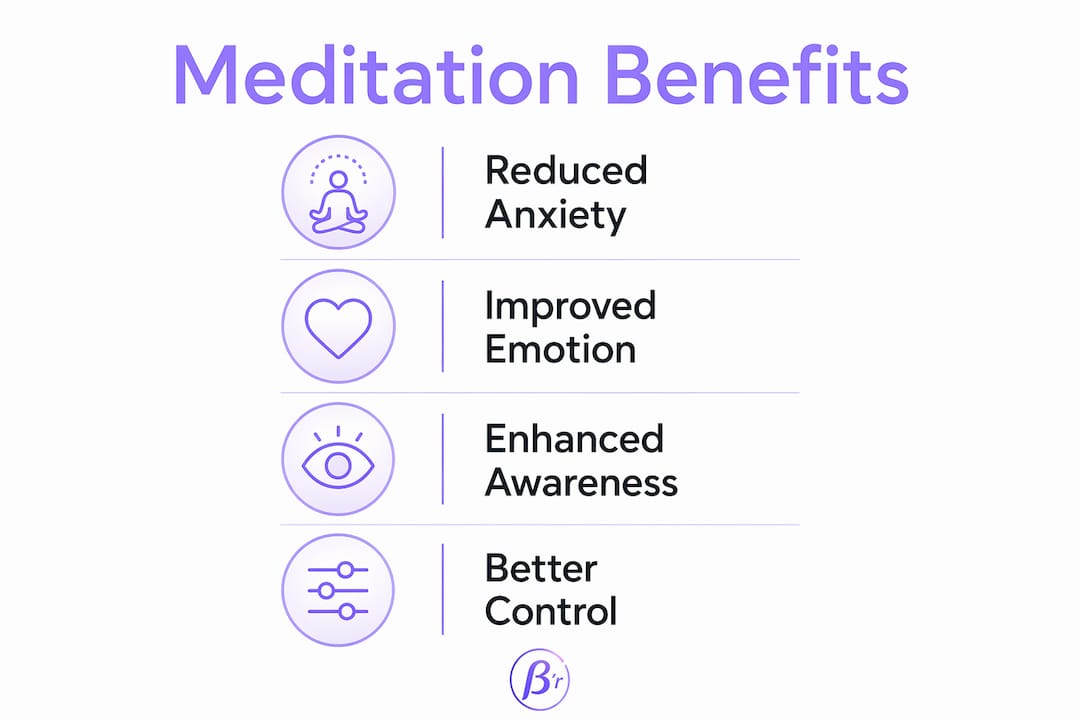
Improved emotion regulation. Dispositional mindfulness predicts better sexual outcomes partly because it builds the capacity to notice anxiety or frustration without being controlled by them. You feel the pressure; you don’t act from it.
Increased interoceptive awareness. Interoception is the ability to sense what is happening inside your body. Guided body-scan practices train this directly. Men who develop stronger interoception tend to notice arousal earlier, respond to physical cues more accurately, and feel more connected during sex.
Nervous-system downregulation. Chronic stress keeps the sympathetic nervous system elevated, which suppresses desire and can interfere with erection and ejaculatory control. Breath-based relaxation techniques for libido work by shifting the body toward a parasympathetic state, where sexual response is physiologically possible.
A 2025 daily-diary study of 297 couples found that on days when individuals reported higher sexual mindfulness than their own average, both partners experienced higher sexual satisfaction, increased desire, and lower sexual distress — tracked across 35 consecutive days.
One distinction worth holding: general mindfulness training does not automatically transfer into sexual situations. Sexual-context mindfulness — practiced with sex-specific cues and intentions — has unique associations with sexual and relational wellbeing that trait mindfulness alone does not fully explain. Targeted practice matters.
Which types of guided meditations work best for sexual wellness
Not every meditation serves the same purpose. Matching the practice to your need is what makes the difference between a useful tool and a pleasant distraction.
- Breath grounding (5–10 minutes daily): Best for performance anxiety and pre-intimacy calming. Slow, counted breathing shifts the nervous system quickly. Use it every morning or in the 5 minutes before sex.
- Body-scan for sensual awareness (10–15 minutes, evening): Builds interoception and reduces body shame. Attention moves slowly from feet to crown, pausing at areas of sensation without judgment. Best for men who feel disconnected from their bodies.
- Pelvic-floor somatic scripts (5–10 minutes daily): Combines breath with deliberate pelvic-floor contractions and releases. Directly trains the muscles involved in ejaculatory control and erection quality. Pairs naturally with pelvic floor training programs.
- Loving-kindness / self-compassion (10 minutes, as needed): Directs warm attention toward yourself and your partner. Reduces shame and self-criticism, which are among the most common psychological brakes on desire.
- Sensate-focus style mindfulness (15–20 minutes, partnered): Attention on touch and sensation rather than outcome. Removes performance pressure by making awareness itself the goal.
- Partner synchronized breathing (5–10 minutes, partnered): Breath-matching creates physiological attunement. Useful for couples who feel emotionally distant or who want a low-pressure intimacy ritual.
| Challenge | Best practice type | Session length |
|---|---|---|
| Low desire | Loving-kindness + body-scan | 10–15 min daily |
| Performance anxiety | Breath grounding | 5–10 min pre-intimacy |
| Difficulty with arousal | Body-scan + pelvic-floor somatic | 10–15 min daily |
| Pain during sex | Trauma-sensitive body-scan (solo) | 10 min; clinician referral advised |
| Emotional disconnection | Partner synchronized breathing | 5–10 min partnered |
| Ejaculatory control | Pelvic-floor somatic script | 5–10 min daily |
How to build a practice that actually sticks
Setup matters more than most guides admit. A private, consistent environment removes the friction that kills new habits.
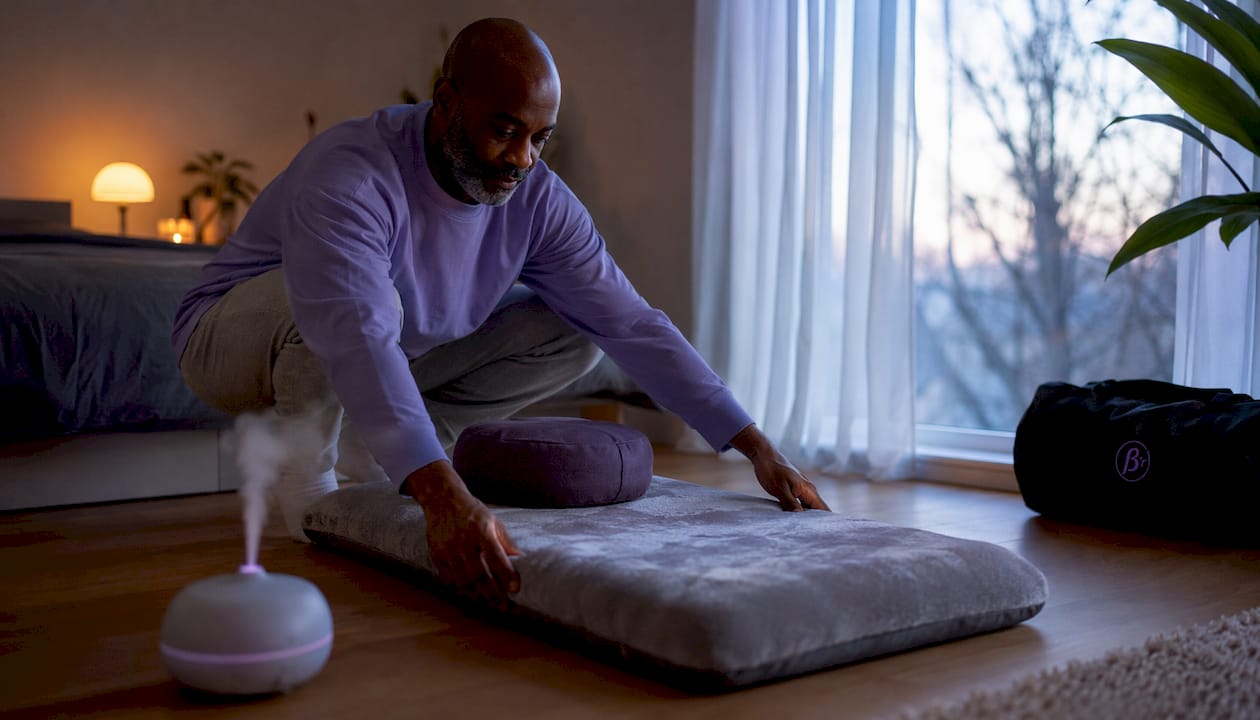
Environment and timing: Choose a quiet space where you will not be interrupted. Morning practice tends to build the strongest habit; pre-intimacy practice delivers the most immediate effect. A simple timer and optional headphones are the only equipment you need.
A 4-week progressive plan:
- Week 1 — Calming foundation: 5 minutes of breath grounding each morning. Goal: establish the habit and notice how your baseline anxiety shifts. No pelvic work yet.
- Week 2 — Body awareness: Add a 10-minute body-scan 3–4 evenings per week. Goal: identify where you hold tension and begin building interoceptive skill.
- Week 3 — Somatic integration: Introduce the pelvic-floor awareness script (5–10 minutes) on alternate mornings. Goal: connect breath, pelvic sensation, and mental presence in one session.
- Week 4 — Applied practice: Use a 2–5 minute pre-intimacy breath-and-pelvic cue before sexual encounters. Goal: carry the calm you have built in solo practice into real situations.
Before-intimacy micro-protocol (2–5 minutes): Sit or lie comfortably. Three slow breaths, exhaling twice as long as you inhale. Gently contract the pelvic floor on the inhale, release fully on the exhale. Repeat 5 times. Then spend 60 seconds scanning your body from head to toe, simply noticing. That is the whole protocol.
Troubleshooting checklist:
- Distraction during practice: Label the thought (“planning,” “worrying”) and return to breath. This is the practice, not a failure.
- Emotional flooding: Slow the breath further, open your eyes, and ground by pressing feet into the floor. If distress persists, pause and seek support.
- Low motivation: Shorten the session to 3 minutes rather than skipping. Consistency beats duration.
- Physical discomfort: Adjust posture. Never force pelvic contractions through pain.
Pro Tip: Set a recurring phone reminder labeled something private and neutral — “morning reset” works well. The label removes any hesitation about opening the app in shared spaces.
Three ready-to-use guided meditation scripts
These scripts are written to be read aloud, recorded on your phone, or followed silently. Delivery notes are included for each.
Script A: Breath grounding and pelvic-floor awareness (3–5 minutes)
Delivery: slow, steady voice, roughly 90–100 words per minute. Pause at each ellipsis for 3–4 seconds.
“Find a comfortable seat. Close your eyes or soften your gaze downward. Take one full breath in through your nose… and release it slowly through your mouth. Again — inhale… and exhale, letting the belly fall. Now, as you breathe in, gently draw the pelvic floor upward — a soft lift, not a clench. Hold for two counts… and release completely as you exhale. Feel the difference between tension and release. Repeat this five times at your own pace. With each exhale, let your shoulders drop a little further. You are here. You are present. Nothing is required of you right now except this breath.”
Best for: mornings, or 3–5 minutes before intimacy. Repeat daily.
Script B: Body-scan for sensual presence (10–12 minutes)
Delivery: unhurried, warm tone, 80–90 words per minute. Longer pauses between body regions.
“Lie down comfortably. Close your eyes. Begin with three slow breaths, each exhale a little longer than the last. Now bring your attention to the soles of your feet. Simply notice — warmth, pressure, tingling, or nothing at all. No judgment. Move slowly upward: calves, knees, thighs. Pause at each area and breathe into it. When you reach the pelvis, stay here a little longer. Notice any holding, any tightness. Breathe into it gently and let it soften. Continue upward: belly, chest, hands, arms, shoulders, throat, face. When you reach the crown of your head, take one full breath and let your awareness expand outward. You are a body that is safe, present, and capable of pleasure. Rest here for a moment before you open your eyes.”
Best for: evenings, 3–4 times per week. Builds interoception and reduces body shame over time.
Script C: Partnered presence meditation (8–10 minutes)
Delivery: read together or have one partner guide. Explicit consent check before beginning.
“Before we start, check in with each other: are you both comfortable and willing to be here together right now? A simple yes is enough. Sit facing each other, close enough to hold hands. Place your right palm in your partner’s left palm, and rest your other hand on top. Close your eyes. Begin to breathe at your own pace, and gradually let your breath find a shared rhythm — not forced, just noticing when your exhales begin to align. Stay here for two minutes, breathing together. Now, open your eyes softly and hold each other’s gaze without speaking. Let your breath continue. If a thought arises, return to the sensation of your partner’s hand in yours. After two more minutes, each of you speaks one sentence: ‘Right now, I feel…’ No elaboration needed. Close with three shared breaths, then release hands gently.”
Safe exit cue: either partner may say “pause” at any time to stop without explanation. This is always respected.
For building intimacy with a partner, this script works well as a weekly ritual, not just a pre-sex protocol.
What the research actually shows
The evidence base for mindfulness and sexual health has grown substantially over the past decade. Here is a concise summary of the most relevant findings.
| Study | Sample | Key finding |
|---|---|---|
| Sexual mindfulness and wellbeing (2019) | 194 midlife married adults | Sexual mindfulness predicted higher self-esteem, relational satisfaction, and sexual satisfaction, independent of trait mindfulness |
| Daily diary study (2025) | 297 couples, 35 days | Within-person increases in sexual mindfulness linked to same-day higher satisfaction, increased desire, and lower distress in both partners |
| Dispositional mindfulness and sexual outcomes (2018) | Multiple observational studies | Higher trait mindfulness predicts better sexual functioning and emotion regulation across partnered and single individuals |
| Clinical sex therapy review | Clinical literature | Mindfulness reduces psychological “brakes” — inhibitory systems that suppress desire or cause distraction during sex |
What these findings mean practically:
- Daily practice matters more than session length. The 2025 couples study tracked within-person variation day by day, showing that the days you practice are the days both you and your partner feel better.
- Sex-specific training outperforms general mindfulness for sexual outcomes. A 2019 study controlled for trait mindfulness and still found unique effects from sexual-context mindfulness. General meditation apps are a starting point, not a complete solution.
- Expect a gradual curve. Early relaxation benefits tend to appear within the first few weeks. Clinically meaningful gains in control and confidence typically require consistent daily practice over multiple months.
When to seek professional help instead of practicing alone
Guided meditations are a genuine tool. They are not a substitute for clinical care when clinical care is what the situation calls for.
Red flags that warrant professional evaluation:
- Persistent pain during or after sex (always see a physician first)
- Erectile difficulties that do not respond to stress reduction or lifestyle changes
- Complete absence of desire for several weeks, especially alongside low mood or fatigue
- Intrusive memories, flashbacks, or dissociation during intimacy (trauma-informed therapy is indicated)
- Thoughts of self-harm or persistent hopelessness
Referral matrix:
- Medical evaluation first: pain during sex, erectile dysfunction with no psychological trigger, hormonal symptoms (low energy, mood changes, reduced libido alongside physical symptoms).
- Sex therapy: performance anxiety that persists despite self-practice, desire discrepancy in a relationship, difficulty with arousal or orgasm without a medical cause. The American Association of Sexuality Educators, Counselors and Therapists (AASECT) maintains a therapist directory at aasect.org.
- Trauma-informed therapy: any history of sexual trauma, abuse, or experiences that surface during body-based practice. A licensed therapist trained in somatic approaches or EMDR is appropriate here.
For men dealing with performance anxiety, self-guided practice is a strong first step — but knowing when to bring in professional support is part of a mature, grounded approach to your own wellbeing.
Safety tips for partnered practice:
- Establish a clear safe word or exit cue before any partnered meditation.
- Never use touch-based practices with a partner without explicit, verbal consent.
- If either partner feels distressed, stop immediately and check in before continuing.
- Trauma-sensitive modifications: keep eyes open, stay seated upright, and skip touch anchors until both partners feel fully comfortable.
This article provides general information, not medical or therapeutic advice. For diagnostic questions or persistent sexual health concerns, consult a qualified clinician or licensed sex therapist.
Key Takeaways
Sexual mindfulness practiced daily — not just occasionally — produces measurable improvements in desire, satisfaction, and distress for both partners, as shown in a 35-day couples study.
| Point | Details |
|---|---|
| Daily practice drives results | Within-person increases in sexual mindfulness link to same-day gains in satisfaction and lower distress for both partners. |
| Sex-specific training matters | General mindfulness does not fully transfer; targeted sexual-context practice produces unique benefits beyond trait mindfulness. |
| 4–6 week timeline | Calming effects appear within days; meaningful confidence and control gains typically require consistent practice over 4–6 weeks. |
| Know when to escalate | Persistent pain, trauma responses, or erectile dysfunction unresponsive to self-care warrant medical or therapeutic evaluation. |
| Projectbetter’s 30-day program | Projectbetter combines daily guided audio meditations, pelvic-floor training, and habit tracking in a private iOS app structured around this approach. |
Why mindfulness alone is not enough — and what to do instead
Most men who try meditation for sexual health start with a general mindfulness app. They sit, they breathe, they feel calmer. And then nothing much changes in the bedroom. That gap is not a personal failure. It reflects a real limitation in how general mindfulness training works.
The research is clear on this: sexual-context mindfulness has distinct associations with sexual wellbeing that trait mindfulness does not fully explain. Sitting with a breath-counting app for 10 minutes each morning builds a useful skill. But it does not teach you to stay present when arousal rises, when performance pressure spikes, or when your attention drifts to self-evaluation mid-encounter. Those are specific situations that require specific practice.
This is why Projectbetter’s approach pairs mindfulness with somatic pelvic-floor work. The pelvic floor is not just a muscle group — it is a feedback loop. Learning to contract and release it deliberately, in sync with breath, builds the kind of body awareness that transfers directly into sexual situations. It is targeted. It is private. And it works in a way that generic relaxation practice does not.
The 30-day structure in Project β’r reflects this logic: start with calming, add body awareness, integrate pelvic-floor training, then apply it. That progression is not arbitrary. It mirrors how the nervous system actually learns new patterns — gradually, with repetition, and with enough specificity to stick.
One more thing worth saying plainly: this kind of practice requires honesty with yourself. Shame, avoidance, and self-criticism are the real obstacles, not technique. The meditations in this article are designed to meet you where you are, without judgment. That is the only starting point that works.
A structured program for men who want more than scripts
The scripts and protocols in this article give you a real foundation. If you want a complete, private program that builds on them day by day, Projectbetter is built for exactly that.
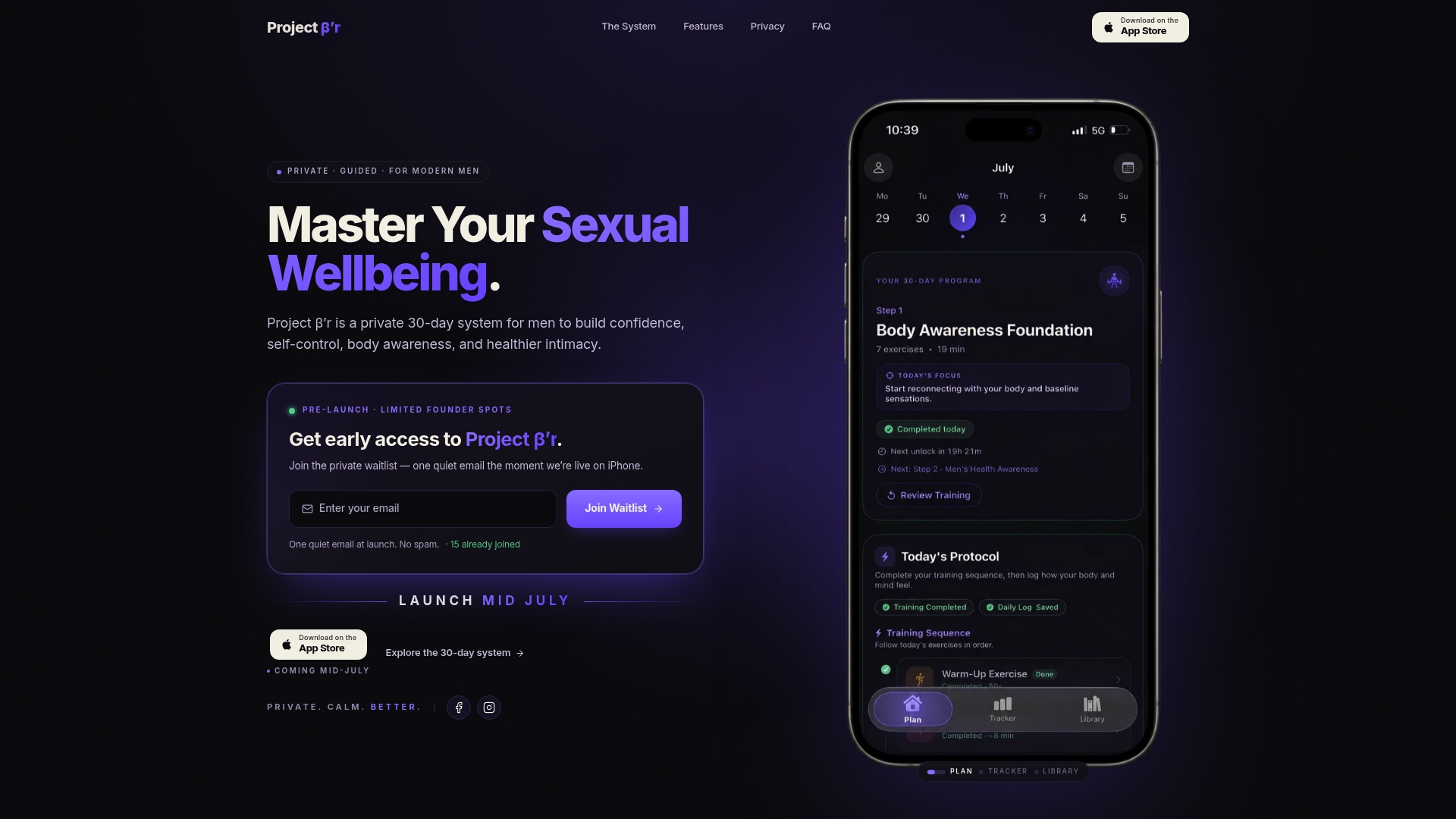
Project β’r is a private 30-day iOS program designed for men who want a structured, evidence-informed path to better sexual confidence and control. Each day includes a guided audio meditation, a pelvic-floor training session, a movement protocol, and a short self-reflection prompt. Progress, mood, and habits are tracked privately — no public profile, no shared data. The program is built around the same mindfulness-plus-somatic approach this article describes, with the daily scaffolding that makes consistency realistic rather than aspirational.
It suits men dealing with performance pressure, low confidence, impulsive habits, or a sense of disconnection from their own body. A free trial is available, with weekly, monthly, and annual subscription options. Start your free trial at projectbetter.io and see what a structured daily practice actually feels like.
Useful sources and further reading
The studies and resources below form the foundation of this article. Each is worth reading directly if you want to go deeper.
- The role of sexual mindfulness in sexual wellbeing, relational wellbeing, and self-esteem (2019) — The key study establishing that sexual-context mindfulness predicts unique outcomes beyond trait mindfulness. Essential reading for understanding why targeted practice matters.
- Daily sexual mindfulness and couple outcomes (2025) — 35-day diary study of 297 couples; the strongest current evidence for daily practice frequency.
- Dispositional mindfulness and sexual outcomes (2018) — Observational evidence linking trait mindfulness to sexual functioning and emotion regulation.
- Clinical sex therapy and mindfulness mechanisms — Clinical review explaining how mindfulness reduces inhibitory psychological “brakes” on desire.
- Mind over matter: Practicing sexual mindfulness — Mayo Clinic Press — Accessible clinical overview; useful for readers who want a physician-reviewed introduction.
- Mindfulness: Getting started — Mindful.org — Practical primer on foundational mindfulness technique for readers new to the practice.
- AASECT therapist directory — aasect.org — Find a certified sex therapist in the United States.
- Project β’r — 30-day men’s sexual wellbeing program — Structured daily program combining guided audio meditations, pelvic-floor training, and habit tracking.
For questions about diagnosis or persistent symptoms, consult a licensed clinician or certified sex therapist rather than relying on self-guided resources alone.
FAQ
How long does it take for guided meditations to improve sexual health?
Calming effects tend to appear within the first few days of consistent practice. Meaningful gains in confidence and ejaculatory control typically require daily practice over multiple weeks, with deeper improvements continuing over several months.
Is sexual mindfulness different from regular meditation?
Yes. A 2019 study of 194 adults found that sexual-context mindfulness predicts sexual satisfaction and relational wellbeing independently of general trait mindfulness, meaning sex-specific practice produces benefits that general meditation does not fully replicate.
Can guided meditations help with performance anxiety?
Breath-grounding and pelvic-floor awareness scripts directly target the cognitive interference and sympathetic arousal that drive performance anxiety. Projectbetter’s daily protocol is structured around this combination for men dealing with performance pressure.
When should I see a doctor or sex therapist instead of practicing alone?
Seek medical evaluation for persistent pain during sex, erectile dysfunction with no clear psychological cause, or hormonal symptoms. Consult a sex therapist (find one via AASECT) for persistent performance anxiety, desire discrepancy, or arousal difficulties that do not respond to self-guided practice.
How do I practice guided meditations with a partner safely?
Establish a verbal consent check and a clear exit cue before any partnered session. Either partner should be able to pause at any time without explanation. Start with synchronized breathing before introducing touch-based anchors, and skip physical contact entirely if either partner has a trauma history until a therapist has been consulted.