Pelvic Floor Exercises for Men: Reddit's Best Tips
Pelvic Floor Exercises for Men: Reddit’s Best Tips
TL;DR:
- Pelvic floor exercises for men involve controlled contractions and relaxations that improve urinary control and sexual function. Consistent, correct practice guided by community and clinical advice leads to noticeable benefits within weeks to months. Proper technique, awareness of common mistakes, and structured routines enhance long-term effectiveness and confidence.
Pelvic floor exercises for men are defined as controlled contractions and relaxations of the muscles supporting the bladder, bowel, and sexual organs. These muscles, known clinically as the pelvic floor musculature, play a direct role in urinary control, erectile function, and ejaculation timing. Men searching for pelvic floor exercises for men Reddit discussions quickly find that thousands of others share the same questions, the same frustrations, and the same quiet wins. The clinical term is Kegel exercises, named after Dr. Arnold Kegel, though the Reddit community often uses broader language that includes reverse Kegels, pelvic stretches, and yoga-based work. Both the clinical evidence and the community experience point to the same conclusion: consistency and correct technique produce real results.
What are pelvic floor exercises for men on Reddit?
Reddit threads on men’s pelvic floor workouts reveal a consistent pattern. Men arrive with concerns about urinary leakage, premature ejaculation, or weak erections. They leave with a structured approach that blends peer experience and clinical guidance. The community normalizes the topic in a way that a doctor’s office rarely does, and that comfort matters for long-term adherence.
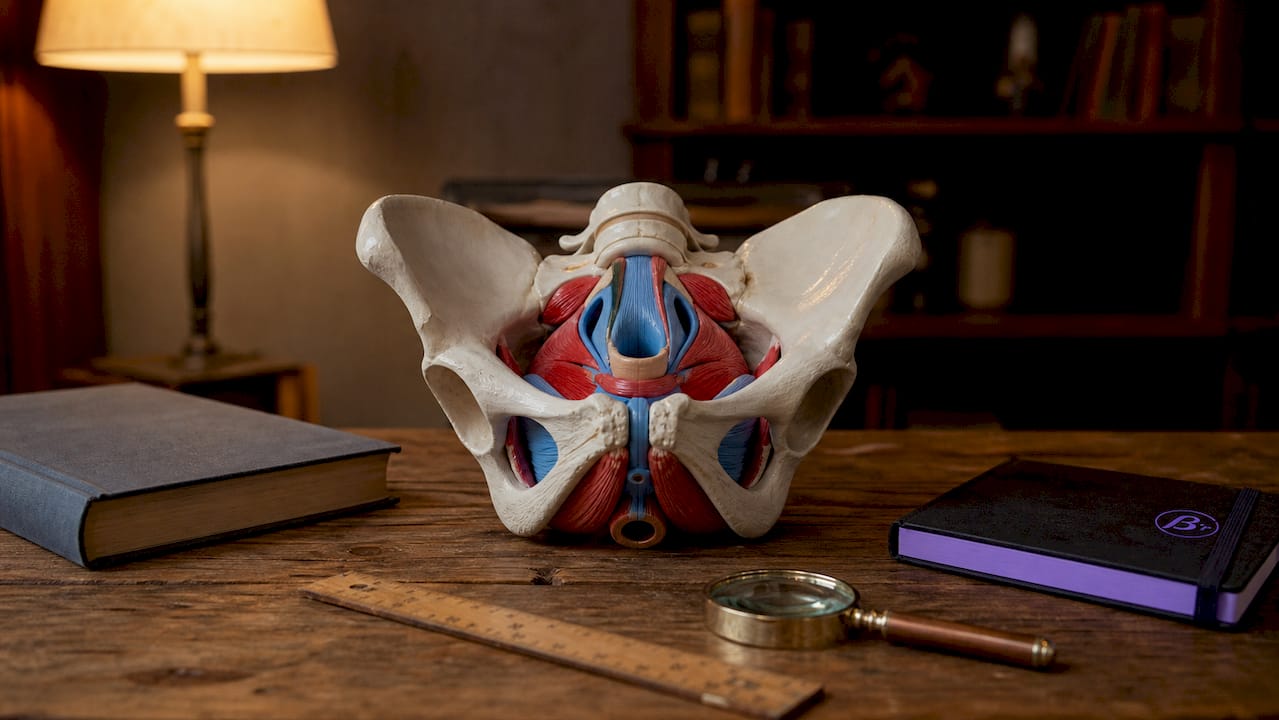
The pelvic floor is a group of muscles and connective tissue that forms a hammock-like base at the bottom of the pelvis. In men, these muscles support the bladder and bowel, wrap around the urethra and rectum, and contribute directly to erectile rigidity and ejaculatory control. Weakness or tension in this group affects all of those functions simultaneously.
Consistent practice typically shows tangible benefits within weeks to months, with positive effects on both bladder control and erectile function. That timeline is realistic, not a promise of overnight change. Men who understand this from the start are far more likely to stick with the routine.
How do you correctly identify and contract your pelvic floor muscles?
Finding the right muscles is the first real challenge. Most men have never consciously engaged this group before, and the body tends to recruit larger, more familiar muscles instead.
Two methods work reliably for initial identification:
- Stop-urine method: While urinating, briefly stop the flow. The muscles you use are your pelvic floor. Use this technique only once or twice to identify the sensation. Overuse disrupts the natural bladder rhythm and can cause dysfunction over time.
- Anal squeeze method: Imagine you are trying to stop passing gas. Squeeze and lift inward. This engages the same muscle group without involving the bladder.
Once you locate the muscles, the correct contraction feels like a gentle lift and inward draw. Nothing should move visibly. Your glutes, thighs, and abdominals stay completely relaxed. If you feel your stomach tighten or your buttocks clench, you are recruiting the wrong muscles.
Breathing is not optional. Natural rhythmic breathing during contractions enhances muscle isolation and supports long-term adherence. Holding your breath is one of the most common beginner mistakes, and it actively slows progress by increasing intra-abdominal pressure.
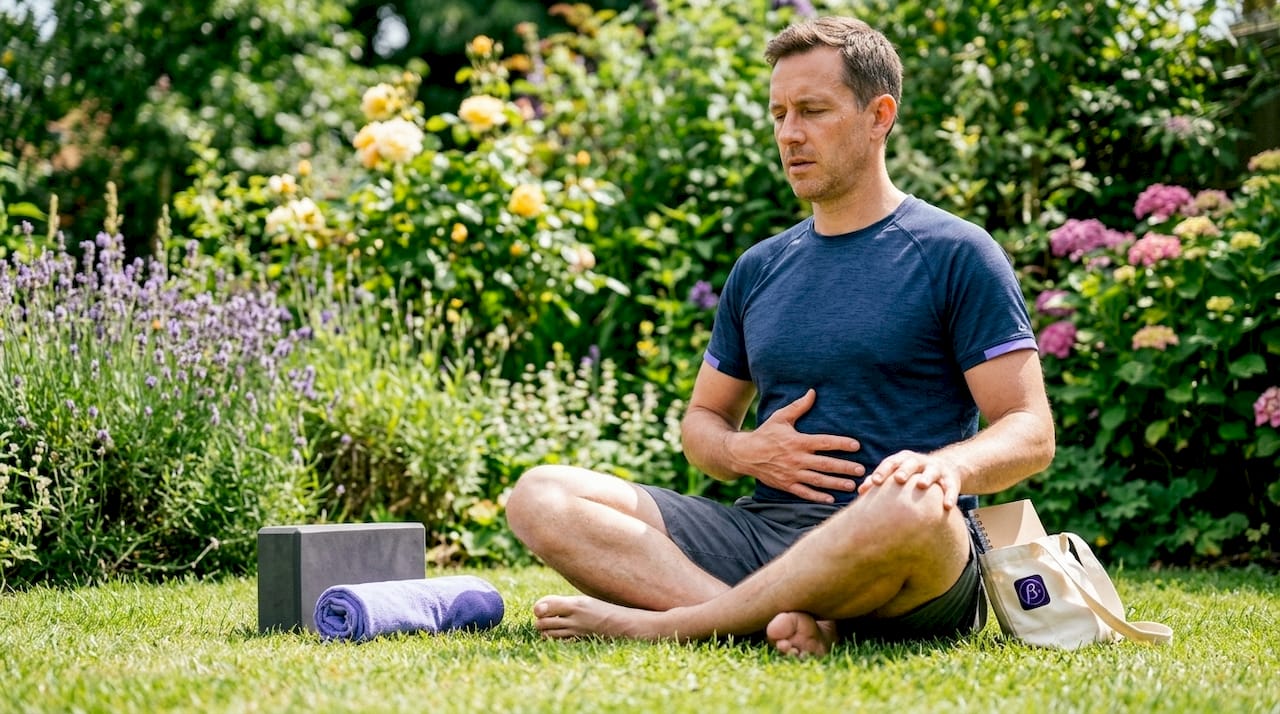
Pro Tip: Place one hand lightly on your lower abdomen while practicing. If you feel your belly tighten, relax completely and start again. The pelvic floor works independently of the abdominals when engaged correctly.
Relaxation is not the break between reps. It is half the exercise. Pelvic floor training requires mastering both full contraction and complete release. A muscle that cannot fully relax creates problems just as real as one that is too weak.
What does a structured pelvic floor routine look like for men?
Structure separates men who see results from men who give up after two weeks. Vague advice like “do Kegels daily” does not give the body enough information to adapt.
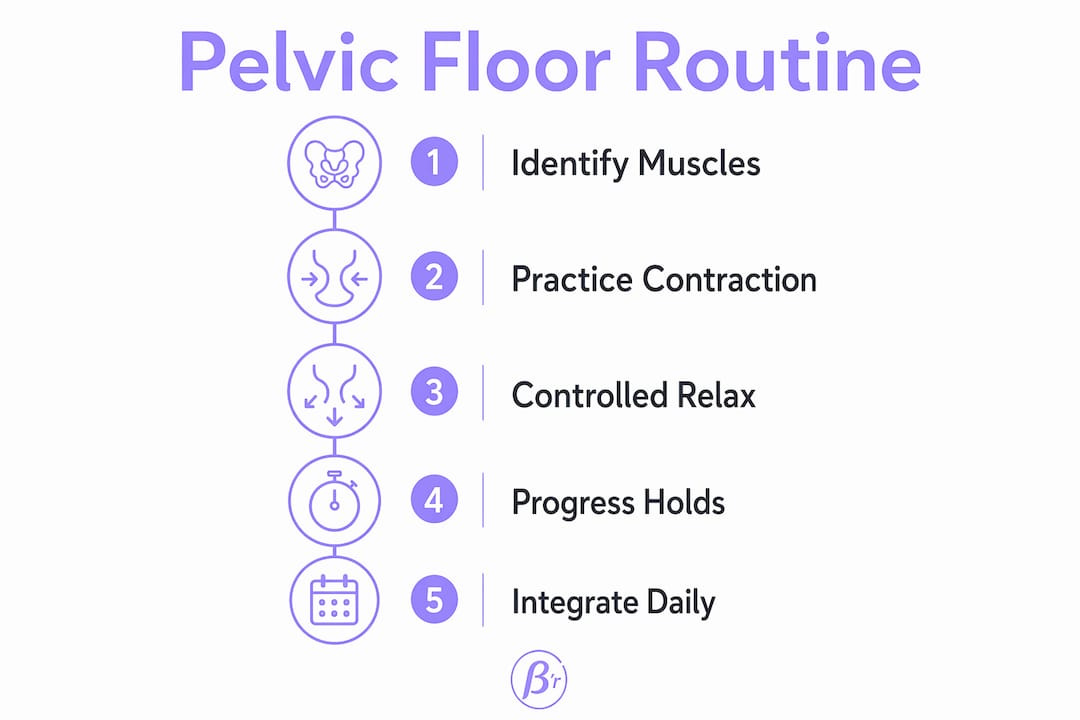
Clinical guidelines recommend 2–3 sets daily, with 8–15 repetitions per set, holding each contraction for 3–10 seconds. That range accounts for where you are starting. A man who has never trained this muscle group begins at 3-second holds. A man six weeks in works toward 10-second holds with the same number of reps.
A practical weekly structure looks like this:
- Weeks 1–2: Lie on your back with knees bent. Perform 3 sets of 8 reps, holding each contraction for 3 seconds. Rest fully between reps.
- Weeks 3–4: Move to seated practice. Increase to 10 reps per set, holding for 5 seconds. Add one standing set at the end of each session.
- Weeks 5–6: Perform all three sets standing. Increase hold time to 8–10 seconds. Add quick-flick reps (contract and release in 1 second) at the end of each set to build fast-twitch fiber response.
Progressive overload applies to pelvic floor training exactly as it does to any other muscle group. When a given hold time and rep count become easy, increase one variable at a time. Jumping too far too fast causes fatigue and discourages consistency.
The position progression matters. Lying down removes gravity from the equation and makes initial contractions easier to isolate. Sitting adds mild load. Standing is the functional position where these muscles actually work during daily life. Moving through all three positions builds real-world strength, not just gym-floor performance.
Integration into daily routines accelerates adherence. Many men practice one set while brushing their teeth, one set during a commute, and one set before sleep. The exercises are invisible to everyone around you, which removes the social barrier entirely.
What mistakes do men most commonly make with pelvic floor exercises?
Most men who stop seeing progress have made one of a small number of identifiable errors. Recognizing them early saves weeks of wasted effort.
- Recruiting the wrong muscles. Clenching the glutes, squeezing the thighs, or tightening the abdomen are the three most common substitutions. These errors reduce progress and can create compensatory tension patterns elsewhere in the body.
- Holding the breath. This is so common it deserves its own category. Breath-holding spikes intra-abdominal pressure and prevents the pelvic floor from contracting cleanly.
- Skipping relaxation. Men tend to focus entirely on the squeeze and rush through the release. A muscle that stays partially contracted between reps never fully recovers, and strength gains stall.
- Inconsistent practice. Two days on, five days off produces almost no adaptation. The pelvic floor responds to frequency and regularity, not intensity.
- Overusing the stop-urine test. Using this method more than occasionally interferes with the normal voiding reflex and can worsen the very symptoms you are trying to fix.
Pro Tip: Set a phone reminder for the same time each day. Habit stacking, attaching your pelvic floor practice to an existing routine like morning coffee or a lunch break, dramatically improves consistency without requiring extra willpower.
Plateaus are normal and not a sign of failure. A 6-week structured program with minimal supervision significantly improved pelvic floor neuromuscular activity in healthy men. That finding matters because it shows you do not need a clinic or expensive equipment. You need a plan and patience.
What do Reddit communities say about men’s pelvic floor training?
Reddit threads on pelvic health exercises for men offer something clinical literature rarely does: unfiltered, first-person accounts from men at every stage of the process. The candor is useful precisely because it is unpolished.
“I spent three months doing Kegels wrong. I was clenching my whole core. Once I figured out the actual muscle, I noticed a difference in two weeks. The reverse Kegel was the piece I was missing. Learning to let go was harder than learning to squeeze.”
Men report that combined approaches, including reverse Kegels, yoga-based hip openers, and structured pelvic floor training, improve sexual function and reduce urinary issues more effectively than Kegels alone. The reverse Kegel, a gentle bearing-down and outward release of the pelvic floor, addresses the tension side of the equation that standard Kegels ignore.
Common themes across Reddit pelvic floor discussions include:
- Technique mastery takes longer than expected, but the payoff is real.
- Relaxation practice is as important as contraction practice, often more so for men with pelvic tension.
- Peer accountability in online communities increases follow-through significantly.
- Incorrect technique can worsen urinary leakage through paradoxical incontinence, a condition where over-tightened muscles prevent proper closure. This warning appears repeatedly in experienced users’ posts.
- Progress is rarely linear. Weeks of no visible change often precede a noticeable shift.
The Reddit community also consistently recommends seeking a pelvic floor physical therapist if progress stalls after 6–8 weeks of correct practice. That advice aligns with clinical guidance and reflects a maturity in these communities that surprises many first-time readers.
How do pelvic floor exercises improve sexual health and confidence?
The pelvic floor muscles directly support erectile rigidity and control the timing of ejaculation. Stronger muscles in this group produce firmer, more sustained erections by compressing the veins that allow blood to leave the penis during arousal. Greater control over contraction timing gives men more influence over ejaculation, which is the most commonly reported sexual benefit in both clinical and community settings.
| Benefit | Mechanism | Timeline |
|---|---|---|
| Improved erectile firmness | Increased venous compression during arousal | 4–8 weeks of consistent practice |
| Better ejaculatory control | Greater voluntary muscle control | 6–12 weeks |
| Reduced urinary leakage | Stronger urethral support | 3–6 weeks |
| Increased sexual confidence | Regained sense of physical control | Concurrent with physical gains |
The psychological dimension is real and measurable in its own right. Men who regain physical control over a function they felt was failing them report a broader shift in confidence. That shift extends beyond the bedroom. Learning to build sexual confidence through deliberate physical practice changes how men carry themselves in relationships and in daily life.
Pelvic floor training fits naturally within a broader approach to men’s wellness. Fatigue, stress, and cortisol all affect sexual function, and pelvic floor strength alone does not address those factors. Men who combine pelvic floor work with sleep, stress management, and general fitness see the most complete results.
Key Takeaways
Pelvic floor training works best when men master both full contraction and complete relaxation, practice consistently across 2–3 daily sets, and apply progressive overload to continue gaining strength over time.
| Point | Details |
|---|---|
| Correct muscle identification | Use the anal squeeze method to locate muscles without disrupting bladder function. |
| Balanced technique | Practice full relaxation between reps, not just contraction, to avoid tension buildup. |
| Structured routine | Follow 2–3 sets of 8–15 reps daily with 3–10 second holds, progressing hold time weekly. |
| Consistent practice | Daily habit stacking produces faster results than irregular high-intensity sessions. |
| Community and clinical alignment | Reddit tips and clinical guidelines agree: technique mastery and patience produce real gains. |
Why community-driven learning changes the pelvic floor conversation
Most men never hear about pelvic floor health until something goes wrong. That is the honest truth, and it is a gap that clinical systems have not closed. What Reddit and private online communities have done is normalize the conversation years before most men would ever bring it up with a doctor.
What I find genuinely valuable about these communities is not just the tips. It is the permission they give men to take this seriously without embarrassment. When a man reads a thread where hundreds of others describe the same experience, the shame dissolves. That emotional shift is often what makes the difference between a man who tries pelvic floor exercises once and one who builds a real practice.
The best outcomes I have seen come from men who blend peer experience with evidence-based structure. Reddit gives you the motivation and the real-world texture. Clinical guidelines give you the framework. Neither alone is as effective as both together. If you are six to eight weeks in and not seeing progress, a pelvic floor physical therapist is the right next step, not more forum scrolling.
Privacy matters in this space. Men are more likely to start, and more likely to continue, when they feel no one is watching and no one is judging. That is why structured private programs outperform generic public fitness plans for this specific goal.
— Projectbetter
Projectbetter supports your pelvic floor progress privately
Knowing the right exercises is only part of the picture. Staying consistent, tracking progress, and understanding how pelvic floor health connects to your broader sexual confidence requires more than a forum thread.

Projectbetter is a private 30-day program built specifically for men. It combines structured pelvic floor training with daily movement protocols and guided reflections designed to address performance pressure, low confidence, and impulsive habits. Every session is private, calm, and grounded in evidence. Men who complete the program report a clearer sense of control and a measurable shift in how they feel in intimate situations. If you are ready to move from information to practice, the Projectbetter app gives you a structured path forward, without judgment and without noise.
FAQ
What muscles do pelvic floor exercises target in men?
Pelvic floor exercises target the levator ani muscle group, which supports the bladder, bowel, and sexual organs. These muscles wrap around the urethra and rectum and directly influence urinary control and erectile function.
How long before men see results from Kegel exercises?
Consistent practice typically produces noticeable improvements in bladder control and sexual function within weeks to months. Clinical evidence and community reports both confirm that daily practice across 2–3 sets accelerates results.
Are reverse Kegels necessary for men?
Reverse Kegels, a gentle outward release of the pelvic floor, address muscle tension that standard Kegels do not. Men with pelvic tightness often benefit more from relaxation practice than from additional contraction work.
Can you do pelvic floor exercises wrong and make things worse?
Yes. Incorrect technique, particularly over-tightening or substituting larger muscle groups, can cause paradoxical incontinence and worsen the symptoms you are trying to fix. Learning proper form before increasing intensity prevents this outcome.
How often should men practice pelvic floor exercises?
Clinical guidelines recommend 2–3 sets daily, with 8–15 repetitions per set and hold times of 3–10 seconds. Daily practice with full relaxation between reps produces the most consistent gains over time.