Decreased Sexual Libido: Causes, Signs, and Treatment
Decreased sexual libido, the clinical term for low sex drive, is a common and treatable shift in sexual interest that responds best to a structured, biopsychosocial evaluation followed by targeted steps. If your desire has dropped noticeably, the two most useful things you can do right now are: review your current medications with a prescriber, and keep a brief two-week symptom diary before your first appointment. Then book a visit with your primary care provider, gynecologist, or men’s health clinician if the change is causing you distress or came on suddenly.
The most common contributors to low sexual desire include:
- Hormonal shifts (low testosterone in men, estrogen and testosterone changes in women)
- Medications (SSRIs, some antihypertensives, hormonal contraceptives)
- Mood and mental health (depression, anxiety, chronic stress)
- Relationship dynamics (conflict, communication gaps, reduced intimacy)
- Lifestyle factors (poor sleep, heavy alcohol use, fatigue, obesity)
Pro Tip: Before your first appointment, write down every medication and supplement you take, when your desire changed, and any life events around that time. A one-page timeline is more useful to a clinician than a verbal summary.
Red flag warning: Sudden loss of sexual desire accompanied by pelvic pain, unexplained bleeding, breast changes, rapid weight loss, or other systemic symptoms warrants prompt medical evaluation, not a wait-and-see approach. Contact your provider the same day or go to urgent care.
Key Takeaways
Decreased sexual libido is common, multifactorial, and responds well to a biopsychosocial evaluation that addresses physical, psychological, and relational contributors together.
| Point | Details |
|---|---|
| Prevalence is high | About 1 in 5 men and a higher proportion of women experience low libido at some point. |
| Medications are often overlooked | SSRIs, some antihypertensives, and hormonal contraceptives are frequent drivers; ask your prescriber about alternatives before stopping. |
| Diagnosis starts with history | Clinicians use the Decreased Sexual Desire Screener and FSFI alongside labs and a full history to identify causes. |
| Treatment is individualized | Effective care combines therapy (CBT, sex therapy), lifestyle changes, and targeted medical options; no single treatment works for everyone. |
| Projectbetter offers structured support | For men without urgent red flags, Projectbetter’s 30-day private program builds daily habits around movement, pelvic floor training, and self-awareness. |
Table of Contents
- What decreased sexual libido actually means — and how it differs from other sexual problems
- How common is low sexual desire, and who is most at risk?
- How decreased libido typically presents
- What causes decreased sexual libido? A biopsychosocial breakdown
- Sex- and life-stage–specific notes on low desire
- How clinicians evaluate decreased libido
- Evidence-based treatment: what actually works
- When to seek help urgently
- Practical self-help steps you can start today
- Structured daily programs for men: what they include and when they help
- A Projectbetter program for men who want structured private support
- What we’ve learned from working with men on this
- Sources
- FAQ
What decreased sexual libido actually means — and how it differs from other sexual problems
Decreased sexual libido refers specifically to a reduction in sexual interest or desire. It is not the same as difficulty becoming physically aroused, trouble reaching orgasm, or sexual pain, though these problems can coexist and sometimes feed each other.
A few precise definitions help here:
- Libido / sexual desire: the motivation or interest in sexual activity, including spontaneous thoughts, fantasies, and the urge to initiate.
- Responsive desire: desire that emerges in response to stimulation or context, rather than arising spontaneously. Many people, especially women, primarily experience responsive desire — and this is normal.
- Arousal: the physical and psychological response to sexual stimulation (lubrication, erection, engorgement).
- Orgasm: the peak physical response during sexual activity.
- Sexual pain (dyspareunia/vaginismus): pain during or anticipating sex, which can suppress desire secondarily.
Clinicians distinguish decreased libido as a symptom from a diagnosable disorder. The DSM-5 criteria for Female Sexual Interest/Arousal Disorder (FSIAD) and its predecessor Hypoactive Sexual Desire Disorder (HSDD) require that reduced desire causes significant personal distress and has persisted for at least six months. Without distress, a lower level of desire is not a disorder. This distinction matters because it shifts the clinical conversation from “is something wrong with you?” to “is this bothering you, and do you want support?”
Clinicians use validated screening tools to structure that conversation. The Decreased Sexual Desire Screener is a brief, five-item questionnaire used in primary care to identify women who may have HSDD. The Female Sexual Function Index (FSFI) is a 19-item self-report tool covering desire, arousal, lubrication, orgasm, satisfaction, and pain — used both in research and clinical settings. Neither tool diagnoses a disorder on its own; they guide the history and flag areas for deeper discussion.
A clinician might open with: “Over the past few months, has your interest in sex decreased, and is that change bothering you?” That single question captures both the symptom and the distress criterion in one breath.
How common is low sexual desire, and who is most at risk?
According to the Cleveland Clinic, decreased sexual libido affects about 1 in 5 men and an even higher proportion of women at some point in their lives.
Prevalence note: About 1 in 5 men experience low libido at some point — and women report it at even higher rates, particularly during hormonal transitions.
Groups with notably higher risk include:
- Postmenopausal women, for whom estrogen and androgen decline can reduce desire, lubrication, and comfort during sex
- Older men, as testosterone levels decline gradually with age
- People with chronic illness — diabetes, cardiovascular disease, thyroid disorders, and kidney disease all affect hormonal and vascular pathways tied to desire
- People taking SSRIs, antihypertensives, or hormonal contraceptives, where medication side effects are a direct driver
- People with depression or anxiety, where low desire is both a symptom and a consequence of the condition
- People under sustained high stress or chronic fatigue, where cortisol elevation can suppress testosterone and reduce motivation for sex
- Postpartum individuals, where hormonal shifts, sleep deprivation, and physical recovery converge
Survey data on sexual desire consistently underestimates true prevalence. Stigma, embarrassment, and the assumption that low desire is “just aging” keep many people from reporting it to a clinician. The real numbers are likely higher than any published estimate.
How decreased libido typically presents
Low sexual desire does not always look the same from person to person. The most common presentation features include:
- Fewer spontaneous sexual thoughts or fantasies than before
- Less interest in initiating sex, even when the relationship is otherwise good
- Reduced responsiveness to erotic cues that previously worked (touch, visual stimuli, context)
- Less pleasure or engagement during sex, even when it does occur
- Avoidance of physical intimacy to prevent situations that might lead to sex
Clinicians also distinguish between generalized and situational decreased desire. Generalized low libido means desire is reduced across all contexts and partners. Situational low libido is specific to a particular partner, relationship dynamic, or setting — and often points more strongly toward relationship or psychological contributors rather than hormonal or medical ones.
Emotionally, people describe the experience differently. Some feel distress and grief about the change. Others feel indifferent, which can itself become a source of shame. A few feel relief, particularly when desire had previously felt compulsive or anxiety-driven. All of these are valid presentations worth discussing with a clinician.
Pro Tip: For two weeks, keep a simple daily log: date, a 1–10 libido rating, hours of sleep, any medications taken, stress level, and whether you had partner interaction. That pattern is far more informative than a general “it’s been low for a while.”
What causes decreased sexual libido? A biopsychosocial breakdown
Mayo Clinic Health System describes low libido as arising from a combination of physical, psychological, and relational factors — rarely from a single cause. The 5th International Consultation on Sexual Medicine (ICSM 2024) reinforces this, recommending a biopsychosocial assessment and cautioning against automatically labeling sexual dysfunction as a psychiatric problem.
Physical and medical causes
Hormonal changes are among the most common physical drivers. In men, low testosterone (hypogonadism) reduces desire directly. In women, declining estrogen and testosterone during perimenopause and menopause affect both desire and physical comfort during sex. Chronic conditions that impair vascular function, nerve signaling, or energy — including diabetes, cardiovascular disease, thyroid disorders, and obesity — all reduce libido through overlapping mechanisms. Genitourinary conditions, chronic pain, and neurologic disorders can suppress desire by making sex uncomfortable or physically exhausting.

Medication-related causes
The NHS notes that SSRIs and other antidepressants, some antihypertensives (particularly beta-blockers and spironolactone), and hormonal contraceptives are among the most frequently implicated drug classes. This is an underrecognized driver. Many people attribute their low desire to stress or relationship problems without realizing a medication started around the same time is the primary cause.
Never stop a prescribed medication abruptly to address libido concerns. Ask your prescriber about alternatives within the same class, dose adjustments, or timing changes. Many antidepressants with lower sexual side-effect profiles exist, and a prescriber can often find a workable switch.
Pro Tip: When raising medication side effects with your prescriber, frame it as: “I noticed my desire changed around the time I started [medication]. Are there alternatives with a lower risk of this side effect?” That framing invites a clinical conversation rather than a dismissal.
Psychological causes
Depression and anxiety are both causes and consequences of low desire. Chronic stress raises cortisol, which suppresses testosterone and reduces motivation broadly, not just sexually. Trauma history, body image concerns, and performance anxiety create avoidance patterns that reduce desire over time. The feedback loop between anxiety and low desire is particularly tight in men, where performance pressure can suppress both erection and interest simultaneously.

Relationship and social causes
Communication breakdown, unresolved conflict, and emotional distance are consistent predictors of reduced desire. Pornography-driven expectations can create a gap between real-world intimacy and internal fantasy that makes actual sex feel less appealing. Cultural and societal messages about what “normal” desire looks like also shape how people interpret and report their experience — often leading to underreporting or misattribution.
Lifestyle and substance contributors
Heavy alcohol use, recreational drug use, poor sleep, and extreme fatigue all suppress libido through hormonal and neurological pathways. Sleep deprivation alone reduces testosterone in men measurably. Obesity affects both testosterone levels and vascular function. These are modifiable factors, and addressing them often produces noticeable improvement even before any medical treatment begins.
Sex- and life-stage–specific notes on low desire
Women: FSIAD, HSDD, and hormonal transitions
Clinical reviews on NCBI Bookshelf confirm that FSIAD (formerly HSDD) is common, frequently underdiagnosed, and requires individualized treatment.
Key contributors in women include:
- Perimenopause and menopause (estrogen and androgen decline)
- Postpartum hormonal shifts combined with sleep deprivation and physical recovery
- Hormonal contraceptives, which can lower free testosterone in some users
- Genitourinary syndrome of menopause (GSM), where vaginal dryness and discomfort suppress desire secondarily
- Surgical or chemotherapy-induced menopause, which produces abrupt hormonal changes
FDA-approved treatment options for premenopausal women with HSDD:
- Flibanserin (Addyi): a daily oral medication that acts on serotonin and dopamine receptors. It requires alcohol abstinence due to a serious hypotension interaction and is contraindicated with moderate or strong CYP3A4 inhibitors.
- Bremelanotide (Vyleesi): an on-demand subcutaneous injectable taken 45 minutes before anticipated sexual activity. It is contraindicated in people with uncontrolled hypertension or cardiovascular disease and can cause transient nausea and blood pressure elevation.
Testosterone therapy for women is used off-label in the United States for postmenopausal low desire, with monitoring for androgenic side effects. Local estrogen therapy addresses GSM-related discomfort and can indirectly improve desire. Pelvic floor physical therapy is evidence-based when pain contributes to avoidance.
Men: testosterone, erectile function, and the anxiety loop
For men, Merck Manuals emphasizes confirming low testosterone with early-morning labs (before 10 AM, when testosterone peaks due to its circadian rhythm) to avoid false-low readings. Testosterone replacement therapy (TRT) is indicated only when labs confirm hypogonadism and symptoms are present. TRT carries real risks: testicular atrophy, reduced sperm production, and potential fertility impairment. Men who want biological children should discuss sperm preservation before starting TRT.
UCSF Urology notes that there is no FDA-approved oral medication for low libido in men. Treatment centers on identifying and addressing the underlying cause. Performance anxiety and erectile dysfunction create a reinforcing feedback loop with desire: fear of failure reduces interest, which reduces arousal, which confirms the fear. Addressing the anxiety component is often as important as any hormonal intervention.
| Population | Approximate prevalence of low libido | Key contributors |
|---|---|---|
| Men (general) | ~1 in 5 at some point | Low testosterone, ED, stress, medications |
| Women (North America) | 9% (distress criteria vary) | Menopause, hormonal contraceptives, postpartum, FSIAD |
| Postmenopausal women | Higher than premenopausal baseline | Estrogen/androgen decline, GSM, mood changes |
How clinicians evaluate decreased libido
A thorough evaluation covers several domains. Knowing what to expect helps you prepare and makes the appointment more productive.
What the history covers
- Onset and timeline: when did desire change, and was it gradual or sudden?
- Situational vs. generalized: does desire vary by partner, context, or setting?
- Full medication list, including supplements and hormonal contraceptives
- Mood, sleep quality, and stress levels
- Relationship context and communication patterns
- Sexual pain or discomfort during or anticipating sex
- Fertility goals (especially relevant before any hormonal treatment)
Screening tools in practice
Mayo Clinic notes that validated tools like the Decreased Sexual Desire Screener and the FSFI help clinicians structure the conversation and identify which domains need deeper exploration. Neither replaces a full sexual history, but both reduce the chance that a clinician overlooks a specific area.
Physical exam and labs
A physical exam may include a genitourinary or pelvic exam when pain, anatomical changes, or hormonal effects are suspected. Common labs include:
- Early-morning total testosterone (men, and sometimes women)
- TSH (thyroid function)
- Fasting glucose or HbA1c (metabolic health)
- Lipid panel (cardiovascular risk)
- Pregnancy test (women of childbearing potential)
- Targeted tests based on history: liver function, renal panel, prolactin, adrenal hormones
Referral pathways
Primary care handles most initial evaluations. From there:
- Gynecology or urology for hormonal management, pelvic exam, or TRT
- Sexual medicine specialist for complex or refractory cases
- Sex therapist or CBT therapist when psychological or relational factors are primary
- Pelvic floor physical therapist when pain or pelvic floor dysfunction contributes
When to request a specialist referral: If your primary care provider has ruled out obvious causes and your symptoms persist, or if you have pain during sex, suspected hormonal disorder, or significant relationship distress, ask for a referral rather than waiting for the next routine visit.
Evidence-based treatment: what actually works
Effective care for low sexual desire is almost always multifaceted. Mayo Clinic Health System is clear that no single treatment works for everyone — the most effective plans address the specific root causes through a combination of counseling, lifestyle adjustment, and targeted medical management where indicated.
Nonpharmacologic approaches
A clinical review in PMC confirms that sex therapy, cognitive behavioral therapy (CBT), and mindfulness-based interventions all have evidence for improving sexual desire. These approaches work by reducing performance anxiety, restructuring unhelpful beliefs about sex, and building awareness of responsive desire patterns.
- Sex therapy: addresses desire, arousal, and intimacy through structured exercises and communication work
- CBT: targets thought patterns that suppress desire (catastrophizing, shame, avoidance)
- Mindfulness-based therapy: builds present-moment awareness during intimacy, reducing distraction and anxiety
- Couples therapy: addresses relational contributors — conflict, communication, emotional distance
- Pelvic floor physical therapy: indicated when pain or pelvic floor dysfunction is a contributing factor; Mayo Clinic includes it among recommended combined approaches
- Guided meditations for sexual health: structured audio practices that reduce anxiety and build body awareness, used as an adjunct to therapy
Lifestyle changes — regular exercise, reduced alcohol, improved sleep, and stress management — are supported by Cleveland Clinic as meaningful contributors to improved libido and overall sexual functioning. These are low-risk, high-value starting points.
Pharmacologic options
Realistic timelines: Psychological therapies typically show meaningful improvement over weeks to months of consistent work. Pharmacologic treatments for women (flibanserin, bremelanotide) may show effects within 4–12 weeks. Testosterone effects in men with confirmed hypogonadism are often noticeable within weeks to months, with full assessment at 3–6 months. If a treatment is not working after a reasonable trial, reassess the diagnosis before escalating.
When to seek help urgently
Most cases of low sexual desire warrant a scheduled appointment rather than emergency care. A few situations call for faster action.
Seek prompt medical evaluation if you notice:
- Sudden loss of desire alongside pelvic pain, unexplained bleeding, or breast changes
- Rapid or unexplained weight loss, fatigue, or other systemic symptoms alongside low libido
- Desire dropped sharply within days or weeks of starting a new medication
- Severe relationship distress or inability to function at work or in daily life
- Fertility concerns combined with hormonal symptoms
Seek emergency mental health support if you experience:
- Severe depression, hopelessness, or suicidal thoughts
- Inability to care for yourself or dependents
- A mental health crisis that feels unmanageable
If you are in a mental health crisis: Call or text 988 (Suicide and Crisis Lifeline) in the United States. Do not wait for a scheduled appointment. Emergency care is the right step when safety is at risk.
Medication-related low libido that began abruptly after starting a new drug is worth flagging to your prescriber within days, not weeks. The NHS guidance on this is consistent: clinicians can often switch to alternatives or adjust regimens rather than leaving a preventable side effect unaddressed.
Practical self-help steps you can start today
These steps are low-risk, evidence-informed, and worth beginning while you pursue a clinical evaluation if one is needed.
- Prioritize sleep. Aim for 7–9 hours. Sleep deprivation measurably reduces testosterone and motivation. Even one week of improved sleep can shift energy and mood noticeably.
- Reduce alcohol. Heavy use suppresses testosterone and disrupts sleep architecture. Cutting back to moderate levels (or less) is one of the fastest modifiable changes you can make.
- Add short, regular exercise. Thirty minutes of moderate aerobic activity most days improves vascular function, mood, and hormonal balance. Resistance training has an additional positive effect on testosterone in men.
- Schedule nonsexual shared time. Shared activities that build connection without pressure — a walk, cooking together, a conversation without phones — rebuild the relational foundation that desire depends on.
- Make small dietary shifts. A diet that supports cardiovascular health (vegetables, whole grains, lean protein, limited processed food) supports the vascular function that underlies both arousal and energy.
- Review OTC supplements cautiously. Products marketed for libido (maca, ginseng, tribulus) have limited and inconsistent evidence. None are FDA-approved for this indication. Discuss any supplement with your clinician before adding it, particularly if you take medications.
Sample symptom diary template (copy and use):
Pro Tip: Once a week, ask your partner one open question about what they enjoy or what they’d like more of — not about frequency or performance. Curiosity reduces pressure faster than any direct conversation about “the problem.”
Self-help is a meaningful starting point, not a substitute for care when red flags, severe distress, or suspected hormonal or medical causes are present.
Structured daily programs for men: what they include and when they help
For men who want a structured, private daily routine while pursuing or alongside clinical care, nonmedical programs offer a practical complement. These programs typically include:
- Movement exercises: short daily routines targeting energy, circulation, and pelvic awareness
- Pelvic floor training: guided Kegel sequences that build control and reduce tension; pelvic floor therapy for men has an evidence base for sexual dysfunction and pelvic pain
- Guided audio meditations: structured practices that reduce performance anxiety and build present-moment awareness during intimacy
- Habit and mood tracking: daily check-ins that surface patterns between sleep, stress, and desire
- Educational content: clear explanations of how hormones, stress, and habits interact with sexual confidence
The evidence base for individual components is solid. Pelvic floor training reduces pelvic pain and improves sexual function. Exercise improves mood and testosterone. CBT-based reflection exercises reduce performance anxiety. A holistic approach to sexual healing that combines these elements tends to produce more durable results than any single intervention.
A practical daily routine might look like: 10 minutes of movement, one set of pelvic floor exercises, a 5-minute guided reflection, and a 2-minute symptom check-in. That is under 20 minutes and can be done privately, at home, without a prescription.
An important note: Structured nonmedical programs work best as an adjunct, not a replacement, for clinical care when hormonal issues, serious illness, or medication side effects are suspected. If you have red flags or significant distress, see a clinician first. For men without urgent medical concerns, a structured daily program can build awareness, reduce anxiety, and create measurable progress while clinical evaluation proceeds.
A Projectbetter program for men who want structured private support
Projectbetter’s 30-day program offers men a private, structured daily protocol that addresses the behavioral and psychological dimensions of low sexual confidence and desire. The program combines movement exercises, guided pelvic floor (Kegel) training, daily challenges, audio meditations, self-reflection tools, and mood and habit logging — all within a clean, private iOS app.
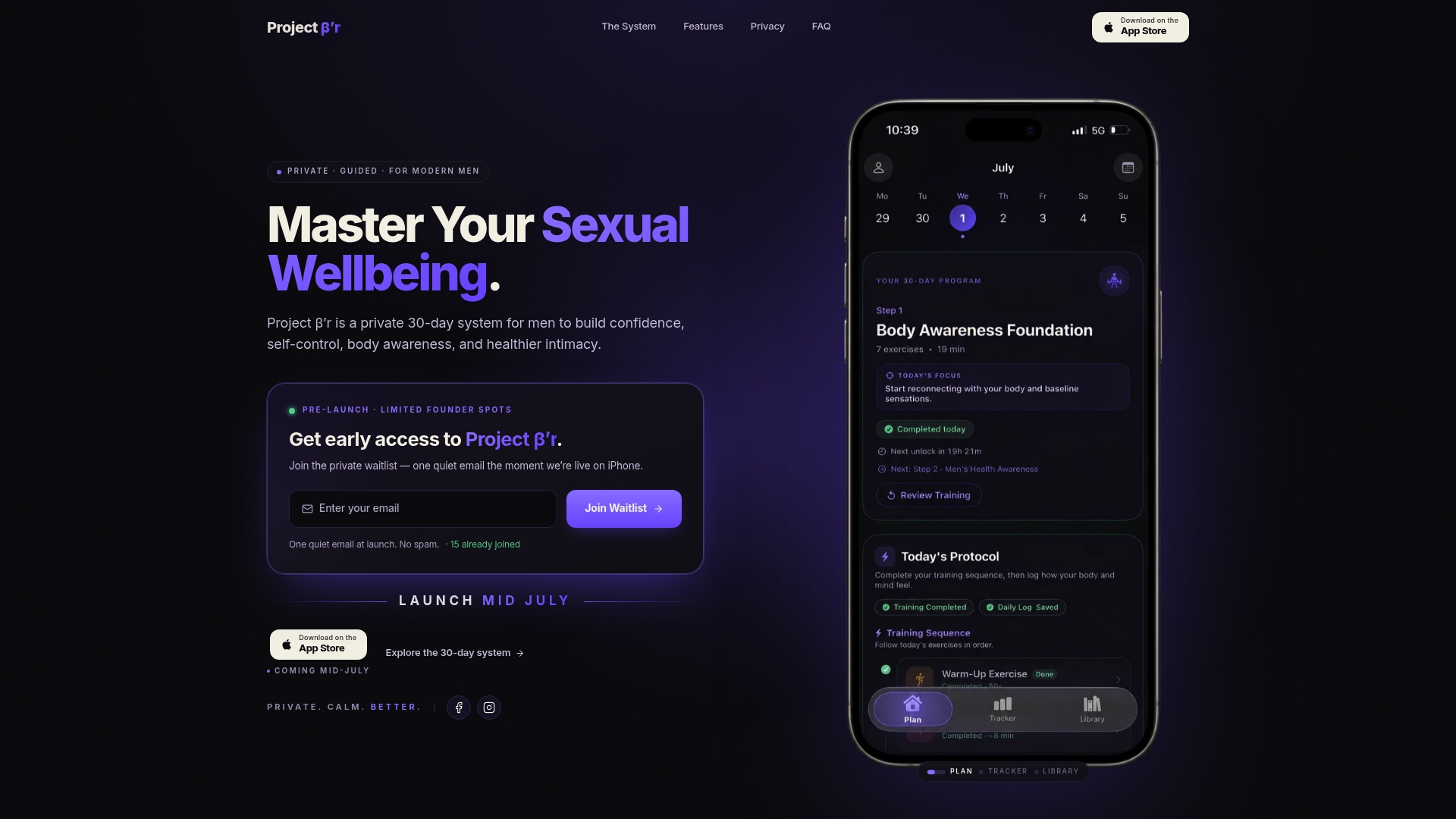
It is designed for men who want to build awareness, reduce performance pressure, and develop measurable habits around sexual wellbeing, without clinical appointments or public programs. The subscription model includes a free trial, so you can assess whether the structure fits before committing. Projectbetter is not a medical treatment and does not replace diagnosis or clinical care for hormonal, medical, or psychiatric causes of low desire. For men without urgent red flags, or those using it alongside clinical support, it offers a calm, judgment-free space to build daily progress.
Ready to see what a structured 30-day protocol feels like? Start your free trial at Projectbetter and take the first private step toward greater confidence and control.
What we’ve learned from working with men on this
The most consistent pattern we see at Projectbetter is that men arrive convinced their low desire is either “just stress” or a sign of something permanently broken. Neither framing serves them. The truth is almost always more specific and more workable than either of those stories.
What gets overlooked most often is the role of accumulated habit. Not dramatic trauma or a clear hormonal diagnosis, but the slow drift of poor sleep, high cortisol, avoidance of intimacy, and a growing gap between expectation and reality. These patterns are quiet, and they compound. By the time a man notices his desire has dropped, the habits sustaining that drop have often been in place for months.
The clinical evidence points clearly toward combined approaches. Therapy, lifestyle change, and targeted medical care work better together than any single intervention alone. But the behavioral layer — the daily choices around sleep, movement, stress, and connection — is where most men have the most immediate control. That is where structured daily work pays off, and it is the gap that a private, consistent program can fill while clinical evaluation proceeds.
Sources
- Low Libido (Low Sex Drive), Cleveland Clinic
- Female sexual interest arousal disorder — NCBI Bookshelf (clinical review)
- Let’s talk: low libido, Mayo Clinic Health System
- Decreased Libido (Low Sex Drive) — UCSF Department of Urology
FAQ
What is the most common cause of decreased sexual libido?
Low sexual desire most often results from a combination of factors rather than a single cause — hormonal changes, medication side effects (particularly SSRIs and some antihypertensives), depression, chronic stress, and relationship dynamics are among the most frequent contributors.
What makes a man weak in bed?
Performance anxiety, low testosterone, poor sleep, heavy alcohol use, and untreated depression are common contributors to reduced sexual performance and desire in men. Addressing the specific underlying cause — rather than a generic fix — produces the most reliable improvement.
Can low libido be treated without medication?
Yes. Psychotherapy (CBT, sex therapy), lifestyle changes (exercise, sleep, reduced alcohol), couples therapy, and pelvic floor physical therapy all have evidence for improving desire without medication. Pharmacologic options exist for specific diagnoses but are not required for most people.
When should I see a doctor about low sex drive?
See a clinician if low desire causes you significant distress, has persisted for six months or more, began suddenly, or is accompanied by pain, bleeding, mood changes, or other physical symptoms. Sudden onset after starting a new medication warrants a call to your prescriber within days.
Does stress directly lower libido?
Chronic stress raises cortisol, which suppresses testosterone and reduces motivation broadly, including sexual interest. Addressing stress through sleep, exercise, and structured relaxation practices can produce noticeable improvement in desire over weeks.
This article provides general health information and is not a substitute for professional medical advice, diagnosis, or treatment. Confirm current clinical guidelines and treatment options with a qualified healthcare provider.