Can Lack of Sex Cause Insomnia? What You Need to Know
TL;DR:
- Sexual inactivity can weaken fragile sleep patterns by removing hormones that promote deep rest, but it does not cause clinical insomnia. Regular sexual activity raises prolactin and oxytocin while lowering cortisol, improving sleep quality and onset. Managing stress and sleep hygiene independently supports better sleep without relying on sexual activity.
Sexual inactivity does not directly cause clinical insomnia, but it can disrupt fragile sleep patterns by removing hormonal support that promotes deep, restful sleep. The question of whether lack of sex can cause insomnia is more nuanced than a simple yes or no. Orgasm triggers the release of prolactin and oxytocin, two hormones that lower cortisol and signal the brain to wind down. When that hormonal reset is absent, people who already struggle with sleep may find their nights harder. Research shows that on nights with sexual activity, individuals spent 7 minutes less awake and sleep efficiency improved by 2 percentage points. That gap is small but meaningful for anyone whose sleep is already fragile.
How does sexual activity biologically influence sleep quality?

Sex functions as a natural sleep aid through a specific hormonal sequence. Orgasm raises prolactin and oxytocin while simultaneously lowering cortisol, the body’s primary stress hormone. Lower cortisol means a calmer nervous system, and a calmer nervous system means faster sleep onset and more time in deep sleep.
The post-orgasmic rise in prolactin is higher after partnered sex than solo activity, but both produce similar neurochemical changes. This matters because it means you do not need a partner to access these sleep benefits. Masturbation produces the same core hormonal shift, just with a slightly smaller prolactin spike.
The data on sleep quality backs this up. Research finds that 67.7% report better sleep after partnered orgasm, while 49.1% report similar benefits after masturbation. The gap between those two numbers points directly to emotional bonding. Physical closeness, skin contact, and the sense of safety with a partner amplify the neurochemical effect beyond what the orgasm alone produces.
Men tend to feel sleepier after orgasm than women do, largely because their prolactin spike is sharper. Women’s sleep benefits vary with the menstrual cycle, with estrogen levels influencing how quickly rest follows arousal. Female resting heart rate lowers after sex, which facilitates easier sleep onset regardless of cycle phase.
- Prolactin: Rises sharply after orgasm, promoting drowsiness and reducing alertness
- Oxytocin: Released during physical intimacy, lowers anxiety and encourages bonding-related calm
- Cortisol: Drops after orgasm, reducing the physiological stress response that keeps you awake
- Serotonin: Elevated after sex, supporting mood stability and the transition into sleep
Pro Tip: Time sexual activity within 30 minutes of your intended sleep time. High-arousal or emotionally charged encounters earlier in the evening may actually delay sleep onset, while calm, bonding-focused intimacy close to bedtime produces the strongest sleep benefit.
Can lack of sex cause insomnia or worsen existing sleep problems?
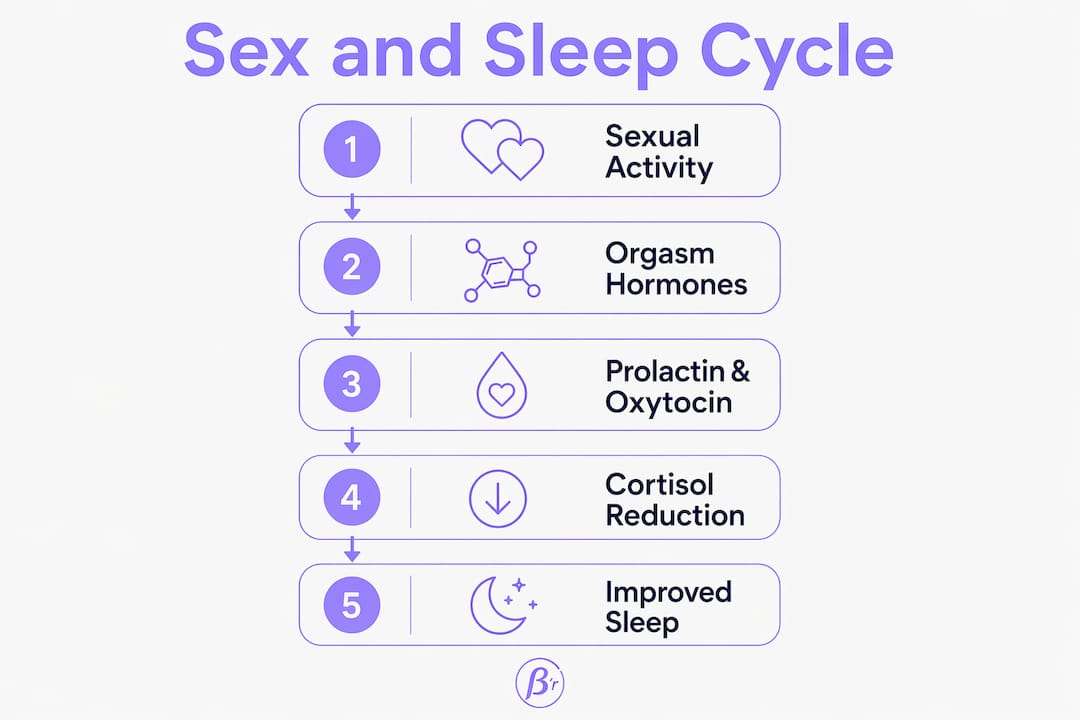
Lack of sex is not a primary cause of clinical insomnia. Clinical insomnia is defined by persistent difficulty initiating or maintaining sleep, occurring at least three nights per week for three months or more, and it has well-established drivers: anxiety disorders, depression, chronic pain, and poor sleep hygiene. Sexual inactivity alone does not meet the threshold of those causes.
What sexual inactivity can do is remove a reliable hormonal relaxation mechanism. For people whose sleep is already fragile, losing that nightly cortisol reset matters. The effect is not causal in the clinical sense. It is more accurate to say that sexual inactivity maintains or worsens existing sleep difficulties rather than creating them from scratch.
The relationship between sex and insomnia runs in both directions. Sleep deprivation lowers testosterone by 10%–15%, suppressing libido and worsening sexual dysfunction. Poor sleep creates the conditions for sexual inactivity, which then removes the hormonal support that could have improved sleep. The cycle feeds itself quietly over weeks.
Sexual inactivity linked to relationship distress or depression is generally a symptom of underlying mental health issues disrupting sleep, not the root cause of insomnia. Treating the underlying stress or relational tension addresses both problems more effectively than focusing on sexual frequency alone.
Several factors connect sexual inactivity with worsening sleep patterns:
- Elevated baseline cortisol from stress or relationship tension keeps the nervous system in a low-grade alert state at night
- Reduced oxytocin from lack of physical intimacy removes a key anxiety-buffering hormone
- Depression or anxiety suppresses both libido and the brain’s ability to regulate sleep cycles
- Involuntary celibacy tied to relationship breakdown or health issues adds psychological distress that compounds sleep disruption
- Loss of bedtime routine that previously included intimacy can disrupt the behavioral cues the brain uses to prepare for sleep
How do psychological and relational factors connect sexual inactivity and insomnia?
The psychological dimension of this relationship is where most of the real damage happens. Depression and anxiety suppress libido and fragment sleep through overlapping neurochemical pathways. Both conditions elevate cortisol, reduce serotonin, and dysregulate the hypothalamic-pituitary-adrenal axis, the system that governs both stress response and sleep architecture.
Elevated baseline cortisol in distressed relationships links directly to sleep problems. This is not about the absence of sex itself. It is about the emotional weight that often accompanies it. A person who is celibate by choice, surrounded by other forms of intimacy and connection, tends to sleep differently than someone whose sexual inactivity reflects loneliness, rejection, or relationship conflict.
The table below shows how context shapes sleep outcomes in sexual inactivity:
| Situation | Psychological state | Typical sleep impact |
|---|---|---|
| Voluntary celibacy with strong social bonds | Low stress, stable mood | Minimal sleep disruption |
| Voluntary celibacy with isolation | Moderate stress, low mood | Mild to moderate sleep difficulty |
| Involuntary inactivity from relationship distress | High cortisol, anxiety | Significant sleep disruption |
| Involuntary inactivity from health issues | Variable, often depressive | Moderate to significant disruption |
Adults with no partnered sex in the past year showed higher depressive symptoms, but the research links those symptoms to context rather than inactivity alone. The absence of sex is rarely the problem. The conditions that created the absence are.
Intimacy without orgasm also carries sleep benefits. Skin contact, shared warmth, and emotional closeness all stimulate oxytocin release. Couples who cuddle, talk quietly, or simply share physical space before sleep often report better rest than those who are physically isolated, regardless of sexual activity. This suggests the relationship between sex and insomnia is mediated as much by emotional connection as by hormonal output.
Practical sleep management beyond sexual activity
Better sleep does not require a partner or a specific level of sexual activity. The behavioral foundations of good sleep are well-established and work independently of sexual frequency.
- Consistent sleep and wake times: The brain’s circadian rhythm responds to regularity. Varying bedtime by more than 30 minutes disrupts the hormonal cues that initiate sleep.
- Light exposure management: Morning sunlight suppresses melatonin and anchors your circadian clock. Avoiding screens for 60 minutes before bed protects the evening melatonin rise.
- Daily movement: Exercise raises serotonin and reduces baseline cortisol, producing some of the same neurochemical effects as sexual activity. Even a 20-minute walk improves sleep quality measurably.
- Stress reduction practices: Breathing exercises, progressive muscle relaxation, and body scan meditation lower cortisol before bed without requiring a partner.
- Limiting alcohol: Alcohol fragments sleep architecture in the second half of the night, reducing restorative deep sleep even when it initially feels sedating.
Improved sleep routines often enhance libido and reduce anxiety, which lifts the cycle of poor sleep and sexual dysfunction simultaneously. This bidirectional benefit means that fixing sleep hygiene is one of the most efficient ways to address both problems at once.
If insomnia persists beyond four weeks despite consistent sleep hygiene, professional evaluation is appropriate. Cognitive Behavioral Therapy for Insomnia, known as CBT-I, is the first-line clinical treatment and produces durable results without medication. Sexual dysfunction that persists alongside insomnia warrants a conversation with a physician, as both may share a hormonal or psychological root that responds to targeted treatment. Understanding how cortisol affects testosterone is a useful starting point for men navigating both issues.
Pro Tip: Combine a 20-minute evening walk with a brief body scan meditation before bed. This pairing lowers cortisol, raises serotonin, and mimics some of the neurochemical relaxation that follows sexual activity, giving your nervous system a reliable wind-down signal even on nights when sex is not part of the picture.
Key takeaways
Sexual inactivity does not cause clinical insomnia, but removing the hormonal relaxation that orgasm provides can worsen sleep in people who are already struggling.
| Point | Details |
|---|---|
| Sex aids sleep hormonally | Orgasm raises prolactin and oxytocin while lowering cortisol, promoting faster sleep onset. |
| Inactivity worsens fragile sleep | Lack of sex removes a natural hormonal reset but does not independently cause clinical insomnia. |
| The relationship is bidirectional | Poor sleep lowers testosterone by 10%–15%, reducing libido and deepening the cycle. |
| Context determines impact | Voluntary celibacy with strong intimacy causes minimal sleep disruption; involuntary inactivity tied to distress causes significant disruption. |
| Sleep hygiene works independently | Consistent routines, daily movement, and stress reduction improve sleep without requiring sexual activity. |
What I’ve learned about sex, sleep, and the stories men tell themselves
At Projectbetter, we work with men who are often carrying two problems at once: disrupted sleep and a quiet sense that something is off with their sexual confidence or drive. What strikes me most is how rarely either problem exists in isolation.
The men who sleep worst are usually not celibate. They are stressed, disconnected, or running on cortisol. The absence of sex is a symptom of that state, not its cause. Treating the symptom by chasing sexual frequency misses the point entirely.
Sex is a genuinely useful sleep tool. The hormonal sequence it triggers is real and measurable. But over-relying on it for sleep is like using alcohol to unwind. It works until it doesn’t, and it masks the underlying tension rather than resolving it.
The most grounded approach I’ve seen is this: address the stress, rebuild the sleep routine, and let sexual confidence return as a byproduct of feeling well rather than as a prerequisite for it. That sequence works. The reverse rarely does.
— Projectbetter
How Projectbetter supports men’s sexual wellbeing and sleep health
Men dealing with low libido, performance pressure, or disrupted sleep often need a structured place to start. Projectbetter is a private 30-day program built specifically for that starting point.
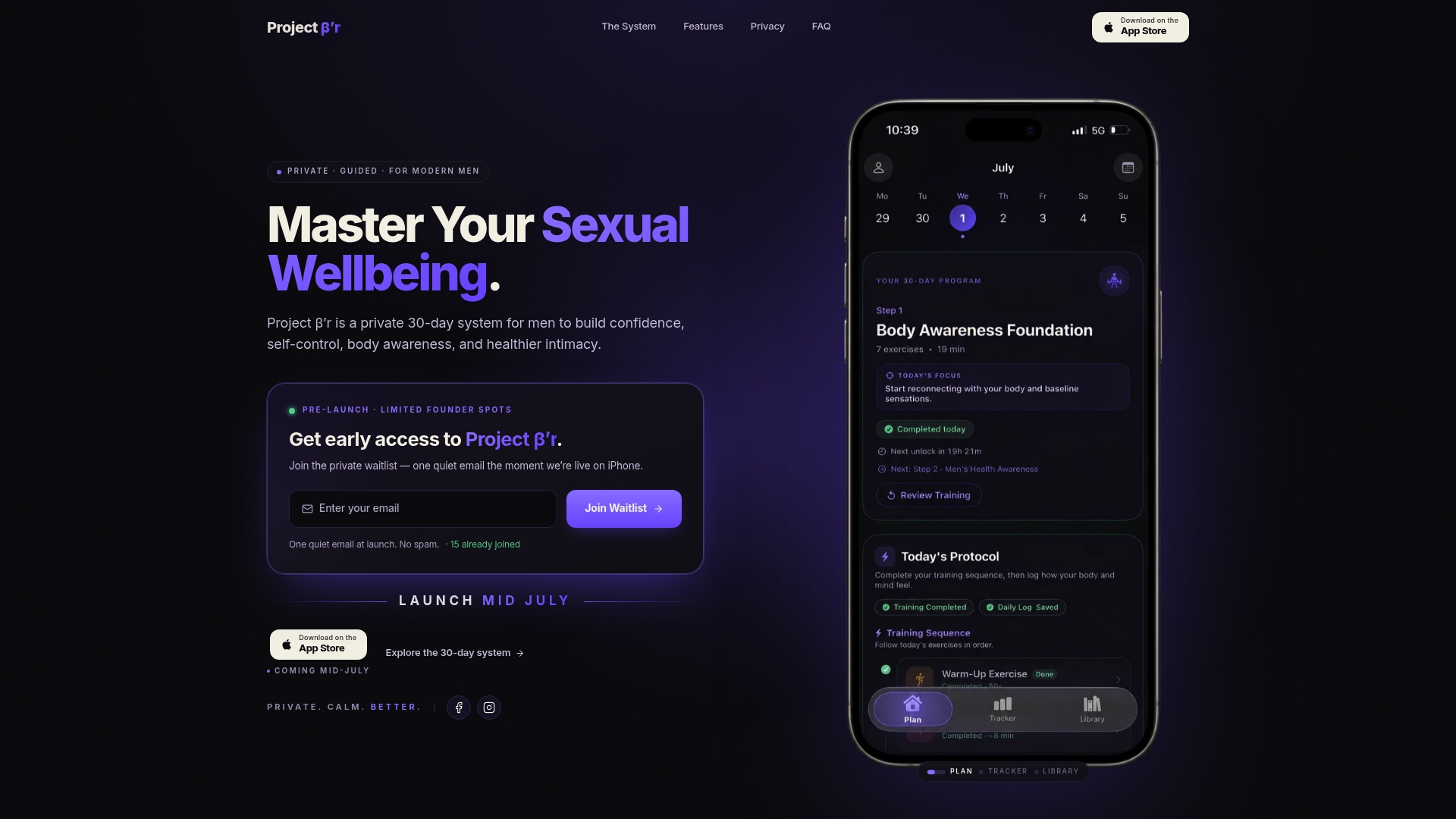
The program combines pelvic floor training, daily movement protocols, and guided reflections to address the physical and psychological roots of sexual confidence. Because stress, cortisol, and sleep quality are all connected, the men’s sexual wellbeing tools inside Projectbetter work on the full picture, not just one symptom. If you are ready to address both your sleep and your sexual health with a calm, structured approach, Projectbetter gives you a private, judgment-free place to do that work.
FAQ
Can lack of sex directly cause insomnia?
Lack of sex is not a direct cause of clinical insomnia. It can worsen fragile sleep patterns by removing the hormonal relaxation that orgasm provides, but persistent insomnia requires other underlying drivers such as anxiety, depression, or poor sleep hygiene.
Does sex before bed actually improve sleep quality?
Yes. Orgasm raises prolactin and oxytocin while lowering cortisol, which promotes faster sleep onset and deeper sleep. Research shows people spend 7 minutes less awake on nights with sexual activity compared to nights without.
Is insomnia linked to lack of intimacy or just lack of sex?
Insomnia connects more strongly to emotional disconnection and elevated stress than to sexual frequency alone. Intimacy without orgasm, including physical closeness and emotional bonding, also stimulates oxytocin and supports better sleep.
Does poor sleep reduce sexual desire?
Poor sleep lowers testosterone by 10%–15% after just one week of restricted sleep, directly suppressing libido. This creates a cycle where insomnia reduces sexual desire, which then removes a natural sleep aid, making sleep harder still.
What can men do to improve sleep without relying on sexual activity?
Consistent sleep and wake times, daily movement, morning light exposure, and cortisol-lowering practices like breathing exercises all improve sleep quality independently of sexual activity. Addressing decreased libido and underlying stress simultaneously produces the most durable results.