Does Cortisol Lower Testosterone? What Men Need to Know
Cortisol directly lowers testosterone by suppressing production and reducing bioavailability through multiple hormonal pathways. This is not a minor or occasional effect. Men experiencing fatigue, low libido, or sluggish recovery may be living with cortisol-driven testosterone suppression without knowing it. The relationship between cortisol and testosterone is one of the most clinically significant hormonal dynamics in men’s health, and understanding it changes how you approach both stress and sexual wellbeing. If your testosterone numbers look “normal” but you still feel off, elevated cortisol may be the reason.
How does cortisol biologically suppress testosterone production?
Cortisol suppresses testosterone through three distinct biological mechanisms, each compounding the others. Together, they explain why chronic stress causes such a measurable decline in male hormonal health.
Suppression of the HPG axis
The hypothalamic-pituitary-gonadal (HPG) axis is the brain’s command chain for testosterone production. The hypothalamus signals the pituitary gland, which then releases luteinizing hormone (LH). LH travels to the testes and tells Leydig cells to produce testosterone. Elevated cortisol interrupts this chain at the top. It reduces gonadotropin-releasing hormone (GnRH) output from the hypothalamus, which cuts LH release, which cuts testosterone production at the source. A 12-day hydrocortisone study demonstrated significant plasma testosterone drops, confirming this axis suppression is real and measurable.

Direct inhibition of Leydig cells
Even if some LH signal gets through, cortisol hits testosterone production again at the testicular level. Cortisol directly suppresses Leydig cell steroidogenic enzyme activity, meaning the testes lose their ability to convert cholesterol into testosterone efficiently. This is a dose-dependent effect. Higher cortisol means greater enzyme inhibition and lower testosterone output, regardless of what the brain is signaling.
Binding globulins and free testosterone loss
Total testosterone on a lab report does not tell the full story. Elevated cortisol increases SHBG, or sex hormone-binding globulin, which binds testosterone and pulls it out of active circulation. Cortisol also raises cortisol-binding globulin. The result is that more of your testosterone sits in an inactive, bound form. You can have a “normal” total testosterone reading and still experience every symptom of low testosterone because your free testosterone is depleted.
Pro Tip: If your lab results show normal total testosterone but you still feel fatigued and have low drive, ask your doctor to test free testosterone and SHBG alongside a morning cortisol level. The full picture matters.
Acute cortisol elevation suppresses testosterone within minutes. Chronic elevation sustains that suppression indefinitely. This is why a single stressful day is manageable, but months of unrelenting pressure create lasting hormonal damage.
What evidence links chronic stress to reduced testosterone in men?
The research connecting chronic stress and testosterone decline is consistent and specific. Chronically stressed men show 15%–30% reductions in testosterone compared to low-stress control groups. That is not a subtle shift. A 15%–30% drop is enough to produce noticeable symptoms in most men, including reduced libido, slower muscle recovery, and lower energy.
Sleep deprivation is one of the fastest ways to see this effect in action. One week of sleep restriction causes a 10%–15% daytime testosterone decline in healthy men. That is a significant drop from just seven days of poor sleep. The mechanism is direct: sleep deprivation raises cortisol, and elevated cortisol suppresses testosterone production through the HPG axis and Leydig cell pathways described above.
Testosterone suppression by cortisol is an evolved survival mechanism, not a malfunction. Under chronic stress, the body deprioritizes reproduction to conserve resources for immediate survival. The problem is that modern stressors, such as work pressure, financial anxiety, and poor sleep, are not short-term threats. They are persistent, and the body’s hormonal response treats them as if they are.
The table below shows how different stress exposures affect testosterone over time.
| Stress type | Cortisol effect | Testosterone impact | Recovery timeline |
|---|---|---|---|
| Acute stress (single event) | Short spike | Temporary dip, minutes to hours | Hours to 1 day |
| Sleep restriction (1 week) | Sustained elevation | 10%–15% daytime decline | Days with restored sleep |
| Chronic stress (months) | Persistently high | 15%–30% reduction | 8–12 weeks with lifestyle changes |
| Glucocorticoid exposure | Pharmacological elevation | Significant HPG axis suppression | Variable, requires medical guidance |
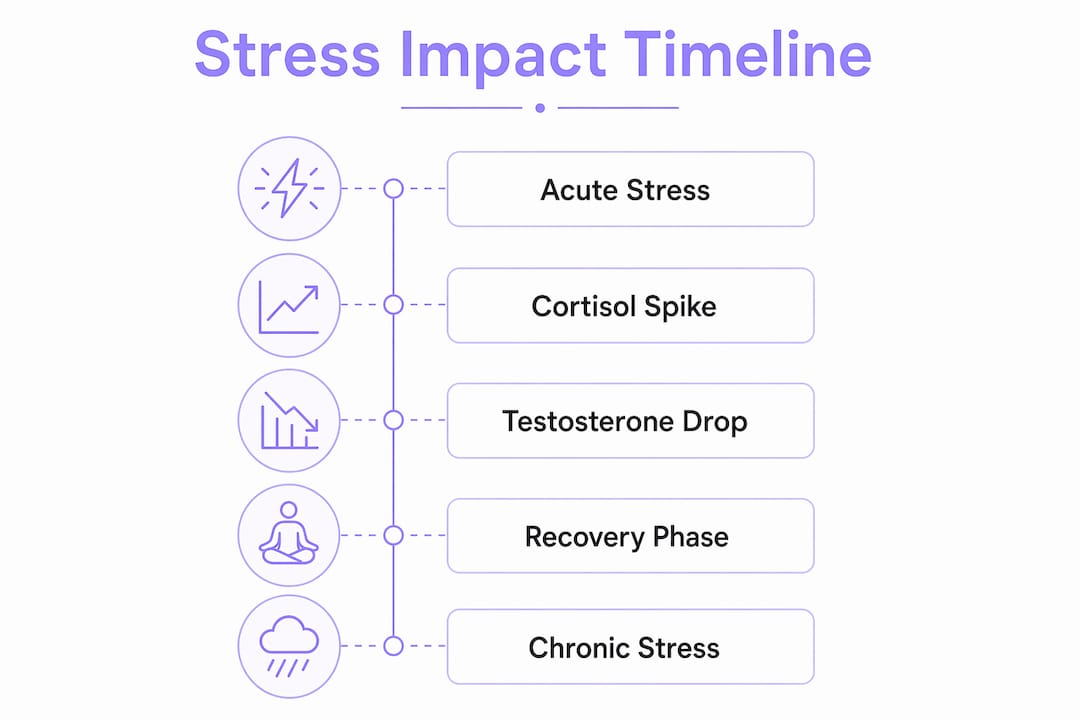
Occasional stress has a minor and reversible impact. Chronic stress creates a persistent hormonal deficit that does not self-correct without deliberate intervention.
How does the bidirectional relationship between cortisol and testosterone affect men?
The cortisol-testosterone relationship runs in both directions, and this is where many men get stuck. Most people understand that high cortisol lowers testosterone. Fewer realize that low testosterone heightens HPA axis reactivity, causing stronger cortisol spikes in response to ordinary daily stressors. The two hormones form a feedback loop that worsens over time if left unaddressed.
Here is what that cycle looks like in practice:
-
Chronic stress raises cortisol, which suppresses testosterone production.
-
Lower testosterone reduces your resilience to stress, making the HPA axis more reactive.
-
Everyday stressors, such as a difficult meeting or a poor night of sleep, now trigger larger cortisol spikes than they would in a man with healthy testosterone levels.
-
Those larger spikes further suppress testosterone, deepening the deficit.
-
Fatigue, low libido, and impaired recovery worsen, which often increases psychological stress, feeding the cycle again.
The symptoms men notice, including low drive, poor sleep quality, reduced motivation, and slower physical recovery, are not just consequences of low testosterone. They are also consequences of elevated cortisol acting independently on the brain, muscles, and immune system. This overlap makes the hormonal picture feel confusing, but the underlying driver is often the same: unmanaged chronic stress.
Breaking this cycle requires addressing cortisol first, not just testosterone. Adding testosterone without lowering cortisol leaves the suppressive mechanism intact. The body continues to bind and deplete free testosterone, and the HPA axis remains overreactive.
What are practical approaches to managing cortisol to restore testosterone naturally?
Restoring testosterone through cortisol management is achievable for most men. The timeline is realistic: measurable improvements begin at 4–6 weeks with consistent lifestyle changes, and significant hormonal restoration typically occurs at 8–12 weeks.
-
Prioritize sleep above everything else. Sleep is the single most powerful lever for cortisol regulation. Aim for 7–9 hours of consistent, dark, and cool sleep. Even partial sleep restoration begins lowering cortisol within days and allows testosterone to recover its natural morning peak.
-
Reduce chronic stressors deliberately. Identify the two or three persistent stressors in your life and address them structurally. This means setting work boundaries, reducing decision fatigue, and building recovery time into your schedule. Stress reduction is not passive. It requires active choices.
-
Adjust your exercise approach. Moderate resistance training supports testosterone and lowers cortisol over time. Excessive high-intensity training without adequate recovery does the opposite. It raises cortisol further. If you are already stressed and fatigued, reducing training volume temporarily often produces better hormonal results than pushing harder.
-
Support your diet. Adequate dietary fat is necessary for testosterone synthesis, since cholesterol is the raw material for steroid hormones. Zinc and magnesium deficiencies are both associated with lower testosterone and impaired cortisol regulation. Whole foods, consistent meal timing, and avoiding chronic caloric restriction all support HPG axis function.
-
Consider structured stress management practices. Breathwork, meditation, and pelvic floor training each reduce HPA axis reactivity over time. These are not soft suggestions. They produce measurable reductions in cortisol when practiced consistently.
Pro Tip: Track your sleep quality and morning energy for four weeks before assuming you need testosterone replacement therapy. Many men find that sleep and stress improvements alone shift their hormonal profile significantly within that window.
Testosterone replacement therapy (TRT) bypasses LH suppression but does not fix cortisol-driven Leydig cell dysfunction or lower elevated cortisol. Men who go straight to TRT without addressing cortisol often find their symptoms persist because the root cause remains active. Lifestyle intervention is the appropriate first step for cortisol-driven testosterone suppression.
Key takeaways
Cortisol suppresses testosterone through three compounding mechanisms: HPG axis inhibition, Leydig cell dysfunction, and increased binding globulins that reduce free testosterone availability.
| Point | Details |
|---|---|
| Cortisol suppresses testosterone directly | It inhibits the HPG axis, impairs Leydig cells, and raises SHBG to reduce free testosterone. |
| Chronic stress causes measurable decline | Stressed men show 15%–30% lower testosterone; one week of poor sleep drops it 10%–15%. |
| The relationship is bidirectional | Low testosterone amplifies cortisol responses, creating a self-reinforcing hormonal cycle. |
| Lifestyle changes restore hormones | Consistent sleep and stress management produce measurable improvements within 4–6 weeks. |
| TRT alone may not resolve symptoms | Without lowering cortisol, testosterone replacement leaves the suppressive mechanism intact. |
What I’ve learned about cortisol, testosterone, and the men who get this wrong
Most men I speak with who are concerned about low testosterone have already started researching TRT. That instinct is understandable. Testosterone is the hormone they know, and replacement feels like a direct solution. But the majority of men under 50 with low testosterone symptoms are dealing with cortisol-driven suppression, not primary testicular failure. Jumping to replacement without addressing cortisol is like patching a leak while leaving the tap running.
The part that surprises men most is the binding globulin issue. You can have a total testosterone reading that looks acceptable and still feel every symptom of deficiency because your free testosterone is depleted. That is not a lab error. That is cortisol doing exactly what it is designed to do under chronic stress.
What I consistently recommend is a structured four-week commitment to sleep, stress reduction, and movement before any hormonal intervention. Not because lifestyle changes are always sufficient, but because they reveal the true baseline. Men who do this often find their symptoms improve significantly. Those who do not respond after 8–12 weeks of genuine effort have clearer grounds for a clinical conversation about further evaluation.
Patience is not passive here. It is the most precise tool you have.
— Aleksandr
Projectbetter and the structured path to hormonal balance
Cortisol management is not a single action. It is a daily practice that requires structure, consistency, and self-awareness. Projectbetter is a private 30-day program built specifically for men who want to address the root causes of low sexual confidence, performance pressure, and hormonal imbalance. The program integrates movement protocols, pelvic floor training, and guided daily reflections, all of which directly support cortisol reduction and HPG axis recovery. If you are ready to work on the habits and patterns that drive your hormonal health, Projectbetter offers a calm, judgment-free space to do exactly that.
FAQ
Does cortisol lower testosterone directly?
Yes. Cortisol suppresses testosterone through HPG axis inhibition, direct Leydig cell impairment, and increased SHBG, all of which reduce testosterone production and bioavailability.
How quickly does high cortisol affect testosterone levels?
Acute cortisol elevation suppresses testosterone within minutes. Chronic elevation sustains that suppression, and one week of sleep restriction alone produces a 10%–15% daytime testosterone decline.
Can you have normal testosterone labs but still have low testosterone symptoms?
Yes. Elevated cortisol raises SHBG, which binds testosterone and reduces free testosterone. Total testosterone readings can appear normal while free testosterone is significantly depleted.
How long does it take to restore testosterone by managing cortisol?
Early improvements typically appear at 4–6 weeks with consistent lifestyle changes. Significant hormonal restoration generally occurs within 8–12 weeks of sustained sleep improvement and stress reduction.
Does testosterone replacement therapy fix cortisol-driven low testosterone?
TRT raises total testosterone but does not lower cortisol or repair Leydig cell dysfunction. Without addressing cortisol, symptoms often persist because the suppressive mechanism remains active.