Porn Dopamine Addiction: The Science and Path to Recovery
Yes, dopamine mechanisms explain much of what drives compulsive pornography use, but the honest answer is more specific than that. It’s not that dopamine “causes addiction” in some simple chemical sense. It’s that pornography can hijack a reward circuit built for survival, teaching your brain to crave a cue long before you consciously decide to act on it. If you’re here because you’re worried about your own habits, the priority right now isn’t self-diagnosis. It’s assessing whether the behavior is harming your relationships, work, or mood, and taking one concrete step today.
What the neuroscience actually supports:
- Pornography can trigger genuine incentive-salience responses (“wanting”) that are measurably different from simple pleasure (“liking”).
- Cue-reactivity, not raw viewing frequency, appears to be the more clinically meaningful marker of problematic use.
- The brain’s reward circuitry retains plasticity, meaning recovery is a biological process, not just a matter of willpower.
Three things to do before reading further:
- Assess functional harm honestly: is this affecting your sleep, your relationship, your job, or your sense of self-control?
- Reduce immediate access through a content blocker or device change while you figure out your next step.
- If you notice depression, anxiety, or an inability to cut down despite real attempts, treat that as a signal to seek a professional assessment, not a personal failure.
Key Takeaways
Porn dopamine addiction is best understood as a cue-sensitized reward response that responds to structured, CBT-based retraining rather than willpower alone.
| Point | Details |
|---|---|
| Cues drive craving, not content | fMRI research shows heightened striatal activation to anticipatory cues, not the erotic content itself. |
| Assess harm, not frequency | Clinicians weigh disruption to work, relationships, and mood over how often someone views pornography. |
| CBT is the first-line treatment | Systematic reviews identify cognitive behavioral therapy as the primary evidence-based approach, with medication as secondary. |
| Early weeks can feel harder before easier | Withdrawal symptoms like irritability and urges often peak in weeks three to six before stabilizing. |
| Structured daily practice supports recovery | Project β’r offers a private 30-day protocol of movement, pelvic floor training, and reflection that complements therapy for men seeking daily structure. |
Table of Contents
- How Porn Dopamine Addiction Affects Brain Reward Circuitry
- Why Pornography Acts as a Supernormal Stimulus
- What Signs Indicate a Real Porn Addiction Problem?
- What Withdrawal Feels Like When You Stop
- Which Treatments Actually Work for Recovery?
- What Can You Do Today to Start Recovery?
- When Should You Get Professional Help?
- How Project β’r Supports Daily Recovery Habits
- A Perspective on Compassion Over Willpower
- Try Project β’r for Structured, Private Support
- Sources
- FAQ
How Porn Dopamine Addiction Affects Brain Reward Circuitry
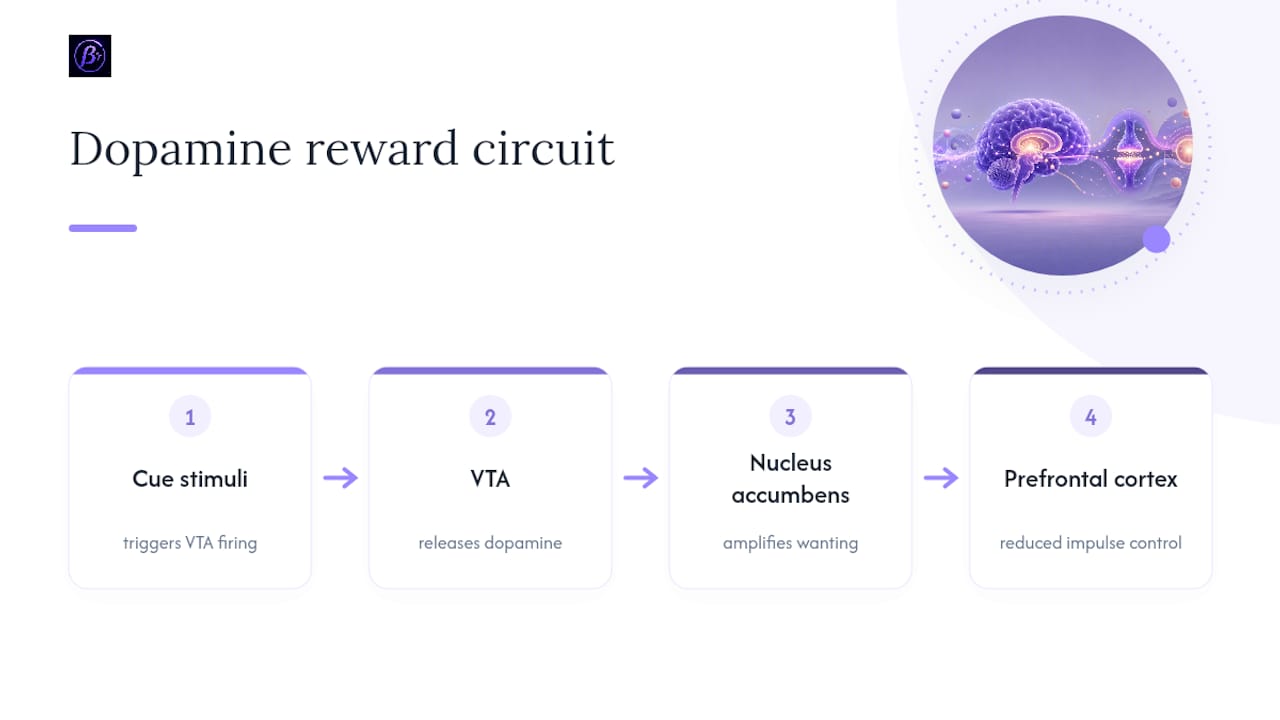
Sexual visual stimuli reliably activate the mesocorticolimbic pathway, the same circuit that responds to food, novelty, and drugs of abuse. Dopamine neurons in the ventral tegmental area (VTA) fire in response to sexually arousing images, sending signals to the nucleus accumbens and then up to the prefrontal cortex, where planning, judgment, and impulse control normally keep behavior in check. This isn’t a fringe theory. It’s the basic architecture of how the brain assigns motivational value to anything rewarding, and pornography engages it with unusual intensity because it delivers novelty on demand.
The distinction that matters most here is “wanting” versus “liking.” Wanting is incentive salience: the pull you feel toward a cue, the mental itch that makes you reach for your phone before you’ve even decided to. Liking is the actual hedonic payoff once you get there. Neuroimaging research shows these are separable processes. In one fMRI study comparing men seeking treatment for problematic pornography use with a control group, the treatment-seeking men showed increased ventral striatal activation specifically to cues predicting erotic images, not to the images themselves. Their brains were lighting up at the anticipation, not the content. That’s the signature of incentive sensitization, and it explains why someone can feel intensely compelled toward pornography even when they report the experience itself as unsatisfying.
A 2025 systematic review of striatal processing found that both ventral and dorsal striatal regions are consistently involved in processing sexual cues, whether those cues are close at hand (an open tab) or distal (a suggestive ad, a memory, a mood). The review is careful to note the evidence is still mixed across studies, some show elevated striatal activity in compulsive users and others don’t, which is a useful reminder that this field is still maturing. Not every brain responds identically, and correlation in imaging studies doesn’t always mean causation.
Reward processing here is highly context-dependent. Framing craving as an incentive-salience signal, rather than a moral failing, changes how people approach the work of managing it, according to a neuroscientific review of dopaminergic reward circuitry.
At the molecular level, repeated high-dopamine exposure can trigger changes in gene expression through pathways involving CREB and DeltaFosB, along with shifts in glutamate signaling. A neuroscience review published through PMC describes how these changes mirror patterns seen in substance addiction models: they build tolerance (needing more novelty or intensity for the same effect) and sensitization (becoming more reactive to cues over time, even as satisfaction from the content itself declines). In plain terms, the brain gets better at wanting and worse at feeling satisfied.
Fast fact: In a study of men seeking treatment for problematic pornography use, 28 participants showed heightened ventral striatal cue responses compared to 24 controls, specifically to anticipatory cues, not the sexual content itself.
If you wanted to sketch this as a diagram, it would flow like this: a cue (visual, emotional, or situational) triggers dopamine release in the VTA, which projects to the nucleus accumbens and amplifies incentive salience, while the prefrontal cortex, weakened by repeated sensitization, struggles to apply the brakes. That weakened top-down control, more than the dopamine surge itself, is often the clinical target for treatment.
Why Pornography Acts as a Supernormal Stimulus
Repeated exposure sensitizes your cue-response circuits, which means the trigger for craving stops being the content and starts being almost anything associated with it: a time of day, a location, a feeling of boredom or loneliness. This is the practical reality that catches most people off guard. They expect the urge to come from deciding to look at pornography. Instead, it shows up uninvited, tied to a context they didn’t even realize was a trigger.
The term “supernormal stimulus” describes any manufactured cue that exceeds what the brain evolved to expect from a natural reward, so it pulls harder than anything in the ancestral environment could. Pornography delivers unlimited novelty, instant access, and zero social risk, three things that never coexisted in nature. Incentive-sensitization theory holds that repeated exposure to a stimulus like this doesn’t just create a habit. It rewires the brain’s alarm system to treat unrelated cues, like opening your laptop late at night, as predictors of reward, which primes the craving before you’ve made any conscious choice.
Consider a typical escalation pattern many men describe to clinicians: a stressful day ends, they’re alone, they open their laptop “just to check something,” and forty minutes later they’re in a viewing episode they didn’t plan. None of the individual steps look dangerous. Stacked together, they form a conditioned sequence that fires on autopilot once the first domino, isolation plus a screen, falls into place.
Common trigger patterns worth watching for:
- Specific times of day, especially late at night or right after work stress.
- A particular device or location associated with privacy.
- Emotional states like boredom, loneliness, anxiety, or even mild excitement.
- Transitional moments: right before sleep, right after an argument, right after finishing a task.
Pro Tip: Keep a simple three-column log for one week: time, emotional state, and what happened right before the urge hit. Most people are surprised to find their top trigger isn’t a sexual thought at all. It’s a mood they were trying to escape.
What Signs Indicate a Real Porn Addiction Problem?
Clinicians assess harm to functioning, not frequency alone. Two people can view pornography at wildly different rates, and the one viewing less could still meet a clinical threshold for concern if it’s damaging their relationships, work performance, or self-image, while the more frequent viewer experiences no real disruption. Frequency is a data point. Impact is the diagnosis.
Watch for these red flags:
- Missing work, sleep, or social commitments because of viewing episodes.
- A noticeable drop in intimacy or connection with a partner.
- Escalating to riskier content or behaviors to achieve the same effect.
- Repeated failed attempts to cut down despite genuinely wanting to.
- Using pornography specifically to numb stress, sadness, or anxiety rather than for pleasure.
A quick self-check you can run right now:
- Has this interfered with a relationship, job, or responsibility in the last three months?
- Have you tried to stop or reduce and found yourself unable to follow through?
- Do you feel shame or secrecy severe enough that it’s affecting your mood day-to-day?
- Has the amount or intensity of content you seek out increased over time?
If you answered yes to two or more, that’s worth taking seriously.
Researchers commonly use structured instruments like the Problematic Pornography Use Scale (PPUS) or the Pornography-Induced Problematic Use Scale (PIPUS) to quantify severity in studies and clinics. These tools are useful for tracking change over time, but they have limits: they rely on self-report, and cultural or religious guilt can inflate scores independent of actual functional harm. Clinical journalism has also pointed out there’s no single standardized diagnostic test or public health pathway for this specific issue yet, which is part of why the harm-based framing matters more than a checklist score.
What Withdrawal Feels Like When You Stop
The typical early trajectory runs through acute withdrawal in the first few weeks, a stabilization period, and then gradual neural recovery over several months. Anyone expecting a clean, linear improvement from day one is setting themselves up for discouragement, because the honest pattern usually gets harder before it gets easier.
Recovery timeline snapshot:
- Weeks 0 to 2: Irritability, restlessness, low mood, and often a spike in urges as the brain searches for the missing dopamine trigger.
- Weeks 3 to 6: Cravings can intensify temporarily, a predictable feature of sensitization reversing itself, before beginning to taper.
- Weeks 7 to 12: Mood stabilizes for most people, sleep improves, and urges become less automatic, though not necessarily absent.
Tolerance and sensitization work against a comfortable early experience. Tolerance means the brain has adapted to expect a certain intensity of stimulation, so its absence initially feels like a void. Sensitization means the cue-response pathways built over months or years don’t switch off overnight; they fade gradually as the circuit gets fewer reinforcing hits. Research using fNIRS imaging has found that high-frequency viewing is associated with altered cortical connectivity and measurable short-term shifts in mood and cognitive performance, which lines up with why the first few weeks can feel foggier or more emotionally reactive than expected.
The most useful thing you can do in this window is plan for high-risk periods in advance rather than white-knuckling them as they arrive. Identify your top two or three trigger windows (often late evening or after conflict) and have a specific, pre-decided alternative action ready before the craving hits, not while you’re already in it.

Which Treatments Actually Work for Recovery?
The direct answer from the clinical literature: psychotherapy, specifically cognitive behavioral therapy (CBT), is the first-line, evidence-based treatment, and medications like SSRIs are considered secondary options when psychotherapy alone isn’t enough. A systematic review that screened over 5,000 articles and identified only 24 meeting rigorous evidence standards affirmed CBT as the primary recommended approach, a useful reminder of how young and still-developing this specific research area is compared to, say, substance use treatment.
| Approach | Primary goal | Evidence base | Typical timeline | Limitations |
|---|---|---|---|---|
| Cognitive behavioral therapy | Identify triggers, restructure thought patterns, build alternative coping skills | First-line per systematic review | Weeks to several months of regular sessions | Requires consistent engagement; access to trained therapists varies |
| Pharmacology (SSRIs, naltrexone) | Reduce compulsivity or treat co-occurring depression/anxiety | Secondary, clinician-guided | Ongoing under medical supervision | Not a standalone fix; best paired with therapy |
| Structured self-help programs | Daily habit disruption, accountability, self-monitoring | Emerging support, complements formal therapy | 30 days for initial stabilization | Not a substitute for clinical care in severe cases |
Clinical guidance from Mayo Clinic frames psychotherapy as the mainstay of treatment for compulsive sexual behavior, with medication reserved for specific situations under a clinician’s supervision, such as significant co-occurring depression or a compulsivity level that hasn’t responded to therapy alone. That sequencing matters: starting with medication before addressing the behavioral and cognitive patterns underneath it tends to treat a symptom without touching the mechanism driving it.
What should you actually expect from CBT-based treatment? Most people don’t experience a dramatic before-and-after moment. Progress tends to look like fewer automatic urges, more successful pauses between craving and action, and better emotional tolerance for the discomfort that used to send them straight to a screen. That’s slower and less cinematic than most people hope for, but it’s also more durable. If you’re weighing your options for professional support, a structured guide to stopping compulsive sexual behavior can help you understand what a clinical pathway actually involves before you commit to one.
What Can You Do Today to Start Recovery?
Immediate, everyday changes can meaningfully reduce cue exposure while you build longer-term skills, and you don’t need to wait for a therapist’s appointment to start. The goal in the first 30 days isn’t perfection. It’s making the automatic path to viewing just inconvenient enough that your prefrontal cortex gets a moment to catch up.
Your first-week checklist:
- Install a content blocker at the router or device level, not just an app you can disable in ten seconds during a craving.
- Identify your two highest-risk hours of the day and schedule something incompatible with privacy during them (a walk, a call, a chore).
- Pick one replacement behavior in advance, physical movement works particularly well, since it uses a different dopamine pathway and burns off restlessness.
- Start a short daily mood log: one line on how you felt and what you did about it.
Blocking tools generally fall into three categories, each with different tradeoffs. Router-level blockers cover every device on your network but require some technical setup. App-level blockers are easier to install but easier to bypass in a weak moment. Accountability services, which share your activity with a trusted person, add real friction but require a level of trust and privacy tradeoff not everyone is ready for. None of these is inherently better; the right choice depends on how much friction you personally need.
A simple 30-day daily protocol that echoes what clinicians recommend:
- Morning: Two minutes of reflection or intention-setting before checking your phone.
- Midday: A brief movement break, even five minutes of walking counts.
- Evening: Mood log entry and one honest note on what triggered any urges that day.
- Weekly: Review the week’s log for patterns you missed in the moment.
Journalism on recovery describes it as day-to-day practice built on consistent protocols rather than a single dramatic turning point, which matches what the neuroscience predicts: circuits that were sensitized gradually get retrained gradually. If you’re rebuilding trust or intimacy alongside this work, a guide to breaking impulsive habits in relationships walks through how to have those conversations without shame driving the process.
When Should You Get Professional Help?
Seek professional help when the behavior is harming a core area of your life, your relationship, your job, your mental health, or when structured self-help attempts haven’t held despite real effort. There’s no shame threshold you need to cross first. Struggling alone longer than necessary just delays the recovery process.
When looking for a therapist, prioritize:
- Documented experience with compulsive sexual behavior or problematic pornography use specifically, not just general talk therapy.
- Training in CBT or related behavioral approaches, since that’s the evidence-supported starting point.
- Comfort discussing co-occurring conditions like anxiety or depression, which frequently travel alongside this issue.
Before booking, ask a prospective therapist:
- What’s your treatment approach for compulsive sexual behavior, and is it CBT-based?
- Have you worked with clients on this specific issue before?
- How do you handle co-occurring depression or anxiety if they come up?
If you’re experiencing thoughts of self-harm or a level of functional impairment that feels unmanageable, that’s an emergency, not a self-help situation. Contact a crisis line or emergency services immediately rather than waiting for a scheduled appointment. For readers looking for a starting point, a curated list of sexual wellness resources for men can help narrow the search.
How Project β’r Supports Daily Recovery Habits
A structured 30-day program gives you daily repetition and built-in accountability, two ingredients CBT research consistently points to as necessary for habit change to stick. That structure is exactly what Project β’r is built around: a private app-based system for men working on performance pressure, impulsive habits, and low sexual confidence, without needing to walk into a clinic on day one.
The program includes:
- Guided movement exercises and pelvic floor (Kegel) training tied to daily protocols.
- Mood and habit logging to track patterns over the 30-day arc.
- Guided audio meditations and self-reflection prompts.
- A library of repeatable exercises designed for privacy and consistency, not public accountability.
Consistent daily protocols, mood logs, replacement habits, structured reflection, are what therapists describe as the actual mechanism of change, more than any single insight or breakthrough moment.
Project β’r fits best for adult men who want a private, structured framework to build daily awareness and self-control, particularly around performance pressure and habit patterns. It is not a replacement for clinical therapy. Men experiencing significant co-occurring depression, trauma, or an inability to reduce use despite consistent effort should prioritize a licensed therapist alongside or instead of an app-based program. Details on the pelvic floor component are covered in a dedicated guide to pelvic floor training for readers curious about that specific piece of the protocol.
A Perspective on Compassion Over Willpower
Recovery from porn-related compulsive behavior is a learned re-regulation process, not evidence of weak willpower. The neuroscience is fairly clear on this: sensitized cue circuits don’t respond to shame, they respond to consistent, structured retraining over time.

It’s also worth naming that “success” doesn’t have to mean total abstinence for everyone. Some men are working toward complete elimination; others toward functional control that doesn’t disrupt their relationships or self-respect. Both are legitimate goals, and neither works without addressing whatever stress, loneliness, or unresolved history the behavior was originally regulating.
If you’re in the middle of this right now, the most useful thing you can do today is smaller than it feels: log one trigger, take one walk, make one honest note. Get professional support if the pattern doesn’t loosen with structure alone.
Try Project β’r for Structured, Private Support
Project β’r is a private 30-day app built for men who want daily structure around performance pressure, impulsive habits, and sexual confidence, without the exposure of group programs or the wait times of clinical intake. Where a therapist’s office requires scheduling, cost per session, and often a waitlist, Project β’r gives you a repeatable daily protocol you control entirely from your phone.
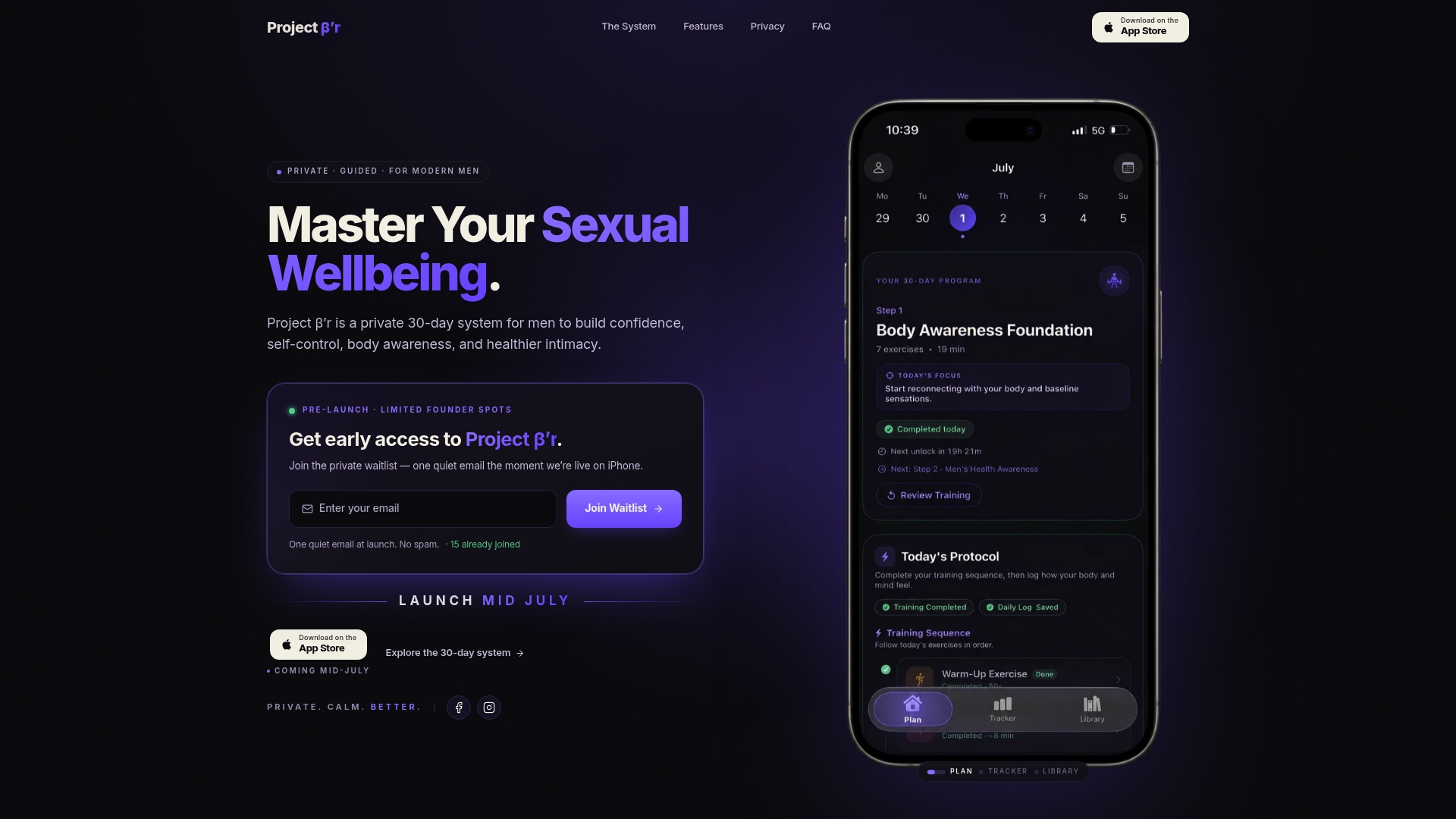
That said, an app is not the right tool for every situation. If you’re dealing with significant depression, trauma, or a pattern that hasn’t budged despite genuine effort, pairing it with a therapist experienced in compulsive sexual behavior, or exploring trauma-informed approaches to healing, gives you a stronger foundation. For men looking for a structured starting point they can begin privately today, Project β’r’s landing page walks through the 30-day protocol, including the movement exercises, pelvic floor training, and guided reflections, so you can decide if it fits where you are right now.
Sources
For readers who want to go deeper into the neuroscience and clinical guidance behind this article, these sources offer the technical detail behind the summaries above:
- Can pornography be addictive? An fMRI study of men seeking treatment for problematic pornography use
- Striatal neural processing of sexual cues in PPU: systematic review (2025)
- Mayo Clinic: Compulsive sexual behavior — diagnosis and treatment
For clinical-level questions specific to your situation, a licensed therapist with experience in compulsive sexual behavior remains the most reliable source of guidance.
FAQ
Is Porn Addiction a Real, Clinically Recognized Condition?
There’s no single universally standardized diagnosis for it yet, but clinicians widely recognize problematic pornography use as a genuine, treatable pattern when it causes functional harm, and treat it using the same CBT-based approaches applied to other compulsive behaviors.
Does Dopamine Actually Cause Porn Addiction?
Dopamine doesn’t cause addiction by itself, but it drives the “wanting” or incentive-salience response that fMRI studies have linked to cue-triggered cravings in men with problematic pornography use, which is the mechanism most closely tied to compulsive patterns.
How Long Does It Take to Recover from Porn-Related Compulsive Behavior?
Early stabilization, reduced urges and improved mood, often develops over the first 12 weeks, though full neural and psychological recovery from a longstanding pattern typically continues well beyond that initial window.
Can an App Like Project β’r Replace Therapy?
No. Project β’r offers a structured, private daily protocol that complements CBT principles, but men with significant co-occurring depression, trauma, or treatment-resistant patterns should prioritize a licensed therapist alongside or instead of an app-based program.
What’s the First Step If I Think I Have a Problem?
Assess whether the behavior is disrupting your work, relationships, or mood, then take one concrete action today, blocking access, logging your triggers, or booking a consultation with a therapist experienced in compulsive sexual behavior.