Best Pelvic Floor Training Apps for Men in 2026
What are the best pelvic floor training apps right now?
The strongest pelvic floor training apps in 2026 combine clinical backing, guided routines, and features that fit real daily life. Dr. Kegel leads for men specifically, with 75.5% of men with ED and 82.5% of men with PE reporting improvements in clinical studies. Squeezy NHS stands out for physiotherapist-designed programs. Kegel Trainer suits beginners well, and Easy Kegel keeps things simple for anyone who wants no-fuss guidance.
| App | Best For | Free / Paid | Platform | Key Features | User Rating |
|---|---|---|---|---|---|
| Dr. Kegel | Men with ED or PE | Paid (subscription) | iOS, Android | Guided Kegel plan, mind cleaner, progress tracker, insights library | — |
| Squeezy NHS pelvic floor app | Physiotherapist-backed programs | Paid | iOS, Android | Customizable plans, professional mode, bladder diary | — |
| Kegel Trainer | Beginners | Free + paid | iOS, Android | Auto difficulty adjustment, guided exercises | — |
| Easy Kegel | Audio/visual learners | Free + paid | iOS, Android | Audio cues, visual prompts, reminders | — |
| Coach app | Coaching-led training | Paid | iOS, Android | Personalized plans, community features | — |
| Kegel Aerobics | Advanced aerobic users | Free + paid | iOS, Android | Aerobic-pelvic hybrid routines | — |
| Kegeltunes | Music-driven practice | Free + paid | iOS, Android | Rhythm-based vibration, music integration | — |
| My PFF | Progress-focused users | Free + paid | iOS, Android | Adaptive plans, goal setting, progress visualization | — |
| TAT | Rehabilitation | Paid | iOS, Android | Medical device integration, clinical protocols | — |
| Kegel Talent Pro | Professional-level training | Paid | iOS, Android | Advanced workout programs, detailed metrics | — |
| KPFE Pro | Biofeedback users | Paid | iOS, Android | Biofeedback integration, customizable difficulty | — |
| Pelvic Floor And Kegel Exercises (Karen Barton) | Education-first users | Free + paid | iOS, Android | Instructional content, exercise library | — |
| Nymbl Training app | Multi-fitness users | Free + paid | iOS, Android | Balance training, pelvic floor modules | — |
| Kegel Trainer Pro | Structured progressors | Paid | iOS, Android | Progressive difficulty, tracking | — |
| Squeezy NHS | NHS-endorsed programs | Paid | iOS, Android | NHS-backed guidance, customizable reminders | — |
| Squeeze Time | Casual users | Free | iOS, Android | Simple timer-based exercises | — |
| Kegeltunes Pro | Advanced music users | Paid | iOS, Android | Extended music library, advanced rhythm training | — |
| Squeezy | General pelvic health | Free + paid | iOS, Android | Core pelvic floor exercises, reminders | — |
| Kegel Trainer PFM Exercises | Beginners to intermediate | Free + paid | iOS, Android | PFM-specific routines, guided sessions | — |
A closer look at each app’s features and experience
Dr. Kegel: the men’s health standard
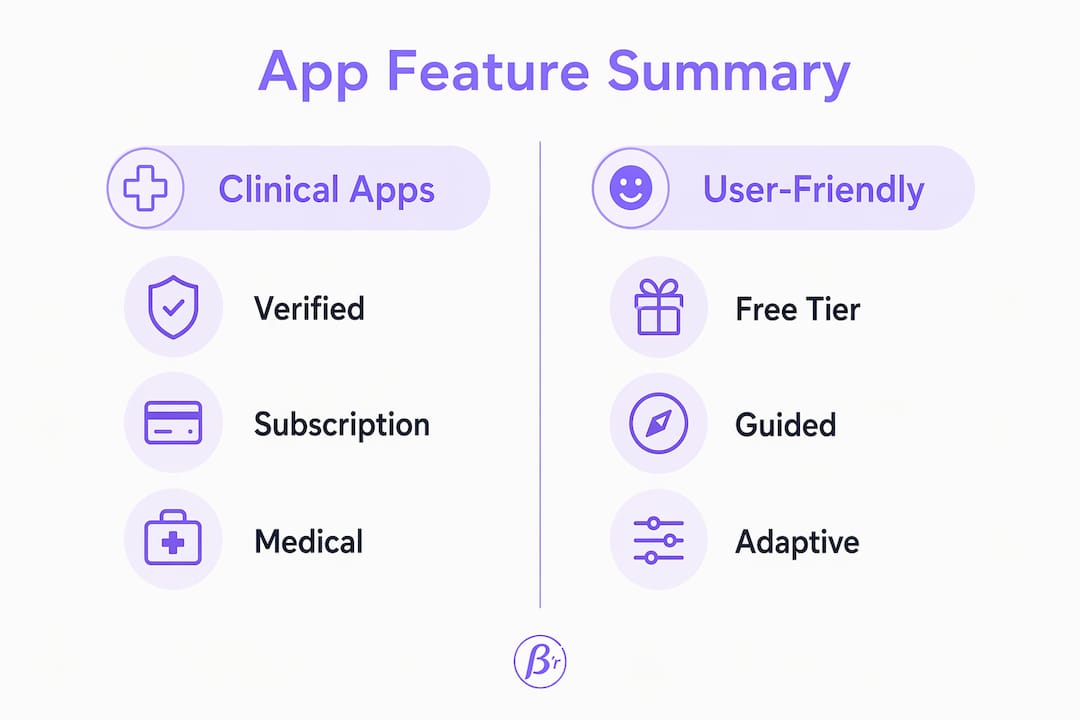
Dr. Kegel is built specifically for men, and that focus shows in every feature. The core training plan uses phone vibration to guide muscle contractions, so workouts stay private and require no equipment. 84% of users reported improvements in pelvic floor strength and related symptoms in the app’s own survey. Beyond the Kegel plan itself, the app includes a Mind Cleaner for stress and anxiety relief, Daily Challenges for lifestyle habits, and an Insights Library covering men’s health, nutrition, and relationships. Workouts take roughly five minutes a day, which makes consistency far easier to maintain.

The app runs on both iOS and Android and requires a subscription for full access. All exercises were verified by a pelvic floor physical therapist, per the developer’s own notes. For men dealing with ED or PE, this is the most clinically grounded standalone app in the category.
Squeezy NHS and Squeezy: physiotherapist-designed precision
Squeezy was designed by chartered NHS physiotherapists specializing in men’s health, and it carries UKCA Class I medical device marking in the United Kingdom. The Professional Mode lets a physiotherapist set a detailed, patient-specific exercise program directly in the app, which is genuinely useful for anyone working alongside a specialist. A bladder diary, audio and visual prompts, and progress graphs round out the feature set. Squeezy NHS and Squeezy are essentially the same clinical foundation with slightly different packaging; both suit men who want a program shaped by a real clinician rather than a generic algorithm.
Kegel Trainer and Kegel Trainer Pro: the beginner’s entry point
Kegel Trainer keeps the interface clean and adjusts difficulty automatically as your strength improves. The free tier gives enough to get started, while the paid version adds more structured progressions. Kegel Trainer Pro builds on that with more detailed tracking and a stricter progressive program. Both are good choices when you want clear, step-by-step guidance without a steep learning curve.
Easy Kegel and Kegel Trainer PFM Exercises: simplicity first
Easy Kegel leans on audio and visual cues to walk you through each contraction, which helps if you’re not sure you’re engaging the right muscles. Reminders are built in and easy to customize. Kegel Trainer PFM Exercises takes a similar approach, with PFM-specific routines and guided sessions suited to beginners moving toward intermediate work. Neither app overloads you with features, and that restraint is the point.
Kegeltunes and Kegeltunes Pro: rhythm as a training tool
Kegeltunes syncs pelvic floor contractions to music beats, using rhythm as a natural pacer. The approach works well for people who find silent timers boring or hard to follow. Kegeltunes Pro extends the music library and adds more advanced rhythm patterns for users who’ve outgrown the basic version.
My PFF, Kegel Talent Pro, and KPFE Pro: for users who want more data
My PFF centers on adaptive training plans and goal visualization, making it a good fit for people who are motivated by seeing measurable progress over time. Kegel Talent Pro steps up to professional-grade workout programs with detailed performance metrics, suited to users who treat pelvic floor training the way they’d treat any serious strength program. KPFE Pro adds biofeedback integration, letting wearable sensors provide real-time feedback on muscle engagement. Biofeedback can meaningfully improve training accuracy when used consistently, and KPFE Pro is one of the few consumer apps that supports it directly.
TAT: rehabilitation-focused training
TAT is built around clinical rehabilitation protocols and supports medical device integration. It suits people recovering from pelvic dysfunction who need structured, medically informed guidance rather than a general fitness program.
Coach app: community and coaching
The Coach app pairs personalized pelvic floor plans with community features and motivational support. For people who stay consistent when they feel accountable to others, the community element adds something the purely solo apps don’t offer.
Pelvic Floor And Kegel Exercises (Karen Barton): education alongside exercise
This app pairs instructional content with its exercise library, which makes it useful for people who want to understand the anatomy and reasoning behind each movement. The educational depth is its clearest differentiator.
Nymbl Training app: pelvic floor within a broader fitness context
Nymbl integrates pelvic floor modules into a wider balance and strength program. For users who want pelvic floor work as one component of a broader fitness routine rather than a standalone focus, Nymbl fits naturally.
Squeeze Time: the no-frills timer
Squeeze Time is a free, timer-based app with no coaching or tracking beyond the basics. It works for someone who already knows the exercises and just needs a simple prompt.
Key features to compare across apps:
- Guided routines: Dr. Kegel, Squeezy NHS, Kegel Trainer, Easy Kegel, and TAT all offer step-by-step guided sessions.
- Biofeedback support: KPFE Pro leads here; TAT also supports medical device integration.
- Clinical or physiotherapist backing: Squeezy NHS and Dr. Kegel both carry verified clinical credentials.
- Education content: Pelvic Floor And Kegel Exercises (Karen Barton) and Dr. Kegel’s Insights Library stand out.
- Community features: Coach app is the clearest option for social accountability.
- Free access: Squeeze Time, Easy Kegel (partial), Kegel Trainer (partial), and Nymbl (partial) offer free tiers.
On privacy and data: Apps that require account creation and sync data to the cloud carry more exposure than offline-first apps. Squeezy NHS stores exercise logs locally by default. Dr. Kegel’s privacy policy is publicly listed at appercut.eu. Before committing to any subscription, reviewing the app’s data handling policy takes less than two minutes and is worth doing.
On wearable integration: Biofeedback sensors paired with apps like KPFE Pro and TAT give real-time muscle engagement data that no phone-only app can match. The tradeoff is cost and setup complexity. For most people starting out, a well-structured app without hardware is the right first step.
How do you choose the right pelvic floor training app for your goals?
The right app depends on where you’re starting and what you actually want to achieve. A few clear criteria narrow the field quickly.
-
Define your goal first. Bladder control, ED support, PE management, and general pelvic strength each call for slightly different programs. Dr. Kegel and Squeezy NHS are the clearest choices for men with specific health concerns. Kegel Trainer or Easy Kegel suit general fitness goals.
-
Check for clinical validation. Apps backed by physiotherapists or supported by published research carry more weight than those built purely on user feedback. Squeezy NHS holds UKCA Class I medical device status. Dr. Kegel cites peer-reviewed clinical studies on pelvic floor muscle training for ED and PE.
-
Consider customization. If you’re working with a physiotherapist, Squeezy NHS’s Professional Mode is hard to beat. If you prefer self-directed training, My PFF and Kegel Talent Pro offer the most flexible self-adjusting programs.
-
Match the platform and device. All major apps support both iOS and Android. If you use a wearable sensor or biofeedback device, KPFE Pro and TAT are the apps to consider.
-
Evaluate the free vs. paid tradeoff honestly. Free tiers on Kegel Trainer, Easy Kegel, and Squeezy give enough to assess usability before committing. Apps like Dr. Kegel and Squeezy NHS require a subscription for full access, but the clinical depth justifies the cost for most users with specific health goals.
-
Read the privacy policy. Pelvic health data is personal. Apps that store data locally or give you clear control over what’s shared deserve preference over those with vague data practices.
Pro Tip: Ease of use, discreetness, and the ability to exercise anywhere are the factors that most consistently predict whether someone sticks with a pelvic floor app long-term. Choose an app you’ll actually open daily, not the one with the most features.
Tips for getting real results from a pelvic floor training app
Consistency matters far more than intensity when it comes to pelvic floor work. These muscles respond to regular, moderate training, not occasional hard sessions.
- Practice daily, but keep sessions short. Five minutes a day, done consistently, outperforms a 30-minute session once a week. Dr. Kegel’s five-minute daily format is built around this principle.
- Follow guided routines carefully at first. Many people contract the wrong muscles when they start. Audio and visual cues in apps like Easy Kegel and Squeezy NHS help you find the right engagement before building intensity.
- Progress gradually. Auto-adjusting difficulty in Kegel Trainer and Dr. Kegel prevents the common mistake of jumping to advanced contractions before the baseline is solid.
- Use tracking to stay honest. Progress graphs in My PFF, Dr. Kegel, and Squeezy NHS show you whether you’re actually improving or just going through the motions.
- Integrate mental health features where available. Apps like Dr. Kegel include stress relief tools because pelvic floor health connects directly to mental wellbeing, and apps that address both tend to produce better long-term adherence.
- Pair app training with broader lifestyle awareness. Sleep, hydration, and stress levels all affect pelvic floor function. The educational content in Dr. Kegel’s Insights Library and Karen Barton’s app addresses this connection directly.
Pro Tip: Give your pelvic floor muscles recovery time. Overtraining is a real risk, especially in the first few weeks. If you feel soreness or increased urgency, reduce session frequency for a few days before resuming.
What a whole-person approach to pelvic floor training actually looks like
Pelvic floor training works best when it’s part of a broader picture of male health, not just an isolated muscle exercise. Clinical research confirms that consistent pelvic floor exercise improves erectile function, ejaculatory control, and bladder and bowel control. But the psychological dimension matters just as much. Stress, performance pressure, and low self-confidence can undermine the physical gains from even a well-structured exercise program.
Pelvic floor apps are evolving to reflect this. The market is shifting away from simple contraction timers toward platforms that integrate mood tracking, psychological support, and educational content. Dr. Kegel’s Mind Cleaner and Daily Challenges address this directly. The Coach app’s community features serve a similar purpose. For men dealing with performance anxiety alongside physical symptoms, an app that addresses only the muscle misses half the picture.
Projectbetter’s approach sits in a different category from the standalone apps compared above. It’s a structured 30-day program built specifically for men, combining pelvic floor exercises for men with guided audio meditations, self-reflection tools, mood and habit logging, and educational content on sexual health. The program addresses performance pressure, impulsive habits, and low sexual confidence as a connected system, not as separate problems.
The benefits of this kind of integrated training include:
- Stronger pelvic floor muscles supporting erectile function and ejaculatory control
- Reduced performance anxiety through structured mental wellness practices
- Greater self-awareness around habits, mood, and physical responses
- Consistent daily structure that builds confidence gradually over 30 days
- A private, judgment-free environment that removes the shame barrier many men feel around these topics
Projectbetter offers a different path for men who want more than muscle training
Most pelvic floor apps give you a timer and a contraction count. That’s useful, but it’s a narrow solution for a problem that often runs deeper.
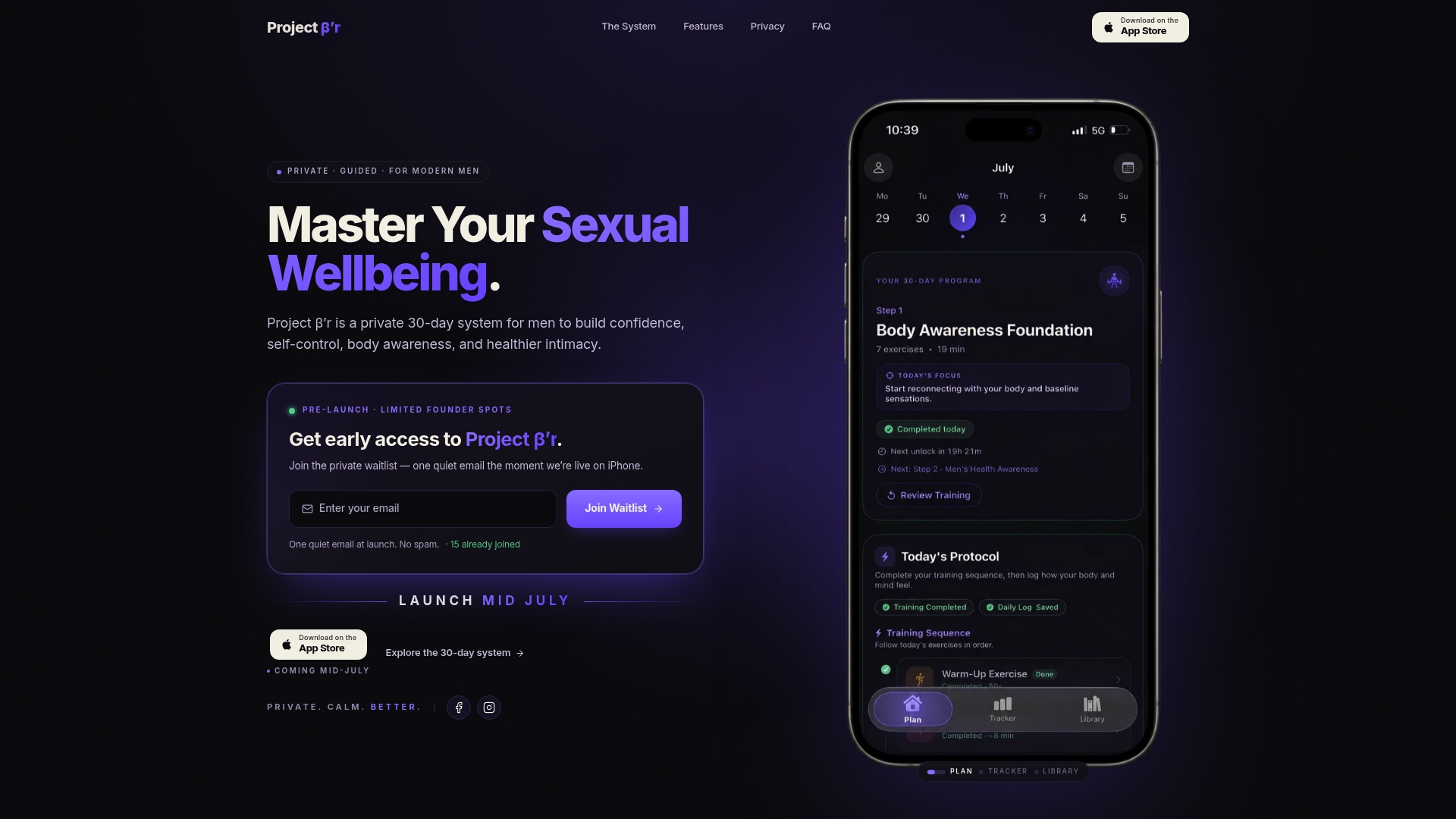
Projectbetter is a private 30-day iOS program designed for men who want to address sexual wellbeing at a deeper level. It combines structured pelvic floor training with guided reflections, daily challenges, mood tracking, and audio meditations, all within a clean, private app environment. If you’ve tried a standalone Kegel app and found that the physical training alone didn’t resolve the confidence or control issues you were hoping to address, Projectbetter’s 30-day program offers a more complete approach. It’s not a replacement for clinical physiotherapy when that’s what’s needed. It’s a structured, self-directed program for men who want calm, consistent progress on their own terms.
FAQ
Which app is better, Dr. Kegel or the Coach app?
Dr. Kegel is the stronger choice for men focused on ED or PE, with clinical study data showing 75.5% of men with ED and 82.5% of men with PE reporting improvements. The Coach app suits users who want community accountability and coaching-led motivation alongside their training.
Is there a free version of the Squeezy app?
Squeezy NHS requires a paid download, though pricing is modest. The core exercise program, professional mode, and bladder diary are all included in the single purchase, with no separate subscription tier publicly listed.
Is the Dr. Kegel app worth it?
For men with specific concerns around ED, PE, or general pelvic floor weakness, yes. The five-minute daily format, physiotherapist-verified exercises, and clinical backing make it one of the most credible options in the category.
What is the best pelvic floor training device?
For app-only training, Dr. Kegel and Squeezy NHS lead on clinical credibility. For hardware-assisted training with real-time feedback, KPFE Pro and TAT support biofeedback sensor integration, which can improve muscle engagement accuracy beyond what a phone-only app provides.
Can pelvic floor apps help with more than bladder control?
Yes. Pelvic floor muscle training supports erectile function, ejaculatory control, and bladder and bowel health. Apps like Dr. Kegel and Squeezy NHS are designed with all of these outcomes in mind, not bladder control alone.
Key Takeaways
The most effective pelvic floor training apps combine clinical validation, guided daily routines, and features that address both physical and mental wellbeing for lasting results.
| Point | Details |
|---|---|
| Clinical backing matters | Dr. Kegel cites studies showing 75.5% of men with ED and 82.5% of men with PE reporting improvements. |
| Squeezy NHS offers physiotherapist precision | Its Professional Mode lets clinicians set patient-specific programs directly in the app. |
| Consistency beats intensity | Five minutes daily, as structured in Dr. Kegel, outperforms infrequent longer sessions. |
| Whole-person apps show better adherence | Apps integrating mood tracking and mental wellness features tend to produce stronger long-term results. |
| Projectbetter goes beyond muscle training | Its 30-day iOS program combines pelvic floor exercises with guided reflections, habit tracking, and mental wellness tools for men. |