Does Being Tired Affect a Man Sexually? What to Know
TL;DR:
- Fatigue reduces testosterone, elevates stress hormones, and impairs the physical and mental readiness for intimacy.
- Addressing sleep quality and managing stress can restore male sexual health and hormone balance effectively.
Being tired affects a man sexually by reducing testosterone, elevating stress hormones, and impairing the physical and mental readiness required for intimacy. Up to 20% of men experience loss of libido tied directly to exhaustion or burnout. Research published in 2026 shows that sleep restriction drops testosterone by 10–15% after just one week at five hours per night. That single statistic reframes fatigue from a minor inconvenience into a genuine hormonal event. The connection between lack of sleep and sex drive is not psychological weakness. It is biology, and understanding it is the first step toward doing something about it.
Does being tired affect a man sexually through hormones?
Fatigue disrupts the hormonal foundation that sexual desire depends on. Testosterone, the primary driver of male libido, follows a circadian rhythm tied directly to sleep quality. When sleep is cut short, the body simply does not complete the hormonal cycles needed to maintain healthy testosterone levels.
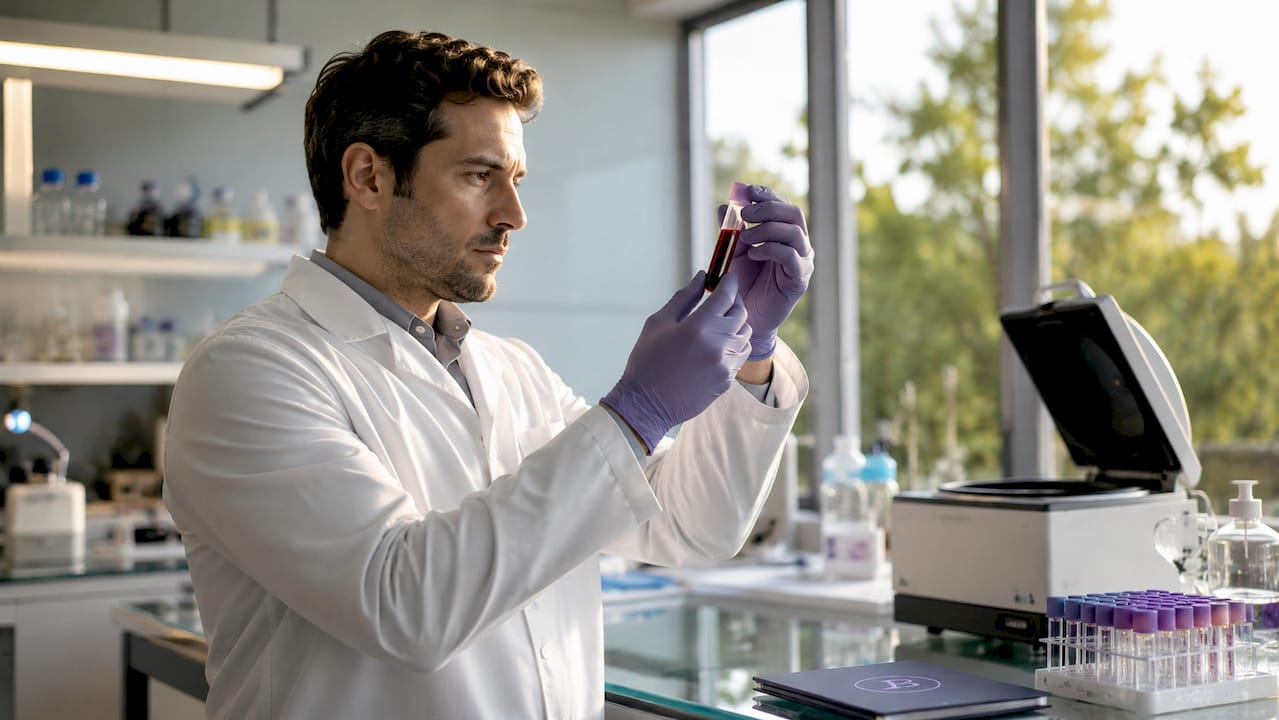
The mechanism is straightforward. Sleep restriction lowers testosterone by 10–15% in healthy men after only seven days of sleeping five hours per night. That drop is clinically significant. It is comparable to aging roughly ten to fifteen years in hormonal terms, which explains why a chronically tired man can feel a sudden and confusing loss of sexual interest.
Cortisol compounds the problem. Elevated cortisol from chronic tiredness suppresses reproductive hormones and shifts the body into a fight-or-flight state. The body treats exhaustion as a survival threat, and reproduction becomes a low priority. Sexual desire requires hormonal stability, vascular readiness, and mental bandwidth. Fatigue removes all three simultaneously.
Fatigue also compromises the vascular and neurological systems needed for erections. Blood flow regulation, nerve sensitivity, and smooth muscle relaxation all depend on a body that is adequately rested. When those systems are impaired, achieving and maintaining an erection becomes physically harder, regardless of desire.
Key physiological effects of fatigue on male sexual function:
- Testosterone decline: Sleep restriction measurably lowers testosterone within days, reducing libido and sexual confidence.
- Cortisol spike: Chronic tiredness raises cortisol, which directly suppresses sex hormones.
- Vascular impairment: Fatigue reduces blood flow efficiency, making erections harder to achieve.
- Hormonal rhythm disruption: Poor sleep quality breaks the circadian cycle that regulates testosterone production overnight.
Pro Tip: Track your sleep duration for two weeks alongside your energy and sexual interest levels. Most men notice a clear pattern within days, which makes the connection between rest and desire impossible to ignore.
What psychological factors link tiredness and sexual performance?
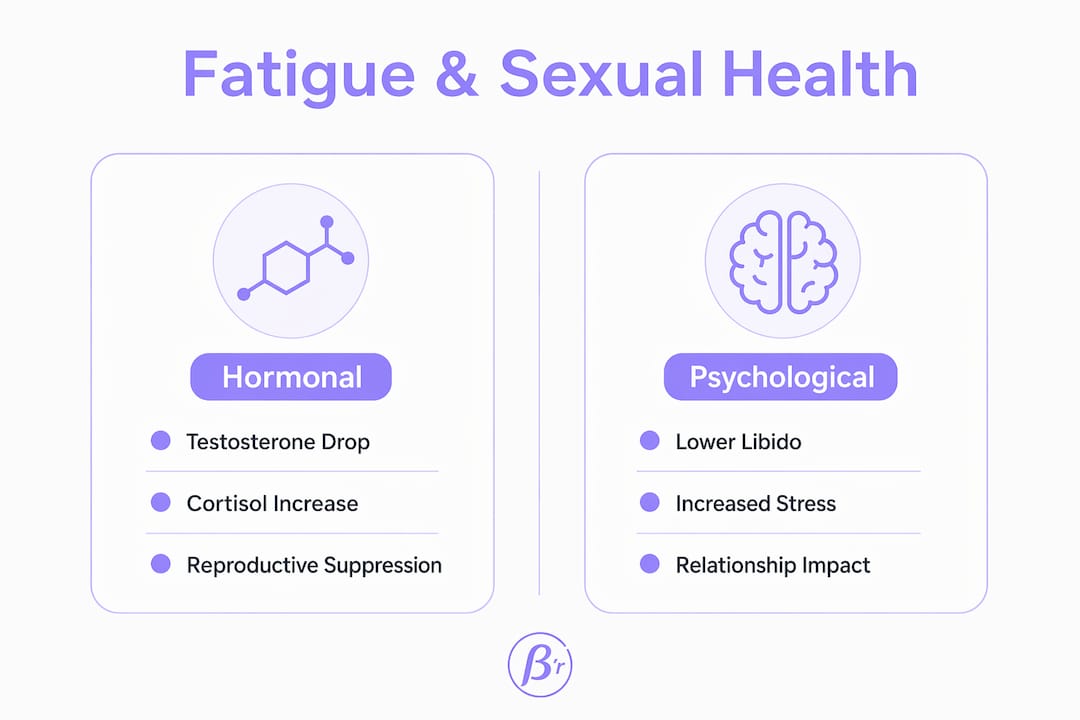
Mental exhaustion is as damaging to sexual performance as physical fatigue. A tired mind loses interest in intimacy before the body even gets involved. Irritability, mood swings, and low motivation all reduce the emotional openness that sex requires.
The most damaging psychological pattern is the performance anxiety loop. Performance anxiety triggered by fatigue-induced sexual difficulties creates a cycle that persists even after the original tiredness improves. One poor experience under exhaustion leads to worry about the next encounter. That worry raises cortisol, lowers testosterone further, and makes the next experience more likely to disappoint. The cycle feeds itself.
“Sexual inactivity lowers mood and destabilizes sleep patterns due to reduced oxytocin and elevated cortisol. But pressure to perform can worsen stress, creating a paradox where trying harder makes recovery slower.”
Relationship intimacy suffers in a quieter way. When a man is consistently tired, emotional closeness with a partner often erodes before sexual function does. Conversations become shorter. Physical affection decreases. The distance that grows from emotional withdrawal can make sexual reconnection feel harder than it actually is.
Stress from sexual difficulties can also disrupt sleep and mood further, creating a bidirectional problem. Poor sleep reduces sexual confidence. Reduced sexual confidence increases anxiety. Increased anxiety worsens sleep. Breaking this cycle requires addressing the psychological layer, not just the physical one.
How do sleep disorders worsen fatigue and sexual health?
Chronic insomnia and obstructive sleep apnea (OSA) are two clinical conditions that significantly amplify the impact of fatigue on male sexual health. Both are underdiagnosed and frequently overlooked when men seek help for low libido or erectile difficulties.
Chronic insomnia increases the likelihood of mood disorders fivefold. Depression and anxiety are both independent causes of reduced sexual desire, so a man with chronic insomnia is dealing with compounding risks. Treating the insomnia alone often produces meaningful improvements in sexual interest without any other intervention.
| Condition | Primary effect on sleep | Impact on sexual health |
|---|---|---|
| Chronic insomnia | Difficulty falling or staying asleep | Lowers testosterone, raises cortisol, increases depression risk |
| Obstructive sleep apnea | Fragmented sleep, oxygen drops | Reduces hormonal balance, impairs vascular function |
| General fatigue | Insufficient total sleep time | Suppresses libido, reduces energy for intimacy |
Obstructive sleep apnea often coexists with fatigue and sexual dysfunction. OSA causes repeated drops in blood oxygen during sleep, fragmenting the sleep architecture that testosterone production depends on. Many men with OSA wake feeling unrefreshed even after eight hours in bed, which is a key warning sign.
Undiagnosed OSA may be the hidden cause when a man’s libido does not improve despite better sleep habits. Clinical assessment, including a sleep study, is the appropriate next step in that situation. Treating OSA with continuous positive airway pressure (CPAP) therapy frequently restores both energy and sexual function.
Pro Tip: If you snore loudly, wake with headaches, or feel exhausted despite a full night in bed, ask your doctor about a sleep study. OSA is treatable, and treatment often resolves fatigue-related sexual difficulties faster than any lifestyle change alone.
What practical steps restore sexual health when fatigue is the cause?
Fatigue-related sexual difficulties are largely reversible. The path back to healthy sexual function runs through sleep, stress management, and realistic expectations, not performance pressure.
-
Prioritize 7–9 hours of consistent sleep. Quality sleep is critical to restoring hormonal balance and libido. Consistency matters as much as duration. Going to bed and waking at the same time daily stabilizes the circadian rhythm that testosterone production depends on.
-
Limit screen exposure before bed. Blue light from phones and screens suppresses melatonin, delaying sleep onset and reducing sleep quality. A 30-minute screen-free window before bed is a low-effort change with measurable results.
-
Manage stress through structured daily habits. Breathing exercises, light physical activity, and brief mindfulness practices all reduce cortisol. Lower cortisol creates space for reproductive hormones to recover. Even ten minutes of deliberate relaxation daily shifts the hormonal environment meaningfully.
-
Seek medical evaluation for persistent fatigue. When tiredness does not improve with better sleep habits, a clinical assessment rules out thyroid dysfunction, low testosterone, anemia, or undiagnosed sleep apnea. These conditions require targeted treatment, not just lifestyle adjustments.
-
Remove performance pressure from intimacy. Focusing on emotional closeness rather than sexual performance breaks the anxiety loop. Physical affection, honest conversation with a partner, and patience with recovery all reduce the cortisol that perpetuates sexual difficulties.
-
Avoid alcohol as a sleep aid. Alcohol disrupts sleep architecture and lowers testosterone. Men who use alcohol to fall asleep often experience worse hormonal outcomes than those who sleep fewer hours without it.
Pro Tip: Treat sleep as a non-negotiable health priority, not a luxury. The men who recover fastest from fatigue-related sexual difficulties are those who address sleep first and sexual performance second.
Key Takeaways
Fatigue affects male sexual health through a combination of hormonal suppression, vascular impairment, and psychological anxiety that compounds over time without intervention.
| Point | Details |
|---|---|
| Testosterone drops fast | One week of poor sleep reduces testosterone by 10–15%, directly lowering libido. |
| Cortisol is the hidden driver | Chronic tiredness raises cortisol, which suppresses sex hormones and reduces sexual desire. |
| The anxiety loop is real | One fatigue-induced sexual difficulty can trigger performance anxiety that persists long after rest improves. |
| Sleep disorders need evaluation | Obstructive sleep apnea and chronic insomnia require clinical assessment, not just better sleep habits. |
| Recovery is possible | Consistent 7–9 hours of quality sleep, stress management, and removing performance pressure restore sexual health. |
What we’ve learned from men navigating fatigue and sexual health
The men who struggle most with fatigue-related sexual difficulties are often the ones who try hardest to push through. They treat low libido as a willpower problem rather than a physiological signal. That framing makes recovery slower and the anxiety loop harder to break.
What actually works is the opposite of pushing through. It is stepping back, addressing sleep as a medical priority, and releasing the expectation that sexual function will return overnight. The hormonal recovery from sleep restriction takes time. Testosterone does not rebound in a single good night. Consistent, quality rest over days and weeks is what moves the numbers.
The psychological layer deserves equal attention. A man who has experienced fatigue-induced sexual difficulties carries that memory into future encounters. That memory raises his baseline anxiety, which raises his cortisol, which makes the next experience harder. Recognizing this pattern is not a sign of weakness. It is the most direct path to interrupting it.
Restoring fundamental health, sleep, stress regulation, and metabolic balance, is the foundation. Sexual confidence follows from that foundation. It does not precede it. Patience with the process is not passive. It is the most productive thing a man can do.
— Projectbetter
How Projectbetter supports men dealing with fatigue and sexual health
Fatigue-related sexual difficulties rarely resolve with a single change. They require a structured, private approach that addresses sleep, stress, and sexual confidence together.
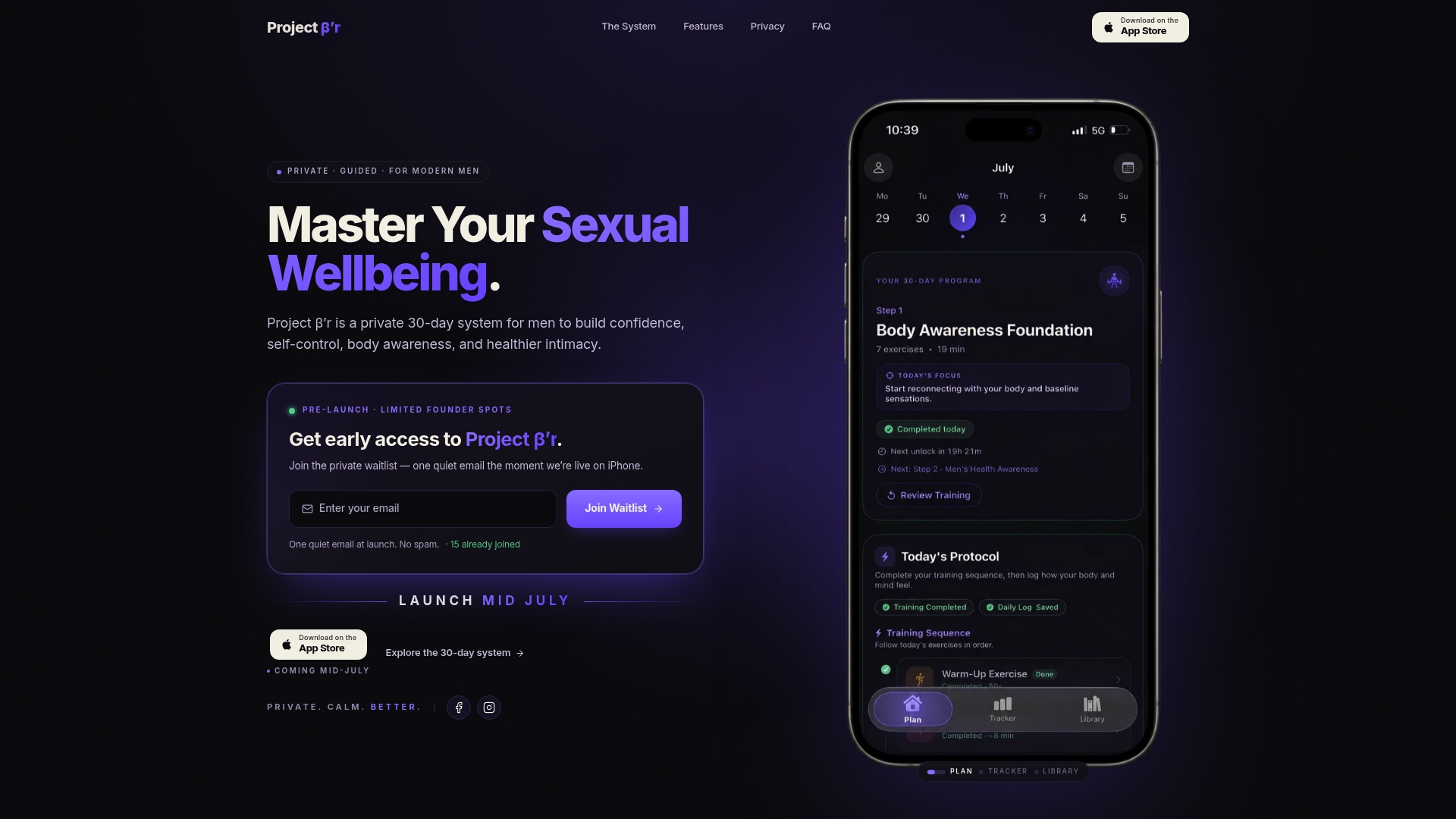
Projectbetter is a 30-day private system built specifically for men working through exactly this kind of challenge. The program combines daily movement protocols, pelvic floor training, and guided reflections designed to rebuild sexual confidence from the ground up. It addresses the performance anxiety loop directly, offering structured daily actions that reduce pressure and rebuild awareness of your body’s signals. The approach is calm, private, and grounded in evidence. No shame. No pressure. Just a clear, steady path toward feeling better in your body and more confident in your relationships.
FAQ
Does being tired lower testosterone in men?
Yes. One week of sleeping five hours per night reduces daytime testosterone by 10–15% in healthy men. That drop is enough to measurably reduce libido and sexual confidence.
Can lack of sex cause insomnia?
Sexual inactivity reduces oxytocin and raises cortisol, both of which destabilize sleep patterns. The relationship between sex and sleep is bidirectional, meaning each affects the other.
How does fatigue cause erectile difficulties?
Fatigue impairs the vascular, hormonal, and neurological systems that erections depend on. Multiple systems fail simultaneously under chronic tiredness, making erectile difficulties a physical outcome rather than a psychological one alone.
Can obstructive sleep apnea cause low libido?
Yes. OSA fragments sleep and reduces blood oxygen, disrupting the hormonal cycles that regulate testosterone. OSA frequently coexists with low libido and often requires a clinical sleep study to diagnose and treat.
How long does it take for sexual function to recover after improving sleep?
Recovery timelines vary, but hormonal balance begins to improve within days of consistent quality sleep. Full recovery from a prolonged period of sleep restriction typically takes several weeks of sustained 7–9 hours per night.