Kegel Exercises for Men: A Complete Practical Guide
Kegel exercises strengthen the male pelvic floor muscles to improve urinary control, reduce post-void dribbling, and support sexual function. Here’s a safe starting protocol you can try right now: contract your pelvic floor for a few seconds, relax for a similar amount of time, and repeat several times. Do that once or twice today. According to the NIDDK, beginners can work toward multiple repetitions per session, several times daily, as strength builds.
Three safety rules before you begin:
- Use the stop-the-urine-stream test only once to locate the muscles. Repeating it as a training method risks incomplete bladder emptying and raises your infection risk.
- Never perform Kegels with a Foley catheter in place. The MSKCC clinical guidance specifically warns this can cause bladder spasms and bleeding.
- Stop immediately if you feel pain. Persistent pain or worsening symptoms call for a professional assessment, not more repetitions.
Key Takeaways
Consistent, correctly performed pelvic floor training produces measurable improvements in urinary control and sexual function in men, typically within 6–12 weeks of regular practice.
| Point | Details |
|---|---|
| Core benefit | Kegels improve urinary control, reduce post-void dribbling, and can support ejaculatory control and erectile function. |
| Starting protocol | Contract for 3–5 seconds, relax for 3–5 seconds; repeat 8–10 times, three sessions per day. |
| Progression rule | Increase hold time before adding sets; advance from lying to seated to standing as control improves. |
| Key safety warning | Never Kegel with a catheter in place; stop and seek help if pain develops or symptoms worsen. |
| Guided option | Projectbetter’s 30-day app offers structured pelvic floor training, daily tracking, and private guided sessions. |
Table of Contents
- What are the pelvic floor muscles in men?
- What are the real benefits of Kegel exercises for men?
- How do you find the right muscles before you start?
- How to do Kegel exercises for men: step-by-step technique
- How often should you do Kegels, and what does a starter plan look like?
- What should you do when Kegels aren’t working?
- What are the risks of overdoing Kegel exercises?
- What does the research actually say about effectiveness?
- A note from Projectbetter on making this a real habit
- Projectbetter’s guided pelvic floor program for men
- Sources
- FAQ
What are the pelvic floor muscles in men?
The male pelvic floor is a layered group of muscles and connective tissue that stretches like a hammock from the pubic bone at the front to the tailbone at the back. The primary muscle group is the levator ani, which includes the pubococcygeus, iliococcygeus, and puborectalis. Working alongside it are the sphincters that control the urethra and rectum.
These muscles carry real responsibility. They support the bladder, rectum, and surrounding pelvic organs, and they activate automatically every time you cough, lift, or sneeze to prevent leakage. For sexual function, they contribute to ejaculatory control and help maintain erections by compressing the veins that allow blood to leave the penis.
One distinction worth knowing: pelvic floor tone can be too weak or too tight. Kegel training addresses weakness. If your pelvic floor is already hypertonic (overly tense), strengthening exercises can worsen symptoms rather than help. Harvard Health notes that some people need relaxation and stretching work instead of strengthening, which is why pain or worsening symptoms always warrant a clinician’s assessment.
What are the real benefits of Kegel exercises for men?
Regular pelvic floor training produces meaningful, clinically supported benefits. The Cleveland Clinic notes that improvements typically appear over weeks to months, not days, and that consistency matters more than intensity.
- Urinary control. Kegels reduce stress incontinence (leakage during coughing or lifting) and urge incontinence by strengthening the sphincter and supporting structures. Men dealing with pelvic floor exercises for incontinence often see the clearest early gains here.
- Post-prostate surgery recovery. Pelvic floor training is a standard recommendation before and after prostate procedures. The Cleveland Clinic confirms it can speed the return of urinary control after prostatectomy.
- Ejaculatory control. Stronger pelvic floor muscles give you more awareness and voluntary control over the muscles involved in ejaculation. Some men report improved control over timing, though individual results vary.
- Erectile support. There is evidence that pelvic floor training can support erectile function in some men, particularly those with mild to moderate dysfunction, by improving blood flow dynamics in the pelvic region. The evidence here is promising but not conclusive for all men.
- Long-term prevention. Pelvic muscle tone naturally declines with age. Treating Kegels as a long-term habit slows that decline rather than reversing it permanently. Starting early gives you a meaningful head start.
How do you find the right muscles before you start?
Getting this right is the most important step. Practicing on the wrong muscles wastes time and can create new tension patterns.
The stop-stream test. The next time you urinate, try briefly stopping the flow midstream. The muscles you use to do that are your pelvic floor muscles. Notice the internal “lift and squeeze” sensation. Then finish urinating normally. Use this test once or twice to identify the muscles, then stop. The Mayo Clinic recommends this only as a diagnostic check, not as ongoing training.
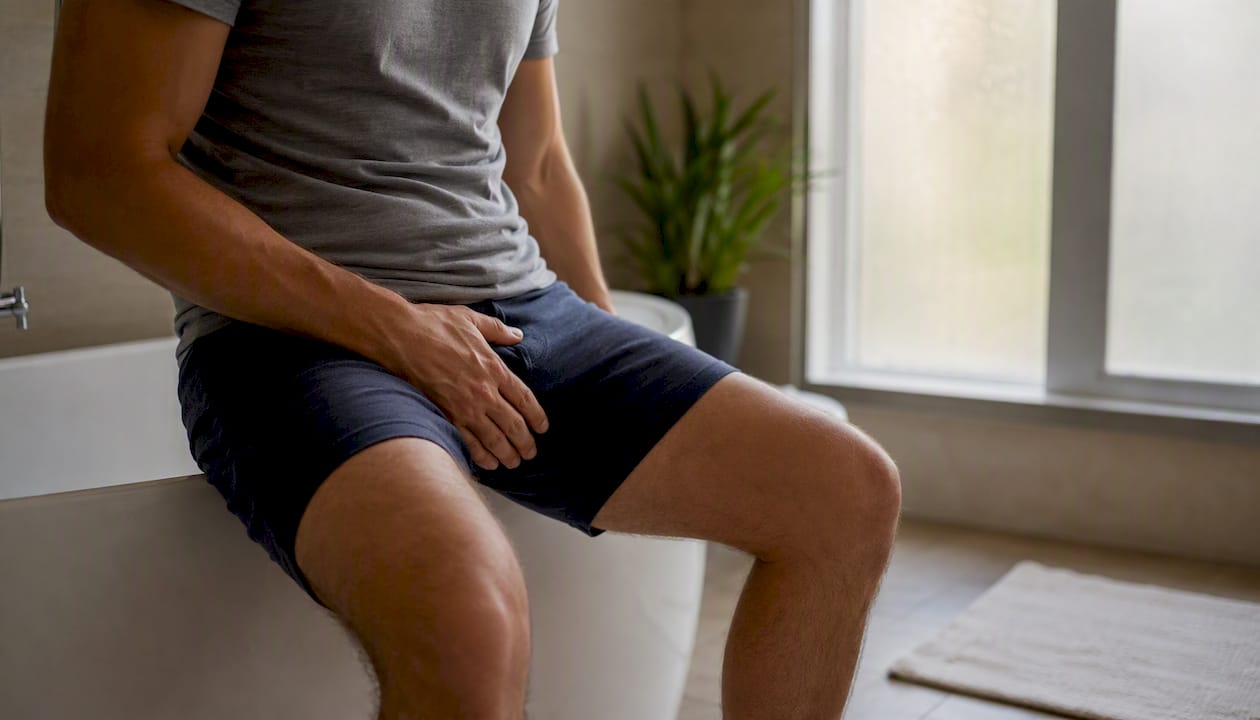
The anal squeeze check. Lying down, try to tighten the muscles around your anus as if you’re preventing gas from passing. You should feel a gentle internal lift. This engages the same levator ani group. Some men find it helpful to place a clean finger near the perineum (the area between the scrotum and anus) to feel the subtle outward pressure that confirms the right muscles are working.
Signs you’re using the wrong muscles. Watch for these in a mirror or by feel:
- Your buttocks visibly clench or lift off the surface
- Your abdomen tightens or pulls inward
- Your thighs press together
- You hold your breath
Any of those signals means compensatory muscles are taking over. Relax everything and try again with a lighter effort.
If you genuinely cannot isolate the sensation after several attempts, or if either test causes discomfort, that’s a clear signal to consult a pelvic-floor physiotherapist before continuing. A visual guide with pictures can also help you confirm your form.
How to do Kegel exercises for men: step-by-step technique
Good form is what separates effective training from wasted effort. Follow this sequence:
- Choose your position. Start lying on your back with knees bent and feet flat. This reduces the load on the pelvic floor and makes isolation easier for beginners.
- Breathe naturally. Exhale gently as you contract. Never hold your breath during a squeeze. Breath-holding raises intra-abdominal pressure and works against the pelvic floor.
- Perform slow holds. Contract the pelvic floor and hold for 5–10 seconds. Beginners will often manage only 3–6 seconds at first, and that’s expected. Relax fully for an equal amount of time between each hold. Do 8–10 slow holds per set.
- Perform fast squeezes. After your slow holds, do 10 quick, sharp contractions, holding each for about 1 second before releasing. These build the reactive strength that prevents leakage during sudden pressure (a cough, a sneeze, a jump).
- Rest between sets. Allow at least 1 minute of rest before repeating. Muscle fatigue is normal early on, per guidance from the University of Michigan Health.
- Progress your position. Once lying-down sets feel controlled, move to seated, then standing. Each position increases the load and more closely mirrors real-life demands.
Pro Tip: If you notice your glutes or thighs engaging, reduce the effort by about half. A lighter, correctly isolated contraction is more effective than a full-body clench.
A single session looks like this: 8–10 slow holds (5–10 seconds each) followed by 10 fast squeezes, repeated for 2–3 sets with rest between. That takes roughly 10 minutes.
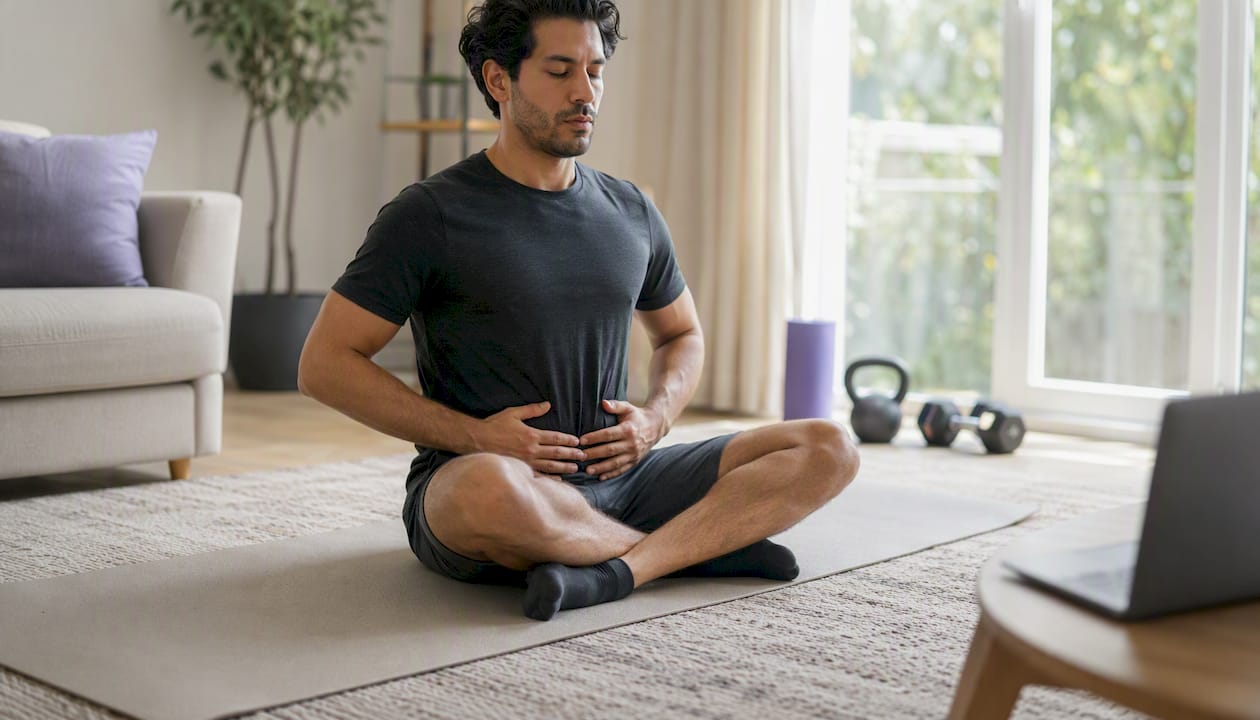
How often should you do Kegels, and what does a starter plan look like?
Consistency over intensity is the rule. Three sessions per day is the standard clinical starting point, and spreading them across the day (morning, afternoon, evening) prevents fatigue and builds the habit more reliably than one long session.
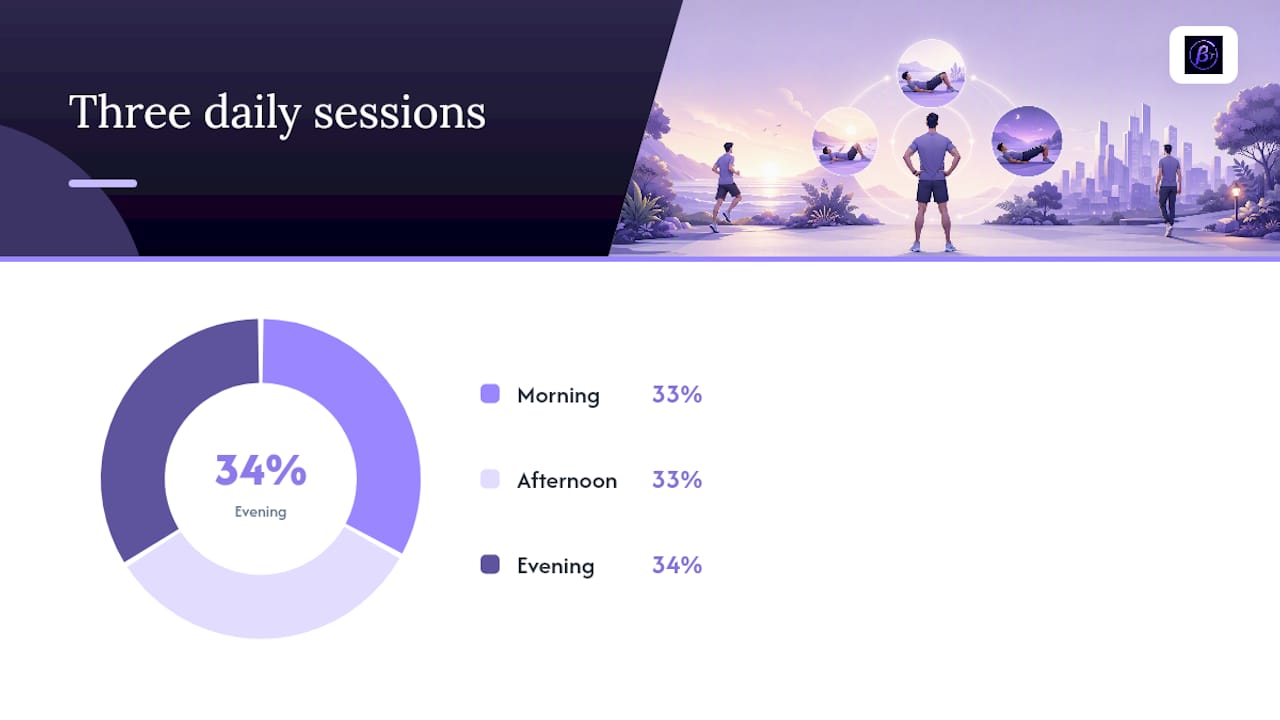
Here is a practical 8-week starter plan:
Progression guidelines:
- Add hold time before adding sets. Increasing from 5 to 10 seconds is more valuable than doubling your set count.
- Advance positions in order: lying down first, then seated, then standing. Move to the next position only when the current one feels controlled and fatigue-free.
- If a session causes soreness or increased urgency, reduce volume the next day and rebuild gradually.
- After 8 weeks, many men see measurable improvement. Clinical sources suggest some benefits continue to develop over 3 months of consistent practice. If you see no change after 8 weeks of correct, consistent training, that’s the right moment to seek supervised guidance.
A structured 30-day guided plan can help you stay on track if self-directed progression feels uncertain.
What should you do when Kegels aren’t working?
Most problems trace back to one of three causes: wrong muscles, inconsistent practice, or an underlying condition that self-training can’t address.
Troubleshooting checklist:
- Check your form first. Are your glutes, abs, or thighs activating? Are you holding your breath? Return to the lying-down position and reduce effort until you feel a clean internal lift.
- Check your consistency. Three sessions per day, every day. Missing sessions is the most common reason progress stalls.
- Check for overtraining. More is not better. If you’re doing Kegels every hour, you may be creating tension rather than strength. Rest days matter.
- Consider community insight. Crowdsourced troubleshooting from men who’ve worked through the same challenges can be a useful supplement to clinical guidance. Reddit-sourced tips offer practical perspectives, though they should complement, not replace, professional advice.
Red flags that require professional evaluation:
- New or worsening pelvic pain during or after exercises
- Increased leakage rather than improvement
- Difficulty urinating or a sense of incomplete emptying
- Any symptoms following surgery, especially prostate surgery
If you have a urinary catheter in place, do not attempt Kegels. Wait until it is removed and cleared by your care team. For post-surgical recovery, a pelvic-floor physiotherapist can guide you through a safe, staged return to training.
What are the risks of overdoing Kegel exercises?
Kegels carry real risks when done incorrectly or excessively. Understanding them keeps your training safe.
Overtraining. Treating pelvic floor muscles like any other muscle group and training them to exhaustion daily can increase tension, cause pelvic pain, and worsen the very symptoms you’re trying to fix. Rest is part of the program.
Hypertonic pelvic floor. If your pelvic floor is already too tight, Kegels are contraindicated. A hypertonic pelvic floor needs relaxation and lengthening work, not more contraction. Harvard Health is clear that strengthening exercises can worsen symptoms in this population. Signs of a hypertonic floor include chronic pelvic pain, pain during sex, or difficulty initiating urination.
Routine stop-stream use. Using the stop-the-stream method as a regular training exercise, rather than a one-time diagnostic check, risks incomplete bladder emptying and raises urinary tract infection risk, as Mayo Clinic cautions.
Adjunct options worth knowing. When self-directed training isn’t producing results, three evidence-based tools can help:
- Biofeedback / perineometer. A sensor placed at the perineum or rectum gives real-time feedback on contraction strength and correctness. StatPearls notes that biofeedback improves training accuracy and outcomes, particularly for beginners.
- Supervised pelvic-floor physiotherapy. A trained physiotherapist can assess your baseline, correct your technique, and progress your program safely. This is the most reliable path for men with post-surgical needs or persistent symptoms.
- Electrical stimulation. Used in some clinical programs to activate pelvic floor muscles in men who cannot voluntarily contract them. This is a supervised clinical tool, not a home option.
What does the research actually say about effectiveness?
Pelvic-floor muscle training is first-line, evidence-based therapy for urinary incontinence in men. That’s not a marketing claim; it’s the clinical consensus. StatPearls confirms that supervised programs consistently produce better outcomes than brief verbal instruction alone, and that program duration and correct technique are the two variables that matter most.
For post-prostate surgery recovery, the Cleveland Clinic and Mayo Clinic both support pelvic floor training as a standard component of rehabilitation. Sexual function benefits, including improvements in ejaculatory control and some aspects of erectile function, have supporting evidence, though effect sizes vary by individual.
Most men notice early changes within 6–12 weeks of consistent, correct training. Meaningful strength gains often require a minimum of 8 weeks, and some benefits continue building over 3 months. The key word is consistent. Sporadic practice produces sporadic results.
If you’re uncertain about your technique or not seeing progress, the most reliable next step is a pelvic-floor physiotherapist, not more repetitions.
A note from Projectbetter on making this a real habit
Kegels are one of the highest-return habits a man can build, precisely because they require almost nothing: no equipment, no gym, no audience. Two minutes, three times a day, done correctly, compounds over weeks into genuine physical change.
What we’ve seen, working with men on structured daily programs, is that the biggest barrier isn’t effort. It’s awareness. Most men don’t know these muscles exist until something goes wrong. Starting before that happens, and pairing the physical practice with breath work, body awareness, and habit anchors (tying your Kegel sets to an existing routine like morning coffee or a commute), is what turns a good intention into a lasting skill.
Kegels fit naturally inside a broader approach to sexual wellbeing: one that includes movement, mindfulness, and honest self-reflection. That’s the philosophy behind Projectbetter’s sexual wellness resources. The physical training matters. So does the mental context around it.
If pain or post-surgical recovery is part of your situation, please don’t self-navigate. A pelvic-floor physiotherapist is the right guide for that chapter.
Projectbetter’s guided pelvic floor program for men
Knowing the technique is one thing. Staying consistent with it, progressing correctly, and connecting it to your broader wellbeing is another. That’s what Projectbetter’s private 30-day app-based program is built for.

Inside the app, you get guided pelvic floor training sessions with clear audio cues, a structured progression plan that moves you from beginner holds to advanced standing sets, and daily habit tracking so you can see your consistency over time. The program pairs Kegel training with breath work, guided reflections, and sexual wellbeing education, all in a private, judgment-free space on your iOS device. There’s no public profile, no social feed, and no pressure.
A free trial lets you experience the structure before committing. Subscription plans are available weekly, monthly, and annually through Apple In-App Purchases. If you’re ready to move from knowing what to do to actually doing it, start your free trial at Projectbetter today.
Sources
These are the primary clinical and research sources used throughout this guide. Each is worth bookmarking for further reading.
- Pelvic floor exercises: Help for incontinence, sexual health, and more - Harvard Health
- Kegel Exercises - NIDDK
- Kegel Exercises for Men: Benefits & How To Do Them - Cleveland Clinic
- Kegel exercises for men: Understand the benefits - Mayo Clinic
- Kegel Exercises - StatPearls (NCBI Bookshelf)
- Pelvic-floor muscle (Kegel) exercises for males - MSKCC
For personalized instruction, especially if you’re recovering from surgery or experiencing pain, a pelvic-floor physiotherapist is the most reliable resource. Your primary care physician or urologist can provide a referral.
This article is general information, not a substitute for advice from a qualified doctor. Consult a qualified healthcare professional about your own circumstances before acting on anything here.
FAQ
How long should a man hold a Kegel contraction?
Beginners typically hold contractions for a few seconds. The goal, per NIDDK guidance, is to increase hold time gradually over several weeks. Always relax for an equal amount of time between contractions.
Is it okay to do Kegel exercises while erect?
Yes, performing Kegels during an erection is generally safe and is sometimes used to observe the pelvic floor’s effect on penile movement. It doesn’t replace standard lying-down or seated practice, but it isn’t harmful for most men.
Do Kegel exercises increase penis size?
No. Kegels strengthen the pelvic floor muscles but do not affect penile tissue or size. They can improve erectile firmness and ejaculatory control in some men, but size is not a documented outcome.
How long before men see results from Kegel training?
Most men notice early improvements in urinary control within 6–12 weeks of consistent, correct practice. Meaningful strength gains often require at least 8 weeks, and some benefits continue developing over 3 months of regular training.
When should a man see a professional instead of training alone?
Seek a pelvic-floor physiotherapist or urologist if you experience pain during exercises, worsening symptoms, difficulty urinating, or if you’re recovering from prostate surgery. Supervised programs consistently produce better outcomes than self-directed training alone.