Pelvic Floor Exercises for Men: PDF With Pictures Guide
TL;DR:
- Pelvic floor muscle training strengthens key muscles controlling urination, erections, and ejaculation in men. Regular, controlled exercises with visual cues improve sexual confidence and bladder control over six weeks. Proper technique and consistency are essential for effective results.
Pelvic floor muscle training is defined as a structured program of targeted contractions that strengthen the levator ani and bulbocavernosus muscles in men. These muscles control urination, support erections, and regulate ejaculation timing. A well-designed pelvic floor exercises for men pdf with pictures gives you visual cues that make it far easier to locate and activate muscles you cannot see. Consistent pelvic floor training is a primary, low-risk intervention for urinary incontinence and sexual dysfunction, with structured programs producing significantly faster results than inconsistent practice. This guide walks you through everything: correct activation, a six-week progressive routine, common errors, and complementary movements that build real sexual confidence.
What are pelvic floor exercises for men pdf with pictures?
Pelvic floor exercises for men, often called Kegel exercises, are controlled contractions of the muscles that form the base of the pelvis. These muscles sit like a hammock between your tailbone and pubic bone. They are often misperceived as a concern for women only, but pelvic floor strength is foundational to male sexual potency, posture, and bladder control.
A PDF with pictures adds a layer of clarity that written instructions alone cannot match. Visual aids and anatomical diagrams improve muscle awareness among men starting pelvic floor training, because these muscles are hidden and cannot be observed directly during exercise. When you can see a labeled diagram showing the pubococcygeus muscle or a photo sequence of correct body position, you activate the right muscles faster and with less frustration.
The clinical case for this training is clear. Structured programs help men recover bladder control after prostatectomy, manage premature ejaculation, and build the kind of physical awareness that carries over into sexual confidence. You do not need equipment. You need a clear method, a consistent schedule, and the right visual reference.
How to locate and activate the male pelvic floor muscles correctly
Finding the right muscles is the first real challenge. Most men accidentally tighten their thighs, abdomen, or glutes instead. That wastes effort and delays results.
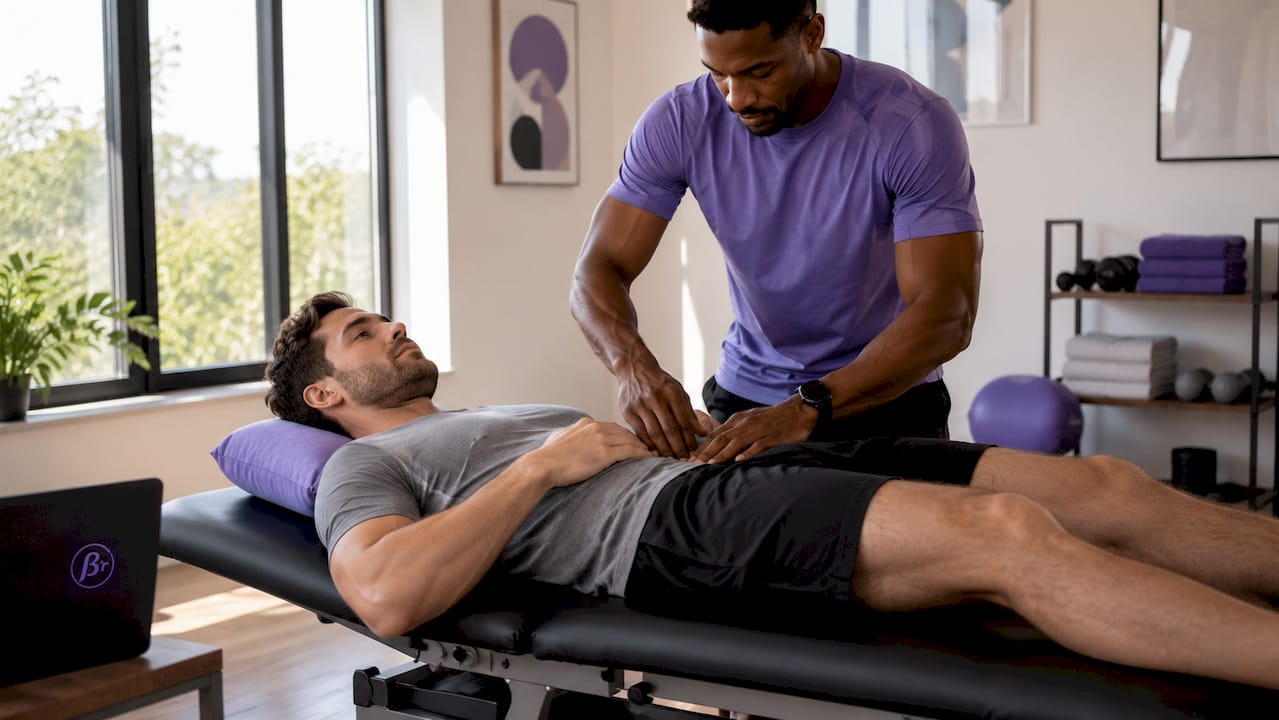
Two reliable identification methods
The most common starting point is the stop-urine test. While urinating, briefly try to stop the flow. The muscles you feel tighten are your pelvic floor. However, use this test sparingly. Repeated attempts interfere with bladder signals and risk urinary retention. Use it once or twice to identify the muscles, then stop.
The second method is the anal contraction test. Imagine you are trying to stop passing gas. The inward lift and squeeze you feel is the correct sensation. Neither method should become a regular exercise. They are diagnostic tools only.
Visual cues that confirm correct activation
Standing in front of a mirror with no clothing provides useful feedback. Mirror observation lets you watch for two signs of correct engagement: the base of the penis pulling slightly inward and a subtle lift of the testicles. If you see those two movements, you are contracting the right muscles.
Common errors to avoid:
- Tightening the thighs or buttocks. Place your hands on your thighs during practice. If you feel them tense, reset and try again.
- Sucking in the abdomen. Your belly should stay relaxed throughout each contraction.
- Holding your breath. Breath holding increases intra-abdominal pressure, which works against the muscle activation you are trying to build.
- Pushing down instead of lifting. The correct sensation is an inward lift, not a bearing-down push.
Pro Tip: Focus on the sensation of lifting rather than squeezing hard. A gentle, controlled lift activates the correct fibers more reliably than brute force.
Step-by-step progressive training routine with pictures
A six-week progressive program is the clinical standard for male pelvic floor training. Men should follow a progressive loading pattern starting with 3-second contractions and building to 8–10 seconds by weeks 5–6, with 3 sets daily. That progression matters because the pelvic floor contains both slow-twitch endurance fibers and fast-twitch reactive fibers. You need to train both.
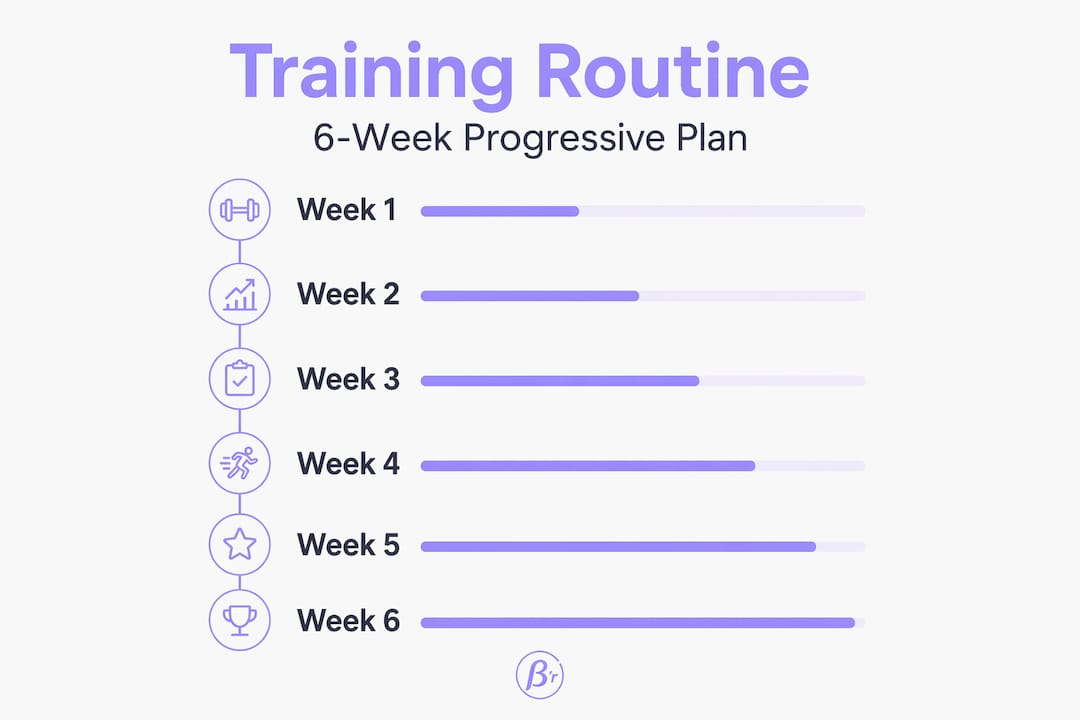
Weekly progression table
| Week | Hold duration | Reps per set | Sets per day | Rest between reps |
|---|---|---|---|---|
| 1–2 | 3 seconds | 10 | 3 | 3 seconds |
| 3–4 | 5 seconds | 10–12 | 3 | 5 seconds |
| 5–6 | 8–10 seconds | 12–15 | 3 | 8–10 seconds |
The ability to sustain a controlled contraction over 8–10 seconds correlates directly with improved bladder control and sexual function. Reaching that threshold is the goal of weeks 5 and 6.
Daily routine steps
- Choose your position. Start lying on your back with knees bent. This reduces gravity’s load and makes isolation easier. Progress to seated, then standing as you gain control.
- Take two slow breaths. Relax your abdomen, thighs, and glutes completely before you begin.
- Contract and hold. Lift and squeeze the pelvic floor muscles for the target duration. Keep breathing normally throughout.
- Release fully. Let the muscles relax completely between reps. A full release is as important as the contraction.
- Add quick flicks. At the end of each set, perform 3–5 rapid contractions and releases. These train the fast-twitch fibers responsible for reactive control during sneezing, laughing, or sexual activity.
- Rest and repeat. Complete 3 sets with full rest between them.
Pro Tip: Anchor your sessions to existing daily habits. Practice one set while brushing your teeth, one during a lunch break, and one before bed. Consistency tied to daily anchor moments produces better long-term results than sporadic intense sessions.
Common mistakes that slow your progress
Most men plateau not because the exercises are wrong, but because their form breaks down without them realizing it. Knowing the specific errors makes them easier to catch early.
- Overusing accessory muscles. Engaging the thighs, buttocks, or abdomen reduces the load on the pelvic floor and slows progress. Isolation is the point.
- Using the stop-urine test as a workout. This disrupts normal bladder function over time. It is a one-time identification tool, not a training method.
- Skipping the release phase. Many men focus on the squeeze and rush through the rest. A full, conscious release builds the muscle’s full range of motion.
- Prioritizing intensity over consistency. Doing 50 reps once a week produces far less improvement than 10 reps three times daily. Frequency beats volume.
- Holding the breath. Smooth, rhythmic breathing keeps intra-abdominal pressure stable and lets the pelvic floor work without interference.
Pro Tip: Use a phone timer or a dedicated app to track hold durations. When you are counting in your head, you almost always cut the hold short without noticing.
Mirrors are genuinely useful here. Watching for the visual cues described earlier confirms whether you are isolating correctly. Some men also find that pelvic floor physical therapy with a trained specialist provides the kind of real-time feedback that accelerates correct technique far faster than self-guided practice alone.
Beyond Kegels: Complementary exercises and lifestyle practices
Kegel contractions are the foundation, but they are not the whole structure. Several full-body movements engage the pelvic floor as a secondary muscle group, building stability and control in ways that isolated contractions cannot replicate.
Bridge pose, cat hump, and heel seat all engage the pelvic floor alongside surrounding muscle groups, improving overall pelvic stability and sexual control. Each one adds a different dimension to your training.
- Bridge pose. Lie on your back, feet flat on the floor, and lift your hips toward the ceiling. Hold for 5 seconds at the top while contracting the pelvic floor. Lower slowly. This builds the connection between glutes, core, and pelvic floor.
- Cat hump (pelvic tilt). On hands and knees, arch your lower back downward and tuck your pelvis under, then reverse. This mobilizes the pelvis and teaches you to feel the pelvic floor through a range of motion.
- Heel seat. Sit back on your heels in a kneeling position. This posture naturally engages the pelvic floor and improves awareness of the muscle group at rest.
Posture and pelvic alignment also matter more than most men expect. A forward pelvic tilt, common in men who sit for long hours, shortens the hip flexors and places the pelvic floor in a chronically lengthened position. That reduces its resting tone and responsiveness. Addressing posture through daily movement and stretching supports everything you are building with Kegel training.
The connection to sexual confidence is direct. Men who train their pelvic floor consistently report greater control over arousal and ejaculation timing, reduced performance anxiety, and a stronger sense of physical self-awareness. That awareness is the foundation of building real confidence as a man, not just in the bedroom but in how you carry yourself daily.
Key Takeaways
Pelvic floor training for men produces measurable gains in bladder control, sexual function, and confidence when you follow a progressive routine, maintain correct isolation, and practice consistently every day.
| Point | Details |
|---|---|
| Progressive loading is required | Start with 3-second holds and build to 8–10 seconds by week 6 for real functional gains. |
| Isolation beats intensity | Contracting thighs or glutes instead of the pelvic floor wastes effort and slows results. |
| Quick flicks train reactive control | Add 3–5 rapid contractions at the end of each set to build fast-twitch fiber response. |
| Consistency outperforms volume | Three short daily sessions produce better outcomes than one long weekly session. |
| Visual feedback accelerates learning | Mirror cues and anatomical pictures help you confirm correct muscle engagement from day one. |
What we have learned from watching men train their pelvic floor
Most men who come to Projectbetter have never thought about their pelvic floor before. They are not dealing with incontinence. They are dealing with performance pressure, a sense of disconnection from their own body, and a quiet frustration that nothing they have tried has given them real control.
What we have seen consistently is this: the men who make the fastest progress are not the ones who train hardest. They are the ones who slow down enough to actually feel what they are doing. Mindful focus on lifting sensations rather than forceful squeezing accelerates results in sexual control and posture improvement. That is not a soft idea. It is a practical technique that changes outcomes.
The mental barrier is real. Many men feel awkward doing pelvic floor exercises because they associate them with vulnerability or medical problems. That association is worth dropping. These muscles are part of your body. Training them is no different from training your back or your shoulders. The difference is that the results show up in places that matter deeply: how long you last, how present you feel, and how much confidence you carry into intimacy.
The visual guides and structured programs exist for a reason. They remove guesswork and replace it with clarity. When you know exactly what to do, how long to do it, and what correct form looks and feels like, the practice becomes calm and consistent rather than uncertain and sporadic. That calm consistency is where the real change lives.
— Projectbetter
Projectbetter supports your pelvic floor training every day
Knowing the exercises is one thing. Following through daily, with correct form and real progress tracking, is another.

Projectbetter is a private 30-day program built specifically for men who want to improve sexual confidence and physical control. The program includes structured pelvic floor training protocols, guided daily movement exercises, and reflections that help you build awareness without pressure. Every session is designed to fit into a real day, not an idealized one. If you are ready to move from knowing what to do to actually doing it, start with Projectbetter and give your pelvic floor training the structure it deserves.
FAQ
What muscles do pelvic floor exercises for men target?
Pelvic floor exercises target the levator ani, bulbocavernosus, and pubococcygeus muscles. These muscles control urination, support erections, and regulate ejaculation.
How long does it take to see results from pelvic floor training?
Most men notice improved control within 4–6 weeks of consistent daily practice. Reaching 8–10 second sustained contractions by week 6 correlates with measurable gains in bladder control and sexual function.
Can I do pelvic floor exercises every day?
Yes. Three sets of 10–15 repetitions daily is the standard clinical recommendation. Daily practice produces better results than higher-volume sessions done less frequently.
What is the stop-urine test and when should I use it?
The stop-urine test involves briefly halting urine flow to identify the pelvic floor muscles. Use it once or twice only. Repeated use disrupts bladder signals and can cause urinary retention over time.
Do pelvic floor exercises improve sexual performance in men?
Yes. Strengthening these muscles improves ejaculatory control, supports stronger erections, and builds the physical self-awareness that reduces performance anxiety. Structured neuromuscular training can also complement Kegel exercises for men recovering from surgery or struggling to activate these muscles voluntarily.