Pelvic Floor Exercises for Men With Incontinence
TL;DR:
- Pelvic floor exercises are the primary treatment for men with incontinence, improving bladder control and sexual function through muscle strengthening. Correct technique, consistent practice, and gradual progression are essential for effective results, especially when done before and after prostate surgery. Supervised therapy or biofeedback can enhance recovery, and patience is key, as significant improvements typically take several weeks to months.
Pelvic floor exercises for men with incontinence are the clinically recommended first-line treatment for regaining bladder control and improving sexual function. These exercises strengthen the levator ani and bulbocavernosus muscles, the same group that controls urine flow, erections, and ejaculation. The American Urological Association supports pelvic floor muscle training (PFMT) as a core part of incontinence treatment for men, particularly after prostate surgery. Done consistently and with correct technique, these exercises produce real, measurable improvements in continence and quality of life.
What are pelvic floor exercises for men with incontinence?
Pelvic floor exercises, commonly called Kegel exercises, are controlled contractions of the muscles that form the base of the pelvis. In men, these muscles support the bladder, bowel, and prostate. When they weaken, due to surgery, aging, or nerve damage, urine leaks. Strengthening them restores the physical control that prevents leakage.
The key distinction most men miss is that pelvic floor training targets a specific, small muscle group. Most men have never consciously engaged these muscles before. That unfamiliarity is why technique matters more than effort.
How do you correctly identify and engage your pelvic floor muscles?
Most men activate incorrect muscles during pelvic floor exercises, substituting the abdomen, thighs, or glutes instead. This is the single most common reason men see no improvement after weeks of effort. Getting the right muscles firing first is the non-negotiable starting point.
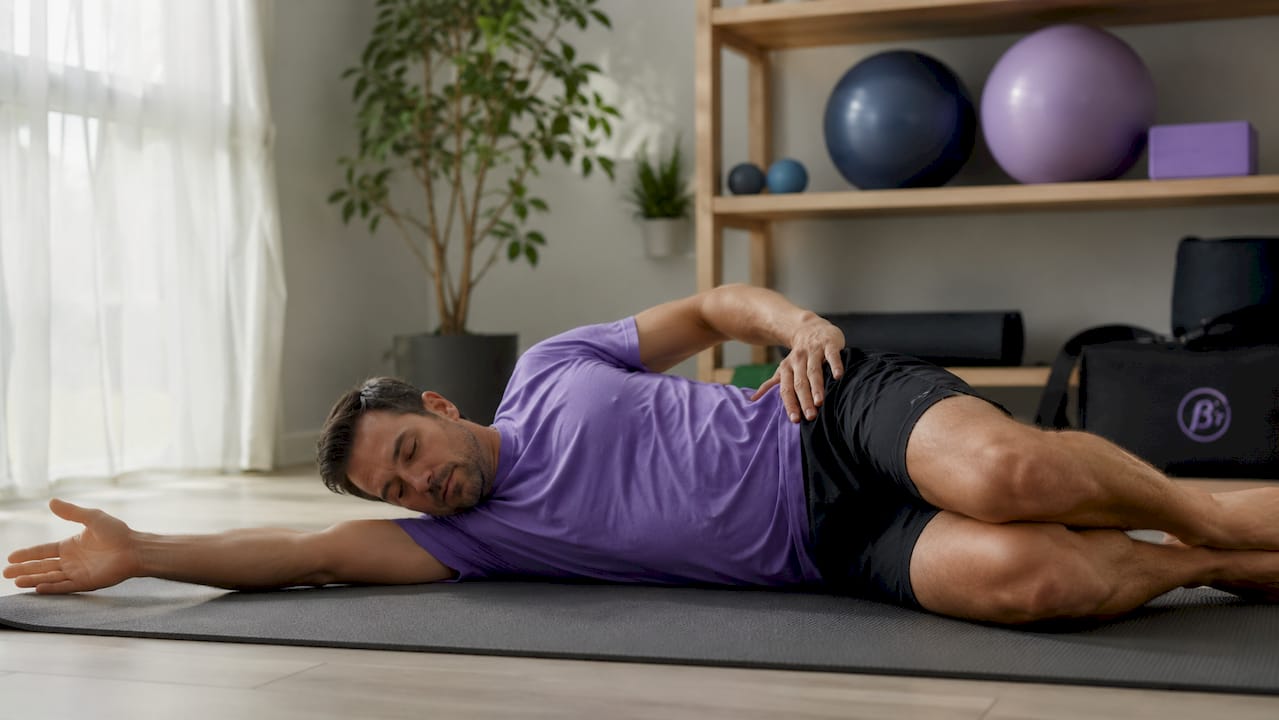
The most reliable activation cue is the sensation of “shortening the penis” inward and upward toward your body. Imagine you are trying to stop the flow of urine midstream. That internal lift and squeeze is the correct movement. Do not use this stop-flow method as a regular exercise, only as a one-time check to confirm you have found the right muscles.
Common signs you are engaging the wrong muscles:
- Your stomach tightens or pulls inward
- Your buttocks clench or lift off the surface
- Your thighs press together or tense
- You hold your breath without realizing it
- Your lower back arches
To confirm correct technique, lie on your back with your knees bent. Place one hand flat on your lower abdomen. When you contract, your abdomen should stay completely still. Only the internal lift should occur. A mirror placed between your legs can also show a slight inward movement of the perineum (the area between the scrotum and anus) when the right muscles engage.
Pro Tip: If you cannot feel the correct muscles at all, try the contraction while sitting on a firm chair. The pressure feedback from the seat makes the internal lift easier to sense.
What is the recommended exercise routine for male incontinence?
A structured, consistent routine produces results. Improvised or irregular practice does not. The following regimen reflects current clinical guidance for men working to restore bladder control.
The core daily protocol
- Choose your starting position. Begin lying down or sitting. These positions reduce the load on the pelvic floor and make correct activation easier when you are learning.
- Contract the pelvic floor muscles. Squeeze and lift inward. Hold for 5–10 seconds. Breathe normally throughout.
- Release fully. Let the muscles relax completely for the same number of seconds you held. Full relaxation between reps is as important as the contraction itself.
- Complete 10 repetitions. That is one set.
- Repeat 3 sets daily. Three sets per day, 10 reps each, is the clinically supported minimum for meaningful improvement.
- Add fast contractions. After your endurance sets, perform 10 quick, sharp contractions with no hold. These train the reflex speed needed to prevent leakage during sudden pressure, like a cough or sneeze.
- Progress to standing. Standing exercises train the muscles for real-life situations. Once you can perform 10-second holds reliably while lying down, shift to standing.
Weekly progression guide
| Week | Position | Hold time | Sets per day |
|---|---|---|---|
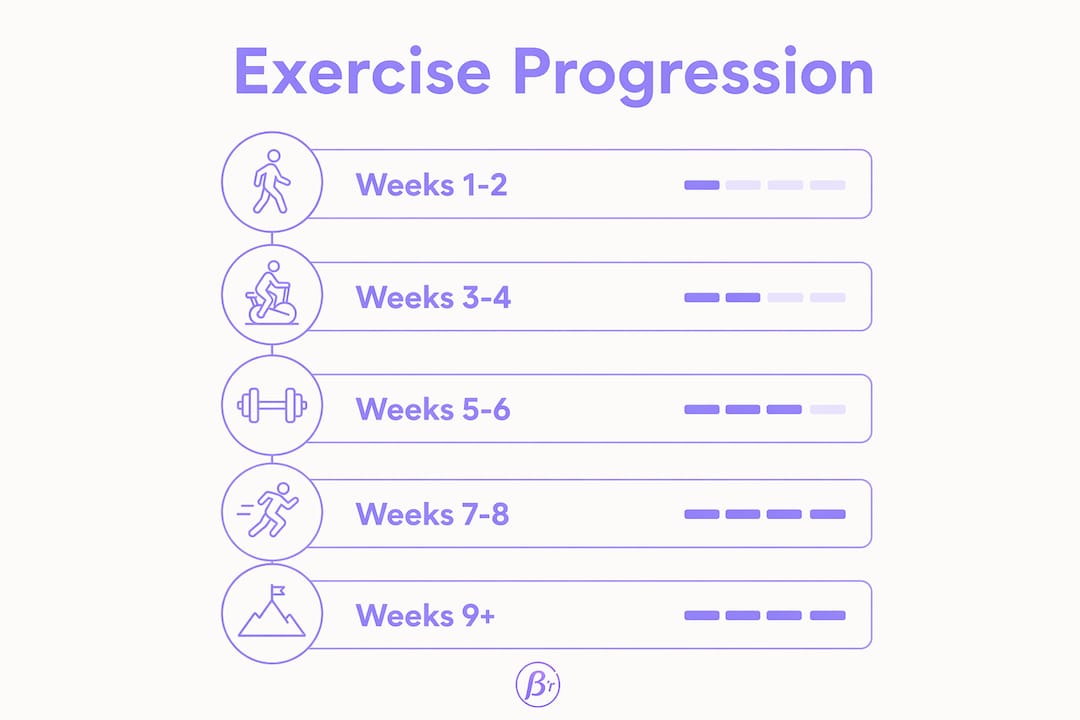
| 1–2 | Lying down | 5 seconds | 3 |
| 3–4 | Sitting | 7 seconds | 3 |
| 5–6 | Standing | 10 seconds | 3 |
| 7+ | Standing + movement | 10 seconds | 3 |
Pro Tip: Attach your exercise sets to existing daily habits. Do one set while brushing your teeth, one after lunch, and one before bed. Habit stacking removes the need for willpower.
When should you start pelvic floor exercises before and after prostate surgery?
Timing matters significantly when surgery is involved. Starting too late reduces recovery speed. Starting at the wrong moment post-surgery causes harm.
Before prostate surgery, the approach is clear:
- The American Urological Association recommends starting pelvic floor muscle training several weeks before the procedure
- Pre-surgical training builds baseline muscle strength and body awareness
- Men who train before surgery recover continence faster post-operatively than those who start only after
- Learning correct technique before surgery means you are not trying to figure it out while healing
After surgery, the rule is firm: do not exercise with a Foley catheter in place. Contracting the pelvic floor while a catheter is present causes pain and increases the risk of bladder spasms. Wait until your surgeon confirms catheter removal and clears you to begin.
“Starting pelvic floor training before prostatectomy improves adherence and accelerates continence recovery post-operatively. The muscle memory and body awareness built pre-surgery translate directly into faster, more confident rehabilitation after the catheter is removed.”
Once cleared, begin gently. The tissues are healing. Start with 5-second holds and fewer repetitions than the full protocol. Progress gradually over the first two weeks before moving to the standard regimen. Listen to your body. Discomfort is a signal to slow down, not push through.
What are the most common mistakes men make with these exercises?
Poor technique is more common than poor effort. Most men who see no results are working hard at the wrong thing.
The mistakes that undermine progress most often:
- Holding the breath. This raises intra-abdominal pressure and can worsen leakage over time. Breathe steadily throughout every contraction.
- Squeezing the wrong muscles. Glutes, thighs, and abdominals are the usual substitutes. If these tighten, reset and start again.
- Skipping the release phase. A muscle that never fully relaxes cannot contract effectively. The rest period is training, not downtime.
- Doing too many reps too soon. Fatigued muscles lose coordination. Quality over quantity always.
- Expecting overnight results. Significant continence improvements typically require 4–6 weeks of consistent practice. Major results can take up to 3 months.
Pain during exercises signals incorrect technique. Specifically, headaches indicate breath holding, back pain suggests abdominal compensation, and stomach pain points to core muscle substitution. Any of these symptoms means you need to stop, reset your technique, and restart with lighter effort.
Pro Tip: If you have practiced correctly for 6 weeks with no improvement, see a pelvic floor doctor for men. A single assessment session often identifies the specific error that home practice cannot catch.
Should you consider supervised therapy or biofeedback?
Home exercises work well when technique is correct and practice is consistent. Consistency and proper technique matter more than whether training is supervised or independent. That said, some men benefit significantly from professional support.
| Training approach | Best for | Key advantage |
|---|---|---|
| Home-based exercises | Men with mild to moderate leakage and correct technique | Flexible, private, no cost after learning |
| Supervised physical therapy | Men post-surgery or with no improvement after 6 weeks | Individualized assessment and correction |
| Biofeedback therapy | Men who cannot feel or isolate pelvic floor muscles | Real-time visual feedback on muscle activation |
Supervised pelvic floor physical therapy produces faster and more reliable continence recovery than unsupervised exercises alone for men recovering from prostatectomy. A therapist conducts a full assessment, identifies compensation patterns, and builds an individualized plan. Biofeedback adds a layer of real-time data, showing you exactly which muscles are firing and with how much force.
Male internal pelvic floor physical therapy is a specialized form of assessment that some men find valuable when standard external cues are not producing results. Effective rehabilitation also trains endurance, speed, and timing of contractions, not just maximal force. That three-part approach, endurance, speed, and timing, is what separates a well-designed program from basic repetition.
Key Takeaways
Pelvic floor muscle training is the most effective non-surgical treatment for male urinary incontinence, requiring correct technique, consistent daily practice, and gradual progression to produce lasting results.
| Point | Details |
|---|---|
| Correct muscle activation | Use the “shortening the penis” cue to target the right muscles and avoid abdominal or glute substitution. |
| Structured daily routine | Perform 3 sets of 10 reps daily, holding each contraction 5–10 seconds, with equal rest between reps. |
| Surgery timing matters | Start training weeks before prostate surgery and wait for catheter removal before resuming post-op. |
| Pain means stop | Headaches, back pain, or stomach pain during exercises signal incorrect technique, not effort. |
| Results take time | Expect early improvement at 4–6 weeks and significant gains by 3 months with consistent practice. |
What I have learned from watching men work through this
Most men approach pelvic floor training the same way they approach the gym: more effort, faster results. That instinct works against you here. The pelvic floor responds to precision, not force. I have seen men do 100 reps a day for weeks with zero improvement because they were squeezing their glutes the entire time.
The men who recover fastest share one trait: they slow down early. They spend the first week doing nothing but learning to feel the right muscles. They do fewer reps than prescribed. They check their technique obsessively. Then, once the activation is clean, they build volume and progress positions. That patience in week one pays off in week six.
Frustration is normal around weeks two and three. Nothing feels like it is working yet. That is when most men quit. What they do not know is that 4–6 weeks of consistent practice is the clinical threshold for measurable improvement. Quitting at week three means stopping just before the results begin.
Combining exercises with lifestyle habits, like reducing caffeine, managing fluid timing, and building a regular sleep pattern, accelerates progress. The pelvic floor does not work in isolation. Neither does recovery.
— Projectbetter
How Projectbetter supports your pelvic floor training
Knowing the exercises is one thing. Staying consistent with them, day after day, is another.

Projectbetter is a private 30-day program built specifically for men working on sexual wellbeing, bladder control, and physical confidence. The program includes structured daily pelvic floor protocols, guided reflections, and movement exercises designed to build real progress without pressure or shame. Every session is private. Every step is structured. You always know exactly what to do next. For men dealing with incontinence, performance concerns, or low confidence, Projectbetter offers a calm, evidence-informed path forward. No guesswork, no judgment, just steady, private progress.
FAQ
What are pelvic floor exercises for men with incontinence?
Pelvic floor exercises for men with incontinence are controlled contractions of the muscles that support the bladder and control urine flow. Performed consistently, they strengthen the levator ani and related muscles to reduce or eliminate leakage.
Can men do pelvic floor therapy after prostate surgery?
Yes, but only after the Foley catheter is removed and the surgeon gives clearance. Starting before catheter removal risks pain and bladder spasms.
How long before pelvic floor exercises improve incontinence?
Most men notice early improvement after 4–6 weeks of consistent daily practice. Major, life-changing results typically develop by the 3-month mark.
What is the correct way to identify pelvic floor muscles in men?
Focus on the sensation of drawing the penis inward and upward, as if stopping urine flow. The abdomen, glutes, and thighs should remain completely relaxed during the contraction.
When should a man see a pelvic floor doctor?
See a pelvic floor specialist if you experience pain during exercises, have had no improvement after 6 weeks of correct practice, or are preparing for or recovering from prostate surgery.