How to Build Sexual Confidence as a Man
TL;DR:
- Sexual confidence is a skill that develops through practice, mindset shifts, and self-awareness rather than innate traits.
- Focusing on competence and acting from core values helps men build genuine confidence even with anxiety present.
Sexual confidence is a learnable skill built through deliberate practice, mindset shifts, and self-awareness. It is not an innate trait, a product of appearance, or something that arrives before you act. Research confirms that perceived self-efficacy strongly predicts sexual confidence levels, meaning the more you believe in your ability to act, the more confident you become. The path to knowing how to build sexual confidence runs through competence first, feelings second. Men who understand this distinction stop waiting to feel ready and start building the skills that make readiness real.
What foundational mindset shifts enable building sexual confidence?
Sexual confidence is an outcome, not a starting point. Most men approach intimacy waiting to feel confident before they act. That approach keeps them stuck. Competence before confidence is the principle that skill mastery, not emotional readiness, drives lasting performance confidence.
The key mental shift is understanding that anxiety does not disqualify you. Psychological flexibility is the ability to accept nervousness, discomfort, or self-doubt without letting those feelings stop you from acting. ACT-based approaches, drawn from Acceptance and Commitment Therapy, show that men who act in line with their values despite internal discomfort perform more consistently than those who wait for calm.
Chasing the feeling of confidence is counterproductive. When you make “feeling confident” the goal, you treat anxiety as a problem to solve before intimacy begins. That creates a loop where pressure mounts and performance suffers. The better target is values clarity: knowing what kind of partner you want to be and acting from that place, regardless of how you feel in the moment.
Three mindset shifts that matter most:
- Confidence follows action. You do not feel ready, then act. You act, then feel more capable.
- Anxiety is neutral information. It signals that something matters to you. It does not predict failure.
- Self-talk shapes performance. Healthy self-talk and sexual agency start with how you speak to yourself before and during intimacy.
Pro Tip: Write down one value you hold as a partner, such as “I want to be present and attentive.” Before intimacy, read it. Acting from a value is more stable than chasing a feeling.
How does presence training reduce performance anxiety?
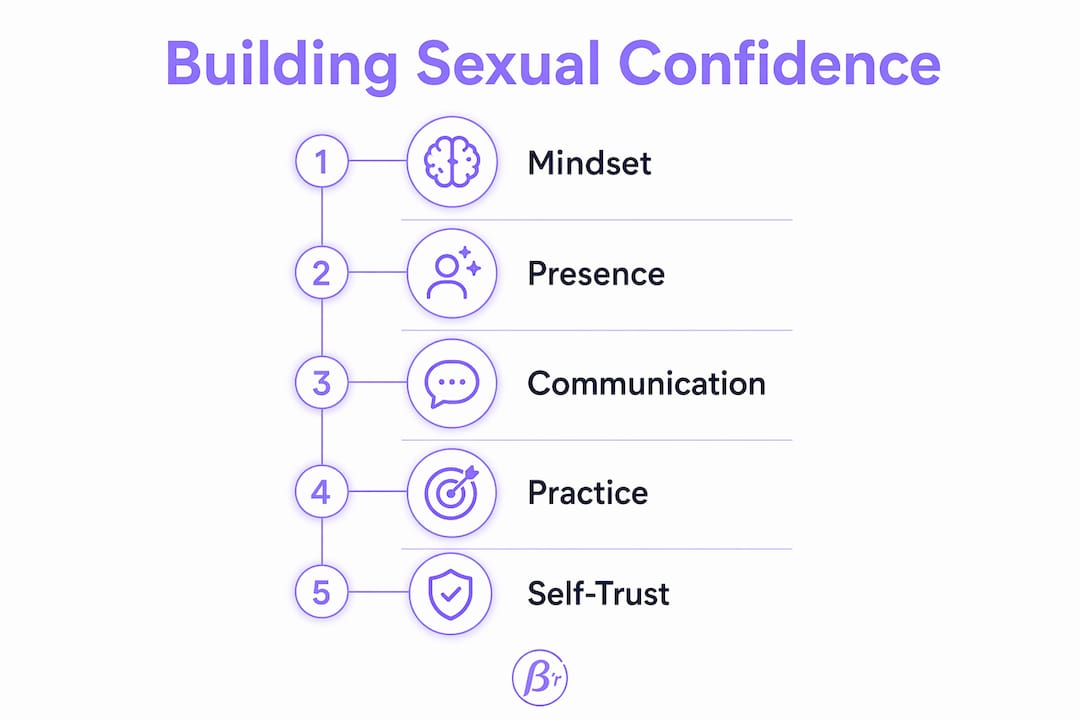
Performance anxiety in intimacy often comes from a phenomenon called “spectatoring.” Spectatoring is when a man mentally steps outside the experience to evaluate himself, watching his own performance instead of feeling it. This self-monitoring breaks arousal, reduces erection confidence, and increases pressure. The solution is not willpower. It is redirecting attention to sensory experience.
Sensate Focus is the most clinically validated technique for this. Developed by Masters and Johnson, Sensate Focus removes sexual performance goals entirely and replaces them with structured touch exercises. The goal is sensation, not outcome. That shift alone reduces the pressure that fuels anxiety.
Here is a practical progression for presence training:
- Non-sexual touch practice. Spend 10 minutes touching your partner’s arm, back, or hand with full attention on texture, temperature, and pressure. No goal. No outcome.
- Body mapping. Slowly explore more of the body, still without sexual intent. Notice what you feel, not what you think.
- Verbal check-ins. After each session, share one sensation you noticed. This builds communication alongside presence.
- Gradual reintroduction. Only after several sessions of non-goal touch do you reintroduce sexual activity, now with a trained attention to sensation rather than performance.
| Step | Focus | Benefit |
|---|---|---|
| Non-sexual touch | Texture, temperature, pressure | Reduces spectatoring |
| Body mapping | Full-body awareness | Builds sensory vocabulary |
| Verbal check-ins | Shared experience | Strengthens communication |
| Gradual reintroduction | Sensation over outcome | Sustains intimate confidence |
Low-pressure intimacy activities, such as massage, slow dancing, or simply lying together without expectation, all train the same attention muscle. Sensation and connection consistently outperform appearance as drivers of sexual confidence.
Pro Tip: Set a timer for 10 minutes and practice non-sexual touch with no agenda. The discomfort you feel at first is the spectatoring habit breaking down. Stay with it.
How does communication build intimate confidence?
Active verbal engagement during intimacy is one of the most underused tools men have. Men who actively engage and direct intimacy report higher satisfaction than men who remain passive. Passive behavior keeps attention internal. Active engagement pulls focus outward, toward your partner and the shared experience.

Vulnerability is the part most men avoid. Disclosing what you want, what feels good, and even what feels uncomfortable requires trust. But research shows that expressing negative feelings during intimacy, not just positive preferences, increases partner satisfaction more than staying silent. Your honesty signals safety. It invites your partner to be honest too.
Communication do’s and don’ts:
- Do say what you want in the moment. “I’d love to slow down” is clear and kind.
- Do name what feels good. Specific feedback builds connection and guides your partner.
- Do share discomfort calmly. “I’m feeling a bit in my head right now” is honest, not weak.
- Don’t perform enthusiasm you don’t feel. Inauthenticity creates distance.
- Don’t wait until after to discuss what didn’t work. Real-time, gentle feedback is more effective.
- Don’t assume your partner knows what you need. Clarity is a form of care.
Practicing these conversations outside the bedroom first makes them easier during intimacy. A five-minute check-in after a date, asking “What felt good tonight?” or “Is there anything you’d like more of?”, builds the habit of open dialogue. Sexual confidence as a skill includes boundary setting and clear communication, not just physical technique.
How do deliberate practice and self-trust sustain sexual confidence?
Self-trust is built by keeping promises to yourself. Every time you follow through on a small commitment, such as practicing presence, initiating a conversation, or completing a pelvic floor exercise, you deposit into your internal account of reliability. Over time, that account becomes the foundation of durable confidence.
Deliberate actions under pressure build self-trust more effectively than avoiding pressure. This is the same principle sport psychology applies to athletes. You rehearse the skill, you perform under mild stress, and you review what happened. Repetition under real conditions is what stabilizes confidence. Waiting for the perfect moment to practice is the same as not practicing.
A training log is a practical tool here. After each intimate experience or practice session, write three things: what you did well, what felt uncomfortable, and one thing you want to try next time. This is not self-criticism. It is structured self-awareness. Tracking progress makes improvement visible and gives you evidence that you are growing.
| Activity | Competence built | Confidence impact |
|---|---|---|
| Pelvic floor training | Physical control and awareness | Reduces erection anxiety |
| Presence practice | Attention management | Lowers spectatoring |
| Communication practice | Verbal clarity | Increases intimate confidence |
| Training log review | Self-awareness | Reinforces self-trust |
Small steps compound. Committing to one presence exercise per week, one honest conversation per month, and one new skill per quarter creates a body of experience that feelings alone cannot replicate. Confidence is built from preparation, communication, and presence, not from chasing a feeling. Men who treat sexual confidence as a practice, not a destination, sustain it far longer.
Key Takeaways
Sexual confidence is built through deliberate skill development, psychological flexibility, and honest communication, not through appearance or waiting to feel ready.
| Point | Details |
|---|---|
| Competence precedes confidence | Build skills through practice first; the feeling of confidence follows naturally. |
| Presence training reduces anxiety | Sensate Focus and sensory exercises retrain attention away from self-monitoring. |
| Vulnerability strengthens connection | Sharing both positive and negative feelings during intimacy increases partner satisfaction. |
| Self-trust grows through repetition | Keeping small commitments and logging progress builds lasting internal belief. |
| Values anchor performance | Acting from clear personal values stabilizes behavior regardless of anxiety or mood. |
What I’ve learned about confidence and competence in intimacy
Most men come to this topic believing confidence is something they either have or don’t. I’ve seen that belief cause more damage than any specific skill gap. When you treat confidence as a fixed trait, every moment of anxiety becomes evidence that you’re failing. That framing is both inaccurate and exhausting.
What actually works is simpler and less dramatic. You practice presence. You say the honest thing. You do the pelvic floor work. You keep the commitment you made to yourself, even when it feels awkward. Over weeks, those actions accumulate into something real. Not a feeling of invincibility, but a quiet, grounded sense that you know what you’re doing and you can handle what comes up.
The men who build the most durable intimate confidence are not the ones who never feel anxious. They are the ones who stopped treating anxiety as a stop sign. They learned to carry it without letting it drive. That shift, from “I need to feel confident” to “I know what to do,” is the whole game.
Patience matters here. Progress in intimacy is not linear. Some sessions will feel connected and easy. Others will feel off. The practice is showing up consistently anyway, reviewing what happened without judgment, and adjusting. That is what building sexual confidence actually looks like in practice. Private. Calm. Better.
— Projectbetter
What Projectbetter offers men building sexual confidence
Knowing the principles is one thing. Having a structured system to apply them daily is another.
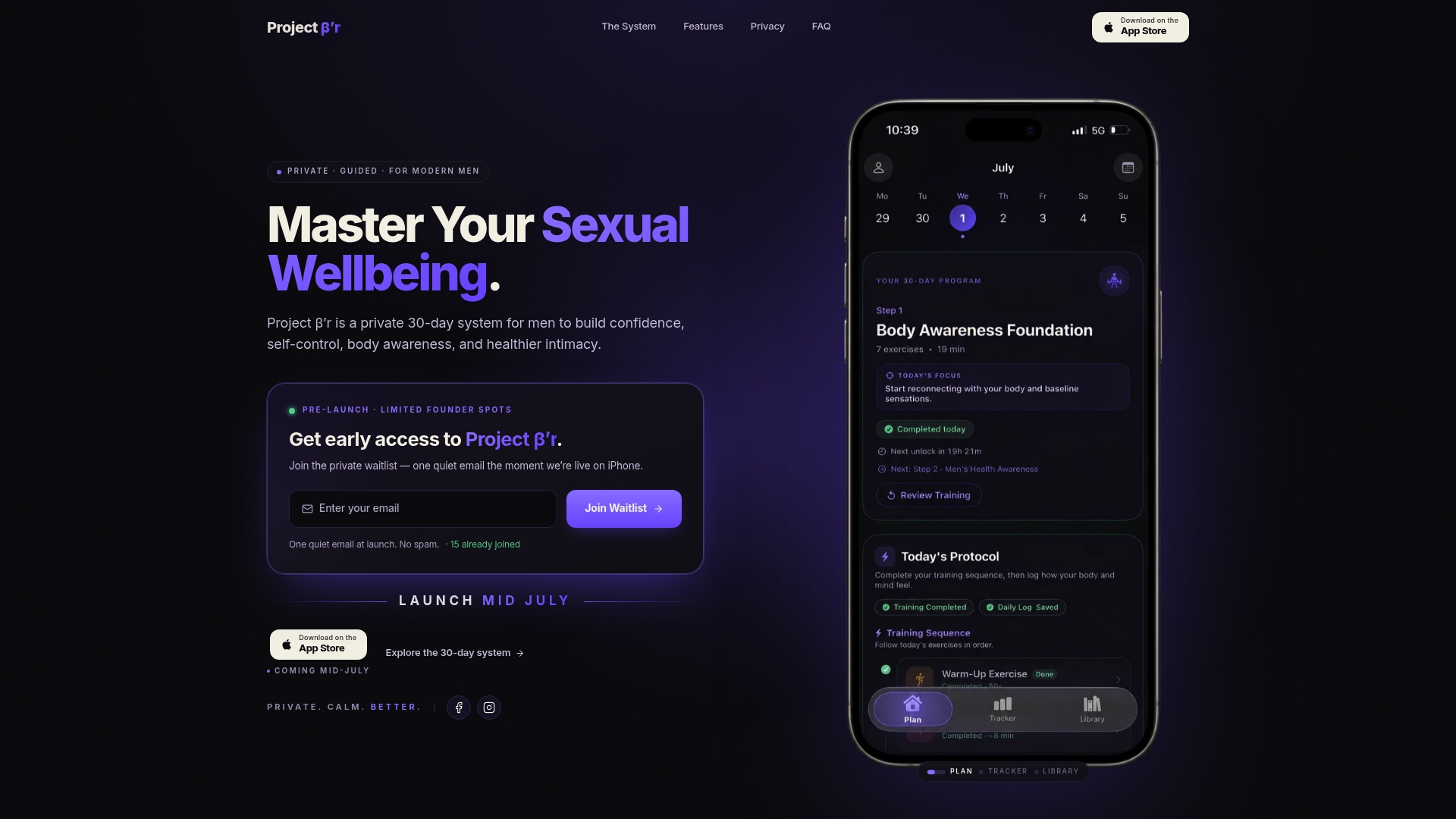
Projectbetter is a private 30-day program built specifically for men who want to develop real sexual confidence through daily practice. The program includes pelvic floor training, movement exercises, and guided reflections that directly apply the competence-first approach covered in this article. Each day builds on the last, so progress is visible and the work stays manageable. There is no pressure, no judgment, and no guesswork about what to do next. If you are ready to move from understanding to action, the Projectbetter program gives you the structure to do it.
FAQ
What is sexual confidence and can it be learned?
Sexual confidence is a man’s belief in his ability to engage in intimacy effectively and authentically. Research confirms it is a learnable skill built through self-efficacy, practice, and clear communication, not an innate trait.
How does performance anxiety affect erection confidence?
Performance anxiety triggers spectatoring, where a man monitors himself instead of experiencing intimacy. This self-evaluation breaks arousal and reduces erection confidence. Sensate Focus exercises retrain attention toward sensation, reducing this effect.
How does communication improve sexual confidence?
Active verbal engagement during intimacy shifts focus from internal evaluation to shared experience. Expressing both positive preferences and honest discomfort increases partner satisfaction and builds the intimate confidence that comes from genuine connection.
How long does it take to build lasting sexual confidence?
There is no fixed timeline, but deliberate practice over several weeks produces measurable change. Men who track their progress and keep consistent commitments report faster improvement than those who rely on motivation alone.
Does body confidence affect sexual confidence?
Body confidence contributes, but research shows sensation and connection are stronger drivers of sexual confidence than appearance. Men who focus on sensory experience rather than how they look report greater satisfaction and lower anxiety during intimacy.