How to Build Confidence as a Man: Proven Methods
TL;DR:
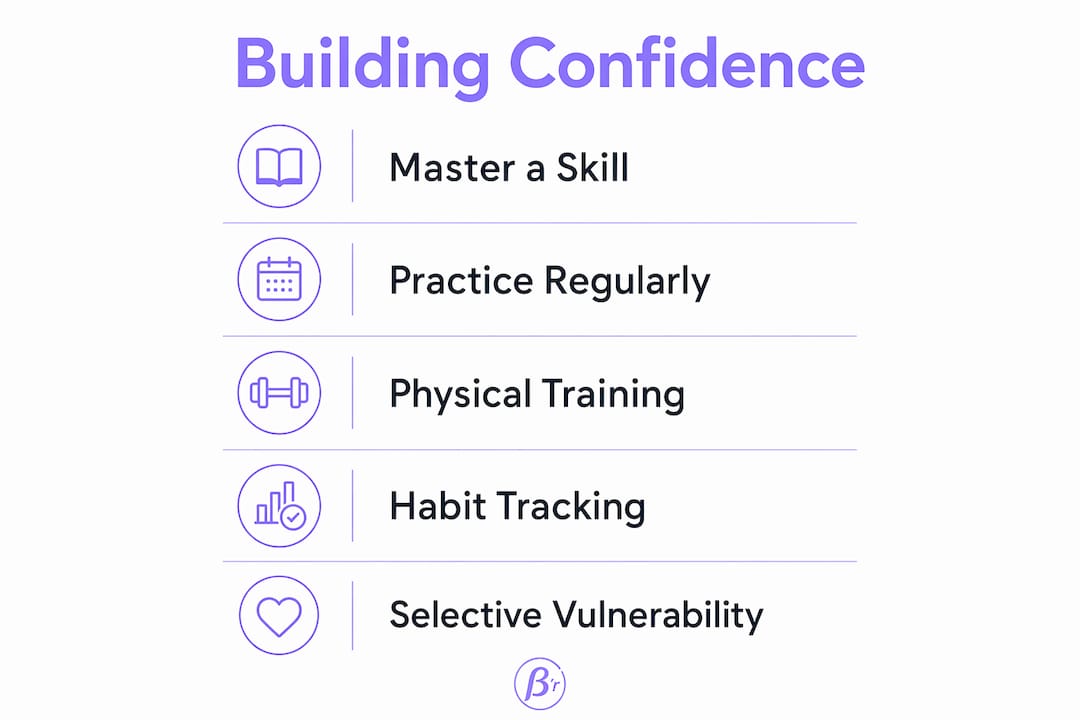
- Building confidence requires deliberate mastery in one area over at least 12 months to develop durable self-efficacy. Men improve social and physical confidence by practicing small, consistent actions and engaging in selective vulnerability within trusted environments. Confidence is a skill built on sustained effort, self-trust, and real competence, not by pretending or shortcuts.
Confidence is defined as your belief in your ability to succeed at specific tasks, not a fixed personality trait you either have or lack. Knowing how to build confidence as a man means understanding that self-assurance grows through deliberate practice, physical training, and honest self-expression. Mastery in one domain over 12+ months builds durable confidence that holds up under real pressure. That timeline matters because it sets realistic expectations and keeps you from quitting too early. The methods in this article are grounded in behavioral science and practical experience, not motivational shortcuts.
How to build confidence as a man through task-specific mastery
Confidence is not a general feeling you switch on. Psychologists call the real thing “task-specific self-efficacy,” which means your belief in your ability to perform a particular skill. A man who is confident in the gym may feel uncertain in a job interview. That is normal and expected. The goal is to build deep competence in one area first, then let that foundation spread.
Mastery requires passing through what researchers call the “incompetence phase.” This phase lasts 3–6 months and feels like personal failure, but it is a natural part of skill acquisition. Most men quit during this window. Staying in it is the single most important decision you can make for your confidence.
Here is what the mastery process looks like in practice:
- Choose one domain. Pick something with clear feedback: a martial art, a musical instrument, public speaking, or a trade skill.
- Set a 12-month minimum. Commit before you start. Short timelines create an exit ramp when discomfort peaks.
- Track small wins weekly. Write down one specific improvement each week, no matter how minor it seems.
- Expect regression. Progress is not linear. A bad week does not erase three good months.
- Resist comparison. Measure yourself against last month’s version of you, not against someone with five years of practice.
Pro Tip: Write your current skill level on a scale of 1–10 at the start of each month. After six months, review the list. The visible progress is evidence your brain can use to build genuine self-trust.
The depth you build in one domain creates a psychological template. Your brain learns that discomfort plus persistence equals growth. That pattern transfers to other areas of life over time.
Does resistance training actually boost self-esteem for men?
Yes. A meta-analysis by Spence et al. (2005) confirmed that resistance training raises global self-esteem in men independently of any changes in physical appearance. The psychological mechanism is called “embodied competence.” When your body does something difficult, your mind registers capability. That registration is confidence.
“The psychological benefits of resistance training are not about looking better. They come from the experience of doing something hard and completing it. That felt sense of capability is what transfers into everyday confidence.”
Practical guidelines for men starting out:
- Train 3 days per week minimum. Research supports this frequency for meaningful psychological benefit.
- Prioritize compound movements. Squats, deadlifts, and pull-ups engage large muscle groups and produce the strongest sense of physical accomplishment.
- Log your lifts. Seeing progressive overload in writing gives you concrete evidence of growth.
- Focus on performance, not aesthetics. Ask “Can I lift more than last month?” not “Do I look different?”
Physical training also regulates cortisol and raises baseline testosterone, both of which directly affect mood and social confidence. Men who train consistently report feeling calmer in high-pressure situations. That calm is not accidental. It is a trained physiological response.
How identity scripts and habit tracking realign your behavior

An identity script is a present-tense written statement that describes who you are becoming, not who you hope to be someday. The difference in phrasing is significant. “I am a man who speaks clearly and directly” works. “I want to be more confident” does not. The brain responds to present-tense identity statements as instructions, not wishes.
Men who spend 15 minutes daily writing and reading identity scripts for 30+ days show measurable behavioral change and confidence growth. That is because repetition rewires subconscious habit patterns over time. The script becomes the default self-image your behavior tries to match.
How to build and use identity scripts effectively:
- Write 3–5 statements in present tense. Keep each one specific and behavior-focused, not vague.
- Read them aloud each morning. Speaking activates a different neural pathway than silent reading.
- Audit your time weekly. Identify one habit that contradicts your script and replace it with one that supports it.
- Pair scripts with habit tracking. Use a simple paper calendar or a notes app to mark each day you completed your practice.
Pro Tip: Audit your phone screen time once a week. If you spend more time consuming content than practicing your chosen skill, your habits are working against your identity script. Adjust the ratio before adjusting the script.
The behavioral science behind this is straightforward. Habits form through repetition and reward. When your daily actions consistently match your stated identity, your subconscious stops questioning whether you are capable. That internal alignment is what most men experience as confidence.
Why selective vulnerability builds stronger confidence than stoicism
Stoicism, as most men practice it, means suppressing emotion entirely. That approach backfires. Men who practice selective emotional expression in trusted environments consistently show higher self-esteem than men who suppress emotions. The key word is “selective.” This is not about broadcasting your struggles publicly. It is about choosing the right people and the right setting.
Brené Brown’s research on shame resilience shows that selective vulnerability in trusted masculine environments builds higher self-esteem by reducing the internal weight of unspoken struggles. Shame grows in silence. When you name a fear or failure to someone you trust, it loses power over you.
How to find or create these environments:
- Join a structured group with shared stakes. Sports teams, martial arts gyms, and accountability groups work because everyone has skin in the game.
- Start small. Share one honest observation about a challenge you faced this week. You do not need to go deep immediately.
- Choose people who respond with respect, not advice. The right environment listens first. Unsolicited fixing is not support.
- Meet consistently. Trust builds through repeated contact over time, not through one intense conversation.
The distinction between vulnerability and weakness is simple. Weakness is avoiding difficulty. Vulnerability is acknowledging difficulty while continuing to act. Men who carry that distinction clearly tend to build confidence faster than those who perform toughness.
What are micro-reps and how do they build social confidence?
Confidence develops as a lagging indicator from successfully performing repeated micro-reps in social situations. A micro-rep is a small, low-stakes social action performed consistently in real life. The repetition conditions your brain to tolerate discomfort and register capability.
| Micro-Rep | Situation | Frequency |
|---|---|---|
| Hold eye contact 2 seconds longer | Any conversation | Daily |
| Ask one follow-up question | Work meetings or social events | Daily |
| Introduce yourself first | New group settings | 3x per week |
| State your opinion directly | Low-stakes discussions | Daily |
| Follow up after a conversation | Professional or social contacts | 2x per week |
Micro-reps in real-life social situations provide immediate evidence of capability. Each completed rep is a data point your brain stores as proof that you can handle social interaction. Over weeks, those data points accumulate into genuine self-trust.
Two common pitfalls undermine this process. First, trying to mimic confident personas often backfires as inauthentic and erodes self-trust. Perform your own behavior better, not someone else’s behavior. Second, negotiating with yourself about whether to do the rep kills momentum. Scheduling fixed 30–90 minute confidence blocks removes internal debate and strengthens willpower over time.
Pro Tip: At the end of each day, write one sentence: “Today I did X and it went Y.” This is not a journal. It is a confidence ledger. After 30 days, you will have 30 pieces of evidence that you showed up.
Confidence grows from evidence and fulfillment of self-promises, not from extroverted traits or alpha posturing. The man who keeps small promises to himself consistently becomes the man others trust and respect.
Key Takeaways
Building lasting confidence as a man requires consistent mastery practice, physical training, identity alignment, and selective vulnerability in trusted environments.
| Point | Details |
|---|---|
| Mastery over time | Commit to one skill for 12+ months and push through the 3–6 month incompetence phase. |
| Resistance training | Train at least 3 days per week to build embodied competence and raise baseline self-esteem. |
| Identity scripts | Write and read present-tense identity statements daily for 30+ days to realign habits. |
| Selective vulnerability | Share honest struggles in trusted, structured groups to reduce shame and build resilience. |
| Daily micro-reps | Perform small social actions consistently to accumulate evidence of your own capability. |
Confidence is a skill, not a starting point
We have worked with men at every stage of this process, and the pattern is consistent. The men who struggle most are not the ones who lack talent or social ability. They are the ones who believe confidence should arrive before the effort, not after it.
That belief is the real obstacle. Confidence is a lagging indicator. It shows up after you have done the hard thing repeatedly, not before. Waiting to feel ready is the same as deciding not to grow.
The other pattern we see is men who try to shortcut the process by performing confidence rather than building it. They copy body language, rehearse scripts, and adopt personas. It works for about a week. Then the performance collapses under real pressure because there is no actual competence underneath it. Authentic confidence is quieter than performed confidence. It does not need to announce itself.
The most practical shift you can make today is this: stop asking “Am I confident?” and start asking “Did I do the thing I said I would do?” Self-trust is built one kept promise at a time. That is the foundation everything else rests on.
— Projectbetter
A structured program for men ready to go deeper
If the methods in this article resonate with you, the next step is putting them into a structured daily practice rather than applying them randomly.
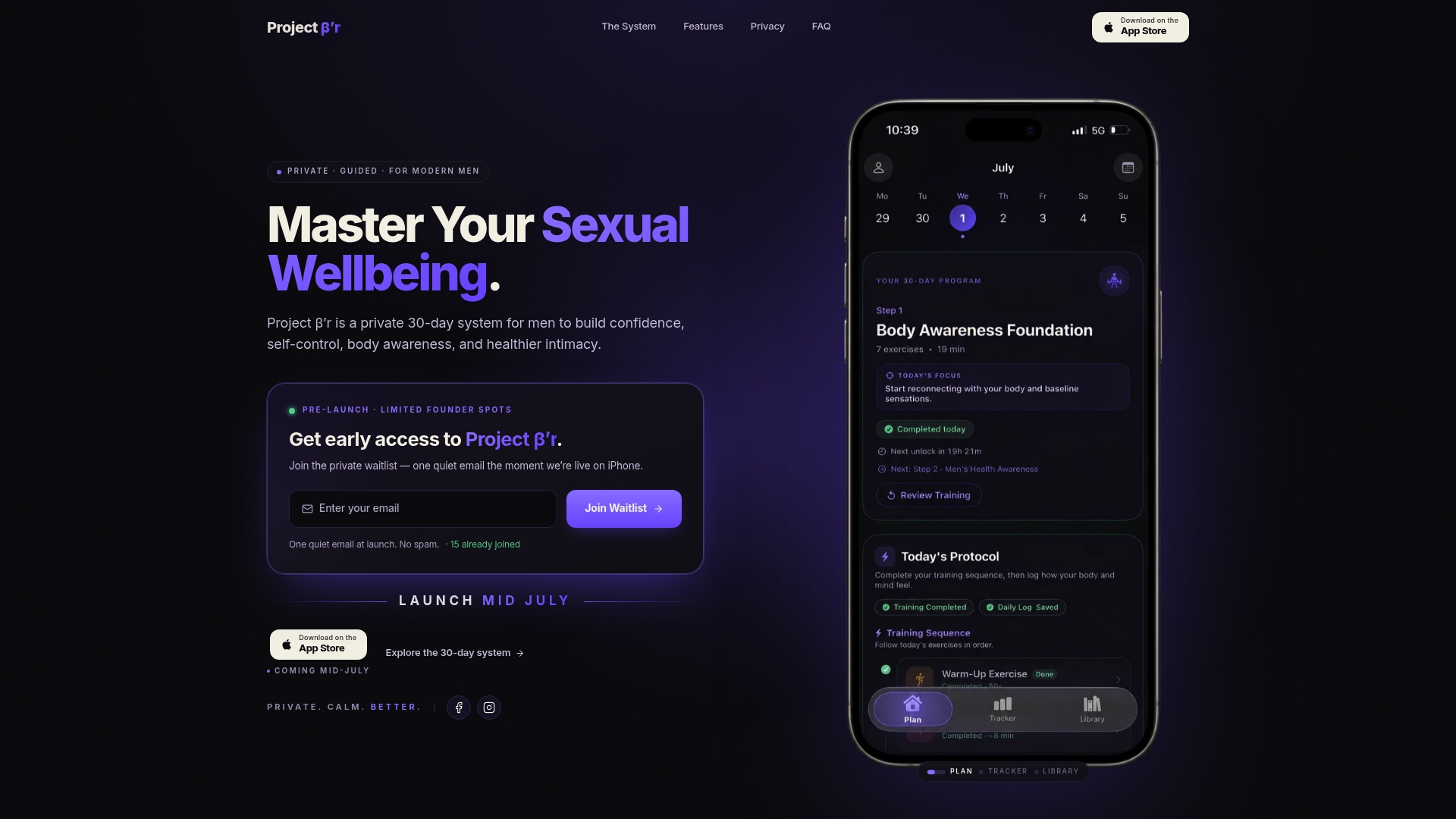
Projectbetter is a private 30-day program built specifically for men who want to address performance pressure, low sexual confidence, and impulsive habits through structured daily protocols. The program includes movement exercises, pelvic floor training, and guided reflections designed to build awareness and self-control from the inside out. It operates in a judgment-free environment where men can work through real challenges without shame or pressure. If you are ready to build confidence that extends into your most private and personal life, the Projectbetter program is a grounded, evidence-based place to start.
FAQ
What is task-specific self-efficacy?
Task-specific self-efficacy is your belief in your ability to perform a particular skill or task. It is more accurate and durable than general self-esteem because it is grounded in real competence.
How long does it take to build genuine confidence?
Research supports a minimum of 12 months of consistent practice in one domain to build durable confidence. The first 3–6 months often feel like regression before progress becomes visible.
Does exercise actually improve self-esteem for men?
Yes. A meta-analysis by Spence et al. (2005) confirmed that resistance training raises global self-esteem in men independently of appearance changes. Training at least 3 days per week produces the strongest psychological benefit.
What is the difference between vulnerability and weakness?
Vulnerability means acknowledging a genuine struggle while continuing to act. Weakness means avoiding difficulty altogether. Selective vulnerability in trusted environments builds shame resilience and raises self-esteem over time.
How do micro-reps build confidence in social situations?
Micro-reps are small, repeated social actions like holding eye contact longer or asking follow-up questions. Each completed action provides evidence of social capability, and that accumulated evidence becomes genuine confidence over time.